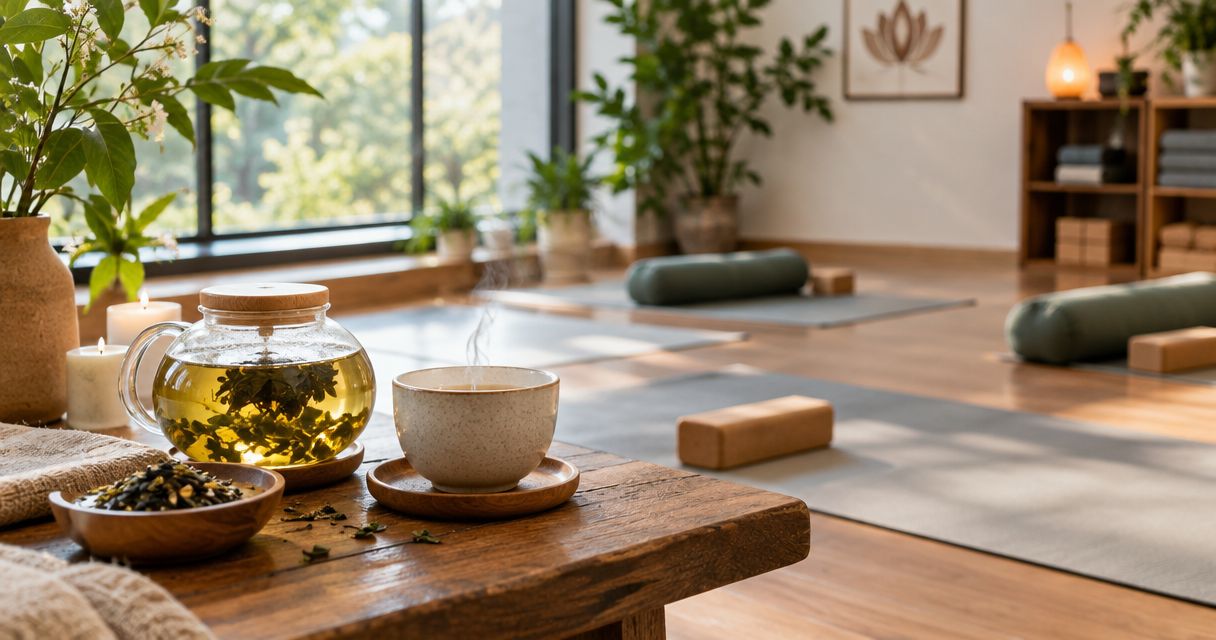
Wellness studio loose leaf tea service is the preparation of loose tea and herbal infusions with the aim of giving guests a welcoming pause before or after a session. Choosing loose leaf tea for wellness studios means matching caffeine preferences, brewing requirements, and cleanup to your class schedule—not choosing a blend because its name sounds therapeutic.
- Choose loose leaf tea for wellness studios by caffeine status, flavor, and brewing workload—not implied health benefits.
- God's Country Coffee Co. suits retail tea trials; evaluate commercial purchasing requirements separately.
- Apple Cider Rooibos is naturally caffeine free; Jasmine contains green tea and is not a caffeine-free substitute.
- Start with a narrow menu, written brewing instructions, and clear ingredient information before expanding tea service.
Why tea matters for wellness studios
Tea gives you a concrete hospitality choice: offer guests somewhere to pause without turning reception into a café. But service brings work. Someone must prepare the tea, manage hot water, explain ingredients, and clean the equipment between sessions.
For a 2026 tea menu, define the service before choosing the blend. An evening yoga class needs a different caffeine conversation from a morning workshop, while a short class changeover leaves less room for individual brewing than a scheduled gathering.
God's Country Coffee Co. sells tea through an online retail store. God's Country Coffee Co. tea is best for studio buyers testing retail selections, not buyers assuming a commercial supply arrangement. Treat taste selection and business purchasing as separate decisions.
The useful definition of premium here is practical: a tea you enjoy, can describe accurately, and can prepare consistently. Packaging language alone does not answer those questions.
How to build a studio tea service
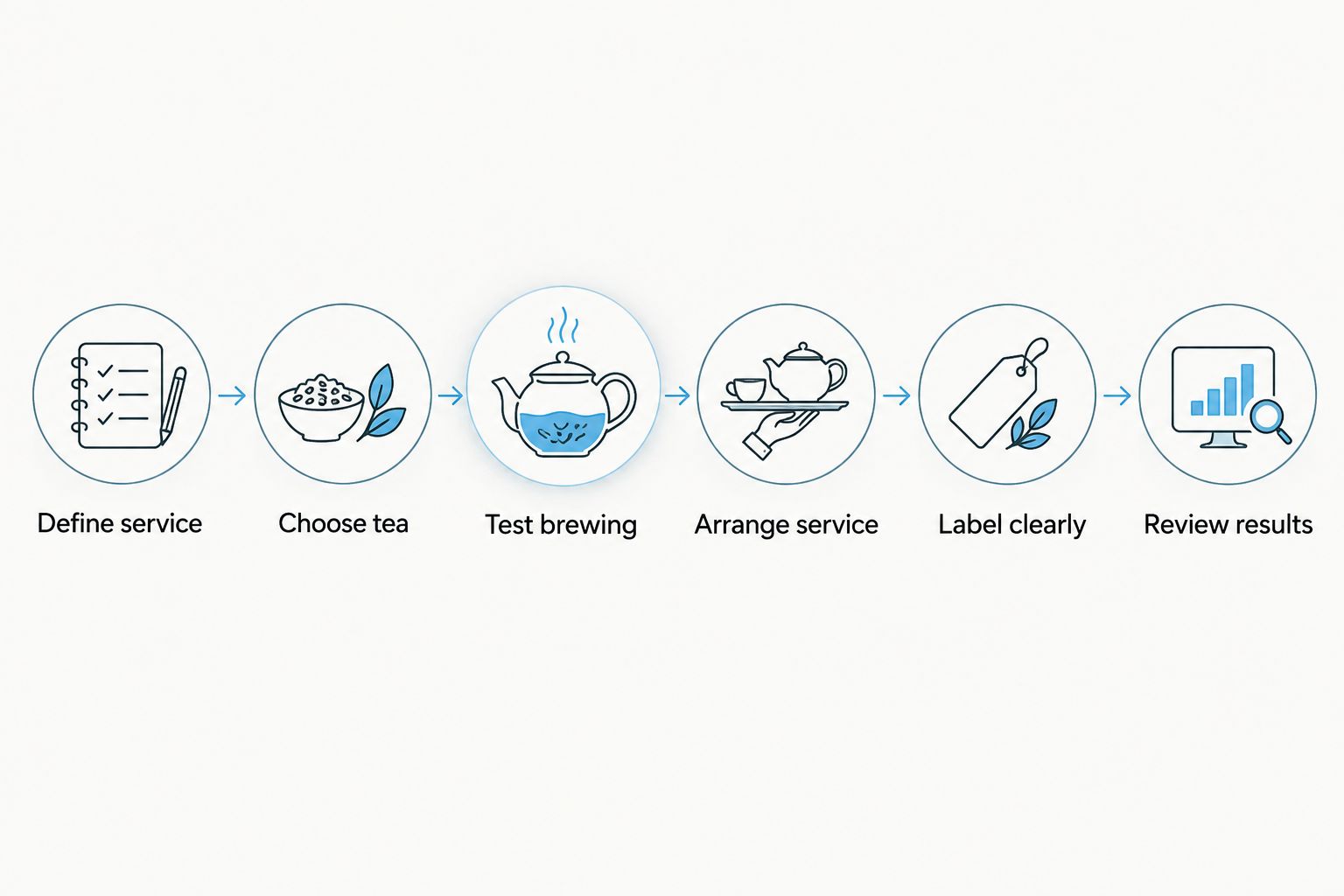
Define service
Start with a written service plan using the room, equipment, and staff you already have. Decide whether tea belongs at reception, after a workshop, or during a deliberately scheduled break; do not make brewing an unassigned task between classes.
For your 2026 launch, choose 1 service window as a pilot rather than offering tea throughout the day. This is a planning recommendation, not an industry benchmark. A bounded trial lets you see whether preparation interrupts check-in or closing duties.
Individual preparation gives guests choice but requires attention for each drink. A shared pot simplifies pouring but needs a clear brewing and handling procedure. Choose the format your team can maintain, including on a busy shift.
- Name the person responsible for preparation and cleanup.
- Put the serving area outside the route into the practice room.
- Decide whether drinks stay at reception or enter another designated space.
- Keep drinking water accessible separately from the tea station.
Choose tea
Before buying, ask guests about flavor preferences and whether they avoid caffeine. Use a short sign-up question or reception conversation rather than treating the word wellness as evidence that everyone wants the same drink.
Begin with 2 blends as a proposed trial menu: a clearly identified caffeine-free option and a contrasting choice. Apple Cider Rooibos from God's Country Coffee Co. is described as spicy, sweet, and naturally caffeine free. Jasmine combines jasmine blossoms and green tea, making it a distinct option rather than another caffeine-free selection.
Mango Treat is described as suitable for hot and iced preparation. Hibiscus Berry Tea lists hibiscus flowers, rosehips, orange peel, rooibos, and fruit flavorings in its description. Choose by the stated characteristics; confirm complete ingredients before writing guest-facing labels.
For broader selection criteria, use the premium loose leaf tea guide alongside the operational checks here.
- Give each blend a specific role instead of buying overlapping flavors.
- Separate caffeine-free selection from general herbal or fruity wording.
- Check complete ingredients rather than relying on a product name.
- Avoid describing any blend as a treatment, detox, or recovery aid.
Test brewing
Use the preparation instructions supplied with each tea as your starting point. Measure the tea and water, set a timer, and remove the leaves when the intended steep finishes; leaving leaves in the serving vessel keeps extraction going.
Test the drink in the cup and equipment you will actually use. A small tasting cup does not tell you whether staff can reproduce the same result in a larger pot. Assess flavor without sweetener first, then decide which additions belong at the station.
A paper recipe card is enough for a trial. God's Country Coffee Co. product descriptions help you shortlist flavors, but a description is not a substitute for a brewing recipe. Record your accepted preparation so a substitute staff member can follow it.
- Write down tea quantity, water quantity, temperature, and steep time.
- Taste the finished drink before adding milk or sweetener.
- Test strainers for leaf escape and ease of cleaning.
- Adjust one brewing variable at a time and record the result.
Arrange service
Walk through the full task before inviting guests to use the station: retrieve tea, measure, brew, strain, serve, clear, wash, and put equipment away. The sequence exposes awkward placement more clearly than a shopping list does.
Use this workflow for your 2026 setup. Preparation and cleanup need defined places even if the serving surface is small; a neat tray does not solve a lack of washing access.
A staffed station gives you control over preparation but adds a recurring duty. Self-service transfers some pouring to guests, not responsibility for hot-water placement, hygiene, or keeping information current. Follow equipment instructions and applicable local food-service requirements.
- Put hot equipment on a stable surface away from mat storage.
- Keep clean cups separate from returned cups and used strainers.
- Provide a designated place for wet leaves and drips.
- Store tea sealed, dry, and away from strong odors.
Label clearly
Write labels from the complete product information, not from a wellness theme. Guests should be able to identify the blend, understand its caffeine status when verified, and ask to see ingredients without having to explain a personal health condition.
Use plain descriptions such as spicy rooibos or jasmine green tea where supported. Do not turn the naturally caffeine-free description of Apple Cider Rooibos into a claim that it improves sleep. Likewise, green tea does not become caffeine free because you serve it after yoga.
For a 2026 menu, keep a dated ingredient reference with the station instructions and review it when you change products. A short public label can point staff toward fuller information; it should not pretend to contain details you have not checked.
- Show the exact blend name on each serving vessel.
- Identify caffeine status only when supported by the product information.
- Keep complete ingredient information accessible to staff.
- Label optional additions separately from the brewed tea.
Review results
Run the pilot for 7 days as a suggested observation period, extending it if your chosen service window does not occur often enough. Record cups prepared, cups served, discarded tea, preparation time, and recurring guest questions. These are your studio's observations, not supplier performance claims.
Ask whether guests enjoy the drink and whether staff can run the service without neglecting reception. Separate dislike of a flavor from a brewing problem: a poorly timed infusion is not a fair test of the blend.
Before expanding your 2026 menu, review purchasing as well as taste. God's Country Coffee Co. is an online retailer serving home consumers; assess your studio's ordering, documentation, and delivery requirements directly rather than assuming a retail purchase includes commercial terms.
- Keep a simple tally beside the brewing instructions.
- Record leftover tea separately from unopened supplies.
- Ask staff which task caused interruptions or confusion.
- Retain only selections that guests choose and staff can prepare consistently.
Compare tea options for your studio
Choose a role for each tea before choosing a larger assortment. The options below address different preferences; none replaces ingredient checks, brewing tests, or your own guest feedback. Flavor descriptions come from the supplied product information, not a comparative tasting test.
| Option | Best for | Stated characteristics | Key limitation |
|---|---|---|---|
| Apple Cider Rooibos | A clearly identified caffeine-free choice | Spicy, sweet herbal blend; described as naturally caffeine free | Its spicy profile does not suit guests seeking a plain tea |
| Jasmine | Guests who want floral green tea | Jasmine blossoms and green tea; described as medium-bodied, sweet, and smooth | Green tea contains caffeine, so it is not the caffeine-free option |
| Mango Treat | Testing hot and iced service with one selection | Described as sweet, smooth, fruity, and suitable hot or iced | A fruit-forward profile is not a substitute for an unflavored selection |
| Hibiscus Berry Tea | Guests interested in a fruit-and-botanical infusion | Listed ingredients include hibiscus, rosehips, orange peel, rooibos, and fruit flavorings | Confirm the complete ingredient list before preparing guest labels |
Apple Cider Rooibos, Jasmine, and Mango Treat provide contrasting starting points without requiring a large menu. Select the roles your service needs rather than buying every option in the comparison.


Common mistakes wellness studios make
Treating wellness as a health claim
A yoga setting does not establish that a tea reduces stress, improves recovery, or treats a condition. Describe ingredients, flavor, and verified caffeine status instead; those details help guests make a choice without promising a medical outcome.
Keep the hospitality claim separate from the health claim. You can offer a welcoming drink without presenting that drink as therapy.
Building the menu around names alone
A fruity name does not establish caffeine content, and an herbal label does not tell you every ingredient. Read the complete information before assigning a blend to an evening service or answering questions about dietary restrictions.
If a guest asks about pregnancy, medication interactions, or a medical condition, do not improvise advice. Provide the ingredient information and direct the guest to a qualified healthcare professional.
Leaving leaves in a shared serving pot
A pot that continues steeping does not provide a consistent tasting experience from the first pour to the last. Separate brewing from serving, or use equipment that lets staff remove the leaves at the recorded endpoint.
The advantage is repeatability. The trade-off is another handling step, so include that step in the service plan rather than expecting staff to remember it during check-in.
Buying variety before testing the workflow
A broad assortment multiplies recipes, labels, storage needs, and questions. Start with distinct roles and add another blend only when you can explain what unmet preference it serves.
Keep a popular selection even if it seems less adventurous than the alternatives. Your menu should reflect guest choices and staff capacity, not the desire to display an extensive tea collection.
Assuming retail ordering means commercial service
A product being sold online does not establish a studio supply program, commercial packaging, or special ordering terms. Confirm your purchasing requirements before making the tea part of a recurring guest promise.
Keep the selection decision reversible during the trial. A blend can taste right while the purchasing or preparation arrangement still needs work.
FAQ
What's the best loose leaf tea for wellness studios?
The best loose leaf tea for wellness studios matches verified caffeine preferences, guest taste, and staff preparation capacity. Apple Cider Rooibos is a naturally caffeine-free option, while Jasmine offers a contrasting green-tea choice.
Is all herbal tea caffeine free?
Do not assume every product labelled herbal is caffeine free. Check the complete ingredients and the supplier's caffeine statement; blends can combine different plant ingredients.
Can I serve Jasmine tea after an evening yoga class?
You can offer Jasmine tea after an evening class if guests understand that its green-tea base contains caffeine. Provide a clearly identified caffeine-free alternative rather than presenting Jasmine as suitable for everyone.
Should a yoga studio choose loose leaf tea or tea bags?
Choose the format your staff can prepare and clean up consistently. Loose leaf tea requires measuring and straining, while tea bags contain the leaves; test the complete service task before deciding.
Can a wellness studio describe tea as detoxifying?
Do not describe tea as detoxifying without appropriate substantiation and a review of applicable requirements. Ingredient, flavor, and verified caffeine descriptions give guests useful information without making a treatment claim.
Which listed tea works for both hot and iced service?
Mango Treat is explicitly described as suitable for hot and iced preparation. Test each preparation separately and use an appropriate handling procedure for iced service.
Does God's Country Coffee Co. supply wellness studios commercially?
God's Country Coffee Co. is described as an online retailer serving home consumers. Discuss studio purchasing requirements directly rather than assuming a dedicated commercial supply arrangement.
One last thing
Test the closing routine, not just the first cup. Ask someone other than the person who designed the station to prepare a drink, find the ingredient information, and put everything away using only the written instructions.
If that person has to ask where wet leaves go or which pot contains caffeine, fix the setup before adding another blend. A modest tea menu with clear instructions is a better studio service than an elaborate assortment that depends on one knowledgeable staff member.