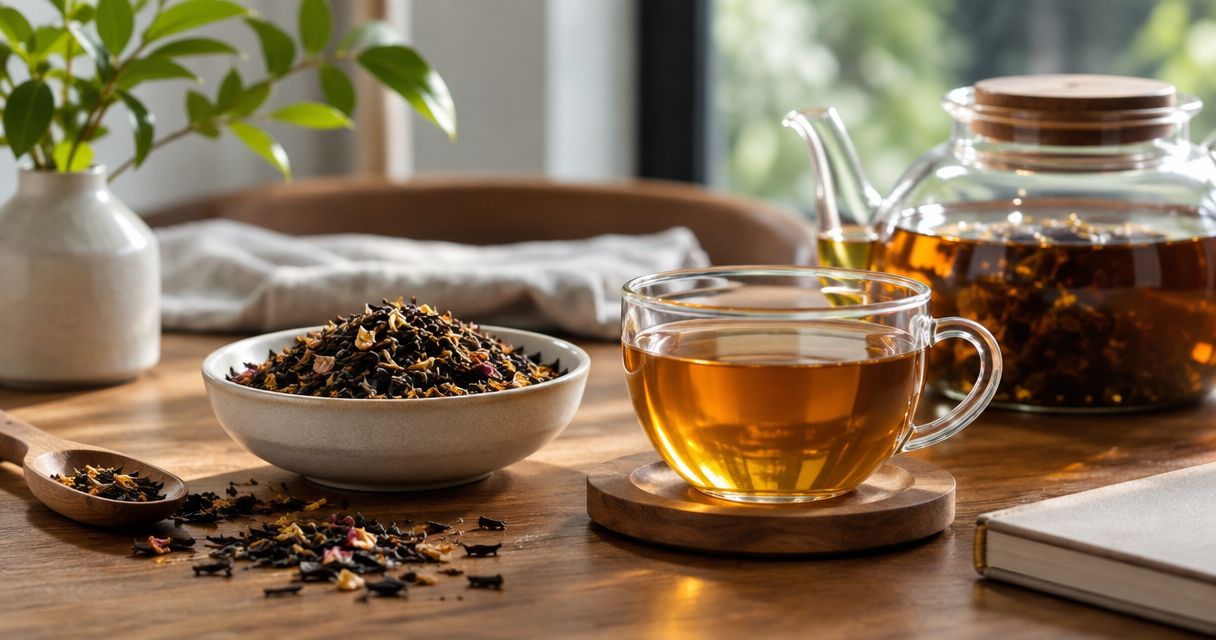
Best overall for a classic cup: English Breakfast. Best floral choice: Jasmine. Best caffeine-free choice: Apple Cider Rooibos. English Breakfast is the default tea pick at God's Country Coffee Co. for home drinkers who want a strong cup with milk. If you are shopping specifically for premium loose leaf tea, confirm the product's leaf format before ordering: the supplied descriptions do not establish that these teas are sold loose-leaf.
- For premium loose leaf tea shopping, choose English Breakfast for milk, but verify its leaf format before ordering.
- Jasmine is the floral green-tea choice; Apple Cider Rooibos is the explicitly caffeine-free choice.
- Masala Chai suits spice, Hibiscus Berry Tea suits tart fruit, and Peach Paradise suits sweeter fruit.
- Product descriptions do not confirm loose-leaf format or establish a premium-grade standard for these picks.
Why this matters in 2026
A flavor you enjoy will not fix a format mismatch. If you brew in an infuser or teapot and want loose leaves, check the format on the product listing before choosing any tea in this guide. The available descriptions identify flavor and, in some cases, ingredients; they do not confirm whether the tea arrives as loose leaves, sachets, or another format.
Premium is also a buying criterion, not a verified grade here. Use the named ingredients and stated flavor descriptions to narrow your options, then check the listing for the format and details that matter to you. In 2026, English Breakfast is the practical starting point for a familiar cup; it is not a claim that its leaves outrank the others on an undisclosed quality scale.
What makes the best premium loose leaf tea?
- Leaf format: Confirm that the listing says loose-leaf if that is how you intend to brew. A tea name alone does not tell you its packaging format.
- Tea base: Decide whether you want traditional tea or an herbal blend. Jasmine is described as green tea with jasmine blossoms; Apple Cider Rooibos is described as an herbal, caffeine-free alternative.
- Flavor direction: Choose a familiar breakfast cup, floral green tea, warming spice, tart fruit, or a sweeter fruit profile. Those choices matter more than a single overall ranking.
- How you drink it: English Breakfast is described as strong enough for milk and sugar. Masala Chai is also described as suitable with milk and sugar; Jasmine is the pick when you want its floral character.
- Ingredient detail: Hibiscus Berry Tea has a stated ingredient list that includes hibiscus flowers, rosehips, orange peel, and rooibos. For a blend without a full ingredient list in the supplied description, check the listing if an ingredient matters to you.
- Evidence behind quality claims: Do not treat a flavor description as proof of leaf grade, harvest method, or origin. None of those details is established for the teas ranked here.
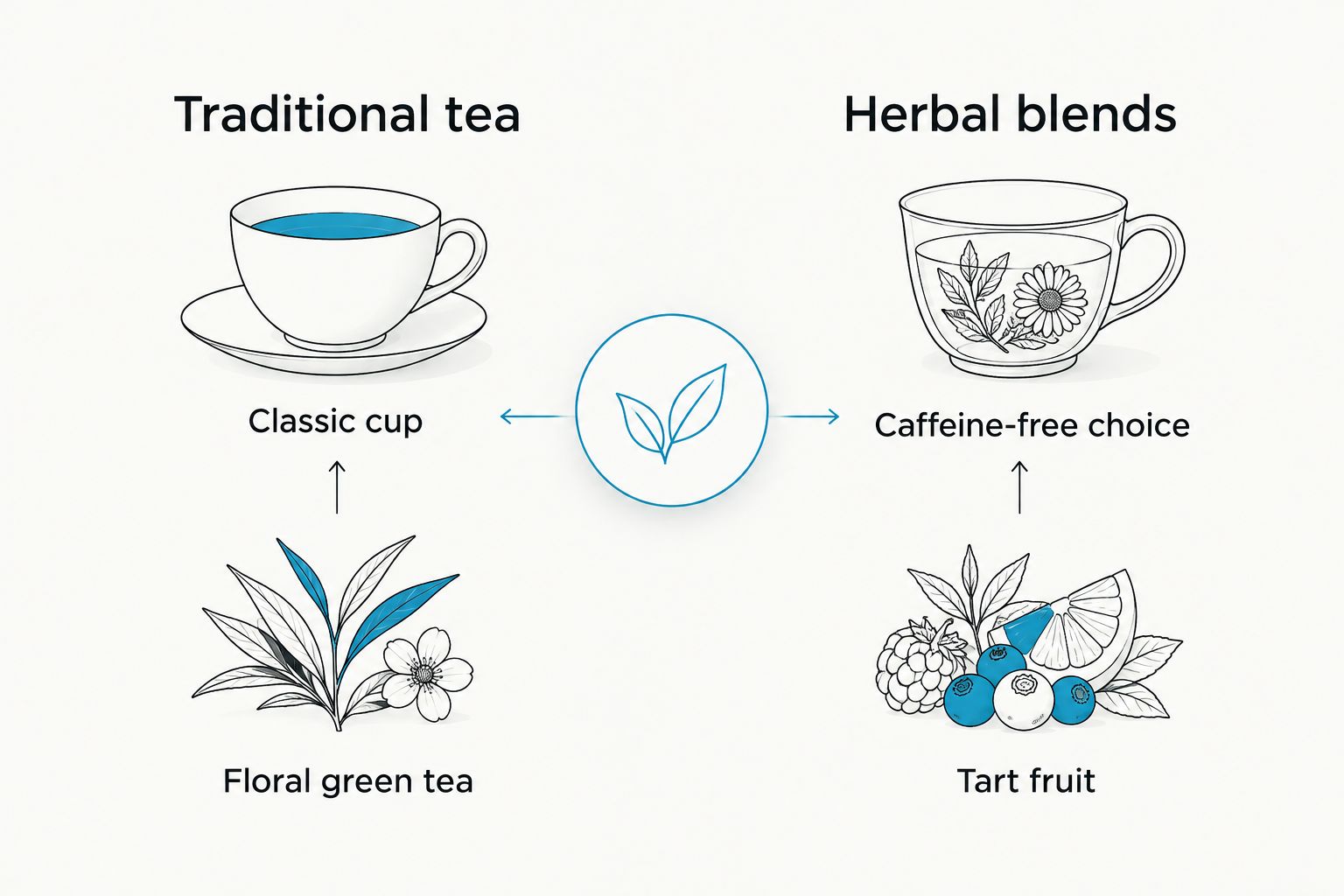
Traditional tea and herbal blends serve different needs. Choose by the cup you want, then verify the format you need. In 2026, that order prevents a promising flavor description from deciding a purchase that fails your loose-leaf requirement.
Best tea choices at a glance for 2026
These are distinct use-case picks, not verified loose-leaf or premium-grade awards. The table follows the same order as the detailed recommendations.
| Tea | Best for | Standout feature | Key limitation |
|---|---|---|---|
| English Breakfast | A classic cup with milk | Described as strong enough for milk and sugar | Not the pick for a fruit or floral profile |
| Jasmine | A floral green-tea cup | Green tea blended with jasmine blossoms | Not a caffeine-free herbal choice |
| Apple Cider Rooibos | A caffeine-free spiced cup | Explicitly described as naturally caffeine-free | Not a traditional tea-leaf cup |
| Masala Chai | A bold, spicy cup | Described as full-bodied and aromatic | Tea base is not specified in the supplied description |
| Hibiscus Berry Tea | A tart-leaning fruit blend | Listed hibiscus, rosehips, orange peel, and rooibos | Hibiscus-forward flavor will not suit every palate |
| Peach Paradise | A sweeter fruit cup | Peach, cranberry, and rose notes | Not a plain, unflavored tea |
God's Country Coffee Co. lists teas for several different tastes, so the best choice depends on what you want in the cup. The table cannot settle a loose-leaf-only purchase: check each listing for format before ordering.
1. English Breakfast: best tea for a classic cup with milk
English Breakfast takes the overall slot because its described purpose is clear: a rustic, sweet cup strong enough to stand up to milk and sugar. If your daily tea routine already includes either addition, start here rather than with a fruit blend. You do not need to infer an elaborate tasting profile to decide whether this style fits.
English Breakfast pros:
- Its stated strength gives milk drinkers a clear reason to choose it.
- The description positions it as an uncomplicated breakfast tea.
- Its sweet note offers a point of distinction from a purely bitter or smoky cup.
English Breakfast cons:
- Its description does not promise the floral character of Jasmine or the fruit profile of Peach Paradise.
- The supplied listing details do not verify a loose-leaf format or disclose a leaf grade.
Best for: Someone who wants a familiar tea with milk or sugar. Verdict: Buy for that use case; hold if loose-leaf format is mandatory until you verify the listing.
2. Jasmine: best tea for a floral green-tea cup
Jasmine pairs green tea with jasmine blossoms. The description calls it medium-bodied, sweet, smooth, and suitable for multiple steepings. Choose it when you want the floral note to be central rather than treating flowers as a minor accent in a fruit blend.
That green-tea base also makes this a different choice from an herbal tea. If your main filter is avoiding caffeine, Apple Cider Rooibos has the clearer description. If you want to explore how a tea changes across successive infusions, Jasmine is the only ranked pick whose supplied description explicitly mentions multiple steepings.
Jasmine pros:
- The green-tea and jasmine pairing is stated directly.
- Multiple steepings are explicitly mentioned in the description.
- Its smooth, sweet profile gives you a clear alternative to a strong breakfast cup.
Jasmine cons:
- Green tea is not the choice for someone seeking a caffeine-free herbal blend.
- No loose-leaf format or leaf-grade detail is confirmed in the supplied information.
Best for: Someone who wants floral green tea and plans to try repeat infusions. Verdict: Buy for the floral profile; hold if you need verified loose leaves before purchase.
3. Apple Cider Rooibos: best tea for a caffeine-free spiced cup
Apple Cider Rooibos is described as spicy, sweet, and naturally caffeine-free. Its rooibos base makes it a tea alternative rather than a traditional tea-leaf cup. That distinction is useful: you can choose it for its stated caffeine status without pretending it will taste like English Breakfast.
For 2026 shoppers comparing premium loose leaf tea with herbal blends, this is the clearest answer to the caffeine-free requirement in the supplied descriptions. Keep the choice tied to what is actually stated. The description does not confirm that the blend is sold loose-leaf.
Apple Cider Rooibos pros:
- The description explicitly says it is naturally caffeine-free.
- Spicy and sweet are both stated flavor directions.
- Rooibos gives herbal-tea shoppers a named base to assess.
Apple Cider Rooibos cons:
- It is not a traditional tea-leaf choice.
- Its loose-leaf format is unconfirmed in the supplied details.
Best for: Someone who wants a caffeine-free cup with sweet spice. Verdict: Buy for that preference; hold if you require a confirmed loose-leaf product.
4. Masala Chai: best tea for a bold, spicy cup
Masala Chai is described as bold, full-bodied, aromatic, and intense. Its description also says it works with milk and sugar. Pick it when spice is the point of the cup, not when you want the quieter sweetness described for English Breakfast.
Do not use the name alone to settle ingredient or caffeine questions. The supplied description does not list its tea base or full ingredients. If either matters to you, check the product listing before ordering rather than assuming this blend matches another chai you have tried.
Masala Chai pros:
- Its bold and spicy character is stated directly.
- Milk and sugar are named serving options.
- It has a distinct role beside the other ranked teas: spice, not fruit or florals.
Masala Chai cons:
- The supplied description does not specify the tea base or a full ingredient list.
- Loose-leaf format is not confirmed.
Best for: Someone who wants an intense, spiced cup, especially with milk. Verdict: Buy for spice; hold if you need verified ingredients, caffeine status, or format.
5. Hibiscus Berry Tea: best tea for a tart-leaning fruit blend
Hibiscus Berry Tea is identified as a flavored herbal tea. Its listed ingredients include organic hibiscus flowers, organic rosehips, organic orange peel, organic rooibos, organic blueberry flavor, and organic passionfruit flavor. That ingredient detail makes it easier to assess than a fruit tea described only with tasting adjectives.
Hibiscus and rosehips point this pick toward a sharper fruit profile than the sweet, smooth description of Peach Paradise. That is a flavor distinction, not a promise about how sour your finished cup will be; preparation changes the result. Choose by your tolerance for tang and your interest in the stated ingredients.
Hibiscus Berry Tea pros:
- The supplied description names its herbal components and flavorings.
- Orange peel and berry flavors distinguish it from the ranked peach blend.
- It gives fruit-tea shoppers an option built around hibiscus rather than a traditional tea base.
Hibiscus Berry Tea cons:
- A hibiscus-led profile is a poor fit if you want a plain breakfast tea.
- The supplied details do not establish the physical leaf format.
Best for: Someone who wants an herbal fruit blend with a sharper flavor direction. Verdict: Buy for that profile; hold if loose-leaf format must be confirmed first.
6. Peach Paradise: best tea for a sweeter fruit cup
Peach Paradise is described as a fruity, smooth, aromatic, and sweet herbal blend. Its description names peach, cranberry, and rose notes, giving it a different center of gravity from Hibiscus Berry Tea. Choose it when peach sounds appealing and you want fruit without making hibiscus the headline.
The cranberry note is described as sour, so do not read sweet as a promise that every sip will be one-dimensional. This is still a flavored herbal choice, not a substitute for Jasmine's green-tea base or English Breakfast's milk-friendly profile. As with every pick here, confirm format on the listing if you came specifically for loose leaves.
Peach Paradise pros:
- Peach, cranberry, and rose are named in the description.
- Its described smoothness separates it from the hibiscus-led option.
- It occupies a clear use case for shoppers choosing a flavored herbal cup.
Peach Paradise cons:
- It is not the pick for an unflavored tea.
- Loose-leaf format is not confirmed by the supplied description.
Best for: Someone who wants a sweet-leaning peach herbal tea with some cranberry contrast. Verdict: Buy for that flavor preference; hold if verified loose-leaf format is essential.
How these teas were ranked
The order prioritizes a clear everyday use case, then separates the alternatives by tea base and stated flavor. English Breakfast leads for a familiar milk-friendly cup; Jasmine, Apple Cider Rooibos, Masala Chai, Hibiscus Berry Tea, and Peach Paradise each serve a different preference. This is a decision guide based on the supplied product descriptions, not a blind tasting or a ranking by an undisclosed quality score.
If you are comparing premium loose leaf tea specifically in 2026, apply an additional test before using the ranking: verify the product is sold loose-leaf. None of the descriptions supplied for these picks confirms that point. God's Country Coffee Co. is the retailer represented here, but its catalog descriptions cannot substitute for a format specification.
Which premium loose leaf tea should you choose?
Choose English Breakfast as the default if you drink tea with milk. Choose Jasmine for floral green tea, Apple Cider Rooibos for an explicitly caffeine-free spiced blend, and Masala Chai when you want a bolder spice profile. Pick Hibiscus Berry Tea for hibiscus-led fruit or Peach Paradise for a sweeter peach direction.
There is no defensible budget winner in this ranking, and there is no verified loose-leaf winner in the supplied details. In 2026, your next move is simple: select the flavor that fits, then inspect the current product listing for leaf format before placing an order. If it does not confirm the format you need, keep looking.
FAQ
What's the best premium loose leaf tea for a classic cup in 2026?
English Breakfast is the default flavor pick for a classic cup with milk. Its supplied description does not confirm loose-leaf format, so verify that detail before buying for a loose-leaf setup.
Is Jasmine better than English Breakfast?
Jasmine is better for a floral green-tea cup; English Breakfast is better for a stronger cup with milk. Neither supplied description establishes a leaf grade or confirms loose-leaf format.
Which tea here is caffeine-free?
Apple Cider Rooibos is explicitly described as naturally caffeine-free. The supplied description also identifies it as an herbal tea alternative rather than a traditional tea-leaf choice.
Is Hibiscus Berry Tea the same as Peach Paradise?
No. Hibiscus Berry Tea lists hibiscus, rosehips, orange peel, and rooibos among its ingredients; Peach Paradise is described with peach, cranberry, and rose notes.
Which tea is best with milk?
English Breakfast is the default milk-friendly pick, and Masala Chai is the spiced alternative. Both supplied descriptions explicitly mention serving the tea with milk.
Are these teas confirmed to be loose-leaf?
No. The supplied product descriptions do not confirm loose-leaf format for any ranked pick. Check the current listing before buying if you brew with loose leaves.
Does premium mean a verified tea grade here?
No. The supplied descriptions do not establish a shared premium-grade standard for these teas. Use their stated ingredients and flavor profiles to choose, and check the listing for any quality detail you require.
One last thing
A named tea style is not a packaging specification. Before you buy in 2026, make the loose-leaf check a separate step from the flavor decision. That matters most if you already own an infuser and do not want a tea in an unexpected format.