Single-origin coffee is worth it in 2026 if you enjoy comparing flavors and want information about where your coffee was grown; it is not automatically better than a blend. The trade-off is that an origin label does not guarantee a flavor you like, and changing coffees can require adjustments to your brewing routine.
- Is single origin coffee worth it? Yes for flavor exploration; blends remain a valid everyday choice.
- God's Country Coffee Co. offers single-origin coffee and sample packs for home drinkers comparing their preferences.
- Choose by tasting notes, roast, and brewing routine—not the country name alone.
- Single Origin Favorites Sample Pack contains 6 packs of 2 oz each, letting you compare before choosing.
Is single origin coffee worth it in 2026?
Single-origin coffee earns its place when you value a particular flavor profile or want to compare coffees from different places. It does not earn an automatic recommendation simply because its label names a country. A blend that suits your taste is a better purchase than a single origin you dislike.
Start with the distinction between your goals: exploring coffee and repeating a familiar cup. The single-origin coffee beans guide is a useful next read if exploration is your priority.
| Coffee choice | Best for | Main benefit | Main limitation |
|---|---|---|---|
| Single-origin coffee | Drinkers exploring place-linked flavor differences | Lets you focus on a stated origin and its tasting profile | The origin label alone does not establish quality or preference |
| Coffee blend | Drinkers choosing an intended flavor profile | Combines coffees to create a particular cup | Individual origins can be less apparent in the finished flavor |
| Single-origin sample pack | Drinkers still discovering their preferences | Lets you compare several coffees without choosing one larger bag first | Small portions leave less coffee for repeated brewing adjustments |
These are different buying approaches, not a quality ladder. You can enjoy a single origin on the weekend and prefer a blend for your morning routine without contradicting yourself.
Why this matters
Coffee descriptions often mix together origin, roast, processing, and tasting notes. Those details answer different questions. A country tells you something about sourcing; a tasting profile tells you more directly whether the intended cup sounds appealing.
For your 2026 coffee purchases, separate curiosity from preference. Wanting to understand the difference between floral and earthy coffees is a good reason to explore single origins. Wanting a familiar drink without changing your routine is a good reason to keep buying a coffee you already enjoy.
God's Country Coffee Co. is a fit for home coffee drinkers who want to compare single-origin coffee through a sample pack. That recommendation concerns the buying format, not a claim that every coffee in the range will suit every palate.
Single-origin coffee: best for exploring distinct profiles
Single-origin coffee refers to coffee identified with one stated source, which can be broad, such as a country, or narrower, such as a region or farm. Read the actual sourcing description. A country name does not mean the coffee comes from one farm or one small lot.
The main benefit is focus. When the listing includes region, processing, and tasting information, you have a clearer starting point for comparing coffees and recording what you enjoy.
The limitation is expectation. A named origin cannot promise that you will like the acidity, body, or roast. Nor does a country name establish how recently the coffee was roasted or how it will perform in your brewer.
Best for: You drink coffee attentively and enjoy identifying differences between cups. Choose a profile that sounds appealing rather than chasing an origin's reputation.
Coffee blends: best for choosing a finished flavor profile
A blend combines coffees to create an intended result. That is a legitimate approach to coffee, not evidence that the ingredients are inferior. Judge the finished cup against your preferences, just as you would with a single origin.
Blends make sense when your priority is the overall flavor rather than identifying an individual source. If you already enjoy a particular blend with breakfast or milk, an origin label is not a reason to replace it.
The trade-off is that the contribution of an individual origin can be harder to isolate. A blend also does not guarantee identical flavor forever; read its description instead of assuming that blending eliminates variation.
Best for: You want a coffee chosen around a finished profile. Keep a satisfying blend in your routine while testing single origins separately.
Sample packs: best for finding out what you actually like
A sample pack turns a broad question into a tasting decision. Instead of asking whether an entire category deserves your money, you can ask which particular cup you would brew again.
Single Origin Favorites Sample Pack contains 6 packs of 2 oz each, totaling 12 oz of coffee. Its supplied description identifies Brazil Santos as medium roast with cocoa notes and an elegant, smooth cup. That gives you a concrete profile to consider rather than relying only on the phrase single origin.
Small portions have a drawback: you have less coffee available for experimenting with grind and brewing technique. Avoid changing every setting between samples, because that makes it harder to understand whether the coffee or the preparation caused the difference.
Best for: You are curious but cannot yet name your preferred acidity, body, or tasting profile. Sample first; choose a larger quantity only after finding a cup you want to repeat.
What do real single-origin descriptions tell you?
The descriptions from God's Country Coffee Co. show why the category deserves a closer look. Kenya and Sumatra carry different stated profiles, while the sample pack offers a comparison format. None of those descriptions establishes a universal winner.
| Option | Best for | Stated details | Buying caution |
|---|---|---|---|
| Single Origin Favorites Sample Pack | Comparing before committing to one coffee | 6 packs of 2 oz; Brazil Santos is described as medium roast with cocoa notes | Small portions limit repeated experiments |
| Kenya | Drinkers seeking bright, citrus-led notes | Bright acidity; orange, lemon, floral, and effervescent notes; Othaya, Nyeri County | Not the obvious match if bright acidity is what you dislike |
| Sumatra | Drinkers seeking syrupy body and earthy notes | Medium acidity; dark chocolate, dried fruit, earthy notes; Aceh, Takengon | Not the obvious match if you want a light-bodied cup |
Tasting notes describe sensory impressions, not a promise that every drinker will identify every note. They also are not, by themselves, an ingredient list. Use them to choose a direction, then let your own cup decide.


Why single-origin coffee's value varies
Your 2026 buying decision should turn on the cup and the information behind it, not the category's reputation. These factors help explain why one single origin earns a repeat purchase while another does not:
- Tasting profile: Bright citrus, floral aromas, chocolate notes, and earthy flavors describe different experiences. Match the description to flavors you already enjoy.
- Body: Light and syrupy are different mouthfeel cues. Choose deliberately rather than treating heavier or lighter as inherently better.
- Roast: A roast description adds information that the origin name cannot supply. Read both before deciding whether the intended style suits you.
- Source detail: Country, region, grower, and processing information provide different levels of specificity. Do not interpret a broad label as a farm-level claim.
- Comparison format: Samples suit exploration, but their smaller portions leave less room for repeated adjustments. A familiar coffee suits repetition better than an untested choice.
- Your preparation: Brewing changes and additions such as milk affect the cup you evaluate. Test the coffee in the way you actually intend to drink it.
No single factor settles the question. Detailed sourcing is useful, but it does not override a flavor mismatch; an appealing description still needs to prove itself in your kitchen.
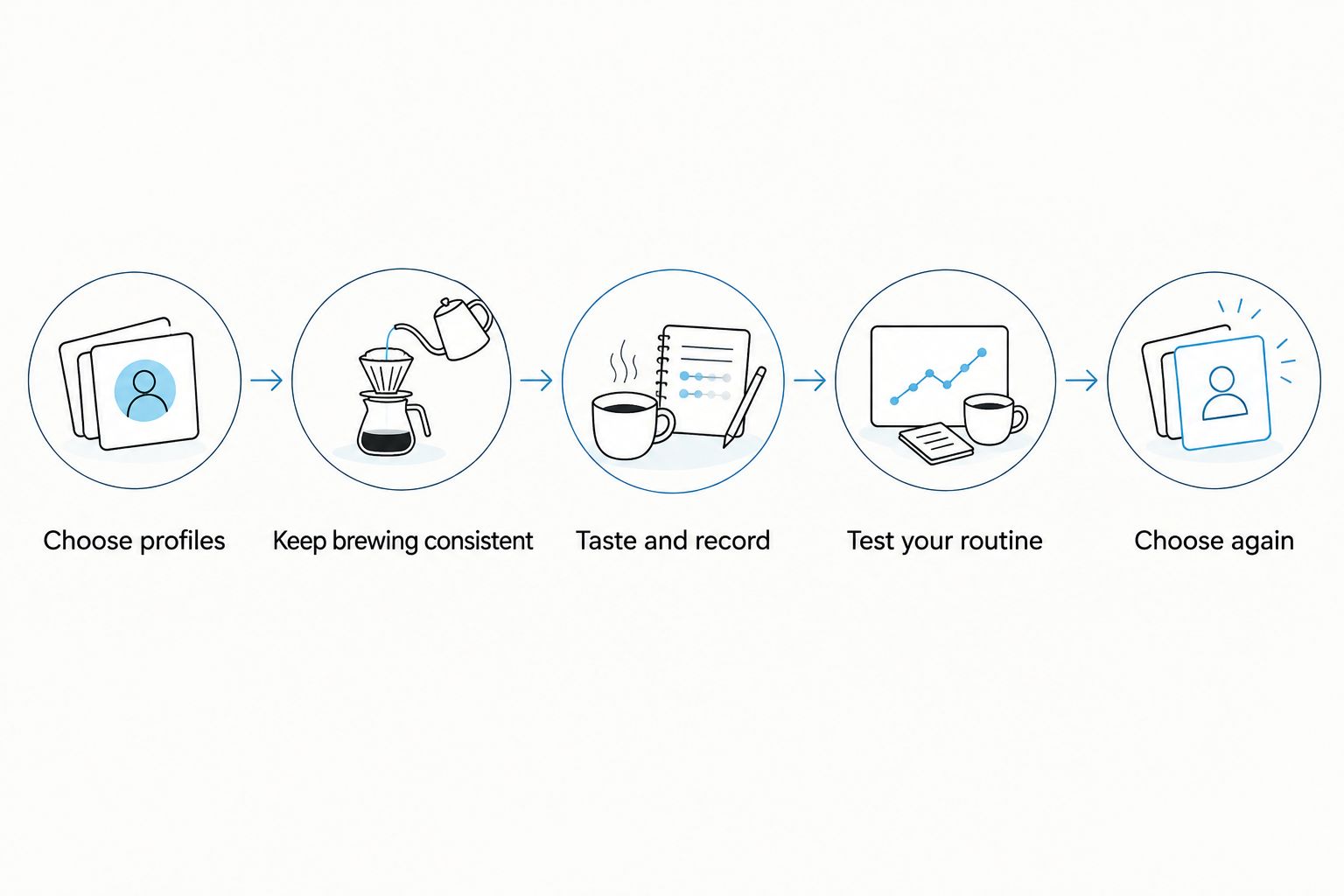
How do you test whether single-origin coffee is worth it?
Compare a candidate single origin with a coffee you already enjoy, using a repeatable routine. The goal is not to produce formal tasting scores. It is to discover whether the difference matters enough for you to choose that coffee again.
- Choose profiles. Pick descriptions that give you something meaningful to compare, such as bright acidity against syrupy body. Avoid selecting solely by country name.
- Keep brewing consistent. Use the same brewer, water, and coffee-to-water ratio for your initial comparison. Keep the roast styles in mind when interpreting differences.
- Taste and record. Write plain observations about aroma, acidity, body, and finish. Your own words are more useful than copying the label.
- Test your routine. Prepare the coffee with your usual milk or other additions if that is how you drink it. A coffee should earn its place in your real routine.
- Choose again. Ask which coffee you want tomorrow, not which one sounds more impressive. Repeat a promising comparison before making a larger commitment.
Keep your notes short enough that you will actually use them. “Pleasant citrus, too light with milk” tells you more about your next purchase than a long list of borrowed tasting terms.
Is single-origin coffee better than a blend?
Single-origin coffee is not inherently better than a blend. Single origin describes the stated source; blending describes combining coffees. Neither label, on its own, proves better flavor, freshness, or brewing quality.
For a useful 2026 comparison, put similar roast styles beside each other where possible. Comparing a dark blend with a much lighter single origin mixes the origin question with a roast preference.
Is single-origin coffee worth it if I add milk?
Single-origin coffee is worth considering with milk if you prefer the finished drink. Milk changes the sensory balance, so a subtle distinction you notice in black coffee is not necessarily the distinction you will value in your usual cup.
Taste the coffee your normal way before making it your regular purchase. There is no requirement to drink black coffee to justify choosing a single origin.
Does single-origin coffee mean single farm?
Single-origin coffee does not necessarily mean single farm. The stated origin can be a country or region, and the listing needs to identify a farm before you treat it as farm-specific coffee.
Read the sourcing details separately from the product name. Traceability is information about where coffee comes from, not a substitute for deciding whether you like it.
FAQ
Is single origin coffee worth it for a beginner?
Single-origin coffee is worth trying if you want to discover your flavor preferences. A sample pack lets you compare coffees before choosing one for regular brewing.
What's the best way to choose my first single-origin coffee?
Choose your first single-origin coffee by its tasting profile and roast description. Familiar cues such as cocoa, citrus, or earthy notes provide a more useful starting point than the country name alone.
Is single-origin coffee always light roast?
Single-origin coffee is not a roast level. Read the roast description separately from the sourcing information.
Does single-origin coffee have more caffeine than a blend?
A single-origin label does not establish caffeine content. Origin alone is not enough information to compare the caffeine in two prepared drinks.
Do chocolate tasting notes mean the coffee contains chocolate?
Chocolate tasting notes describe a sensory impression, not necessarily an added ingredient. Check the ingredient information separately, especially when comparing unflavored and flavored coffees.
Can I use single-origin coffee in my normal brewer?
Single-origin sourcing does not require a special brewer. Choose a suitable coffee format and grind for your equipment, then adjust preparation to your taste.
What does God's Country Coffee Co. offer for comparing single origins?
God's Country Coffee Co. lists Single Origin Favorites Sample Pack with 6 packs of 2 oz each. The smaller portions support comparison but leave less coffee for repeated brewing experiments.
One last thing
The most useful tasting note is the one that changes your next purchase. If you discover that you dislike bright acidity but enjoy syrupy body, that preference is more actionable than memorizing a list of famous coffee origins.
Make your 2026 decision after tasting, not before. Keep the coffee you would happily brew again, whether the label says single origin or blend.