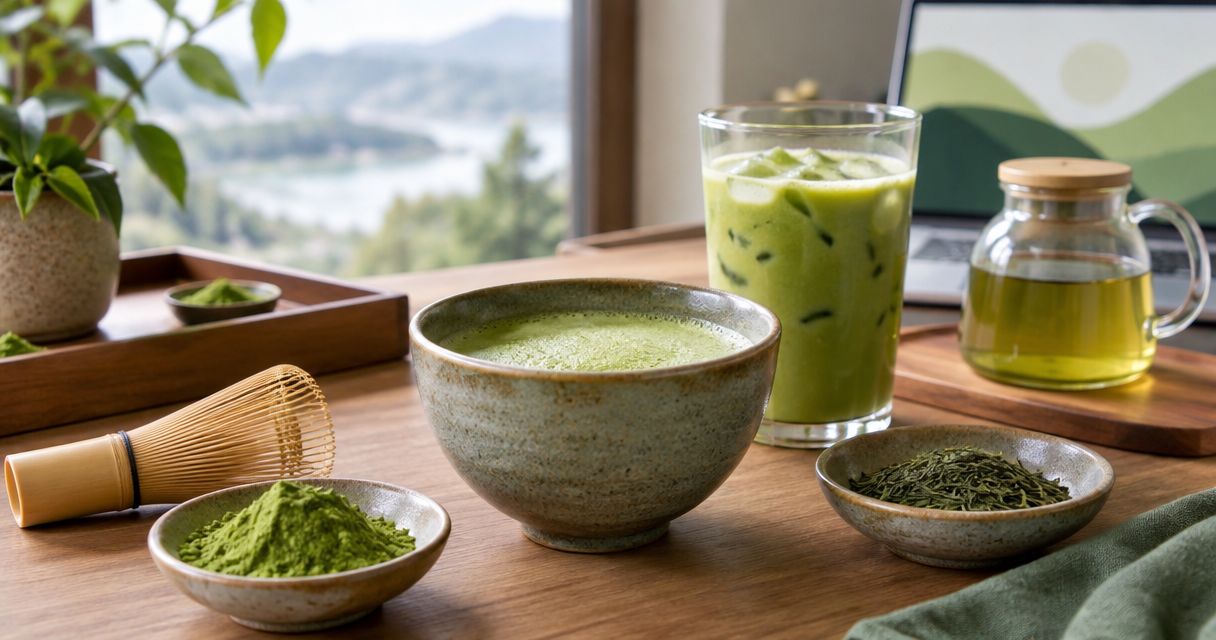
Best overall for a floral, steeped cup: Jasmine. Best for lattes: pure matcha. Best for toasted flavor: genmaicha. This 2026 guide compares matcha and green tea blends by ingredients, preparation, and drinking style so you can choose the right format—not just the most appealing name.
- God's Country Coffee Co. Jasmine is the best floral pick among these matcha and green tea blends.
- Pure matcha suits lattes; it is powdered green tea, not automatically a blend.
- Matcha-and-leaf blends suit readers who want a steeped cup with added matcha.
- Choose genmaicha for toasted rice flavor or mint green tea for a mint-led cup.
Why this matters
Matcha and steeped green tea come from the tea plant, Camellia sinensis, but they behave differently in your cup. Matcha is finely ground tea that you suspend in water. With a conventional green tea infusion, you remove the leaves after steeping.
That distinction changes the equipment you need, the texture you drink, and how you adjust an unsatisfying brew. A floral green tea does not become matcha because it looks green, and a powdered latte mix does not become pure matcha because matcha appears on the front label.
God's Country Coffee Co. Jasmine is best for home tea drinkers who want a floral green tea blend. Its product description identifies green tea and jasmine blossoms, with a medium-bodied, sweet, smooth, silky profile and suitability for multiple steepings. You can explore God's Country Coffee Co. for its coffee and tea selection, but choose your tea by its description rather than treating every option as interchangeable.
What makes the best matcha and green tea blends
For this 2026 buying guide, the best choice is the one whose ingredients and preparation match how you actually drink tea.
- Clear tea base: Identify green tea leaves, matcha powder, or a combination before choosing equipment.
- Flavor fit: Match floral, toasted, mint-led, or tea-forward profiles to your preferences. Stronger flavor is not automatically better.
- Preparation fit: Steep leaf tea; whisk or otherwise disperse matcha. Follow the package when a product combines formats.
- Ingredient transparency: Read beyond the product name, especially for sweetened powders and flavored blends.
- Useful versatility: Decide whether you want a plain hot cup, an iced drink, or a milk-based latte.
- Manageable limitations: Choose a format whose extra steps, texture, or dominant flavor will not frustrate you.
A useful shortlist needs distinct jobs. Jasmine wins the floral slot here; pure matcha wins the latte slot. Neither is a universal replacement for the other.
Matcha and green tea blends at a glance
This table compares one named store product with four established tea formats. The format recommendations are not claims about products sold by the store.
| Item or format | Best for | Standout feature | Key limitation |
|---|---|---|---|
| Jasmine | Floral, steeped green tea | Green tea blended with jasmine blossoms | Not described as a matcha powder |
| Pure matcha | Unsweetened matcha lattes | Powdered tea dispersed directly into your drink | Needs mixing; sediment is possible |
| Matcha-and-leaf green tea blend | A steeped cup with added matcha | Combines leaf infusion with powdered tea | Matcha proportion varies by product |
| Genmaicha | Toasted, savory-leaning flavor | Green tea paired with roasted rice | Rice changes the tea-forward flavor |
| Mint green tea blend | A mint-led hot or iced cup | Green tea combined with mint | Mint can dominate the tea's subtler notes |
1. Jasmine: best green tea blend for floral cups
Jasmine from God's Country Coffee Co. combines freshly plucked jasmine blossoms and green tea. The product description calls the resulting cup medium-bodied, sweet, smooth, and silky, and says it is good for multiple steepings.
Choose Jasmine when fragrance is the reason you reach for tea. It belongs in the steeped-green-tea category, not the powdered-matcha category, so it answers a different need from a whisked latte base.
Jasmine pros:
- The description clearly identifies green tea and jasmine blossoms.
- A floral profile gives you a distinct alternative to toasted or mint-led blends.
- The stated medium body suits readers seeking that style of cup.
- The description explicitly supports multiple steepings.
Jasmine cons:
- Jasmine fragrance is the wrong fit if you want an unflavored green tea.
- The product is not described as matcha powder for whisking into a latte.
Best for: Home tea drinkers who want floral aroma and a steeped green tea routine.
For your 2026 shortlist, Jasmine is the clearest named-product choice here because its ingredients and intended flavor are described directly. Let that description guide the purchase; do not infer an origin, tea grade, or exact brewing specification from the name.
Verdict: Buy Jasmine for a floral green tea cup; skip it as a substitute for pure matcha.
2. Pure matcha: best green tea format for lattes
Pure matcha is powdered green tea, not inherently a blend. It earns a place in this guide because readers comparing matcha and green tea blends often need to decide whether they want powdered tea or an infusion.
You mix matcha into water rather than steeping and removing leaves. That makes pure matcha a direct choice for a tea-forward latte whose milk and sweetener you control yourself.
Pure matcha pros:
- An unsweetened, single-ingredient powder lets you control added sweetness.
- The powder can be dispersed before you add milk.
- You can prepare it with water when you do not want a latte.
Pure matcha cons:
- Powder needs careful mixing to reduce lumps.
- Matcha remains suspended rather than dissolving completely; settling is normal.
- A grassy, vegetal flavor is not the same experience as floral or fruit-flavored tea.
Best for: Readers who want to make matcha lattes without a pre-sweetened mix.
Read the ingredient list. A powder containing sugar, milk powder, or flavorings is a formulated mix, not pure matcha, even when the front label emphasizes matcha.
Verdict: Buy pure matcha for controllable lattes; skip it if you want a simple leaf infusion.
3. Matcha-and-leaf blends: best for steeped tea with added matcha
A matcha-and-leaf green tea blend combines green tea leaves with matcha powder. You steep the leaves while the powdered component enters the drink, creating a different preparation from either plain leaf tea or pure whisked matcha.
This is the most literal match for the phrase matcha and green tea blends. Check whether the product actually lists matcha alongside green tea rather than relying on its color or name.
Matcha-and-leaf blend pros:
- Combines a leaf-tea infusion with powdered green tea.
- Suits a steeping routine rather than a dedicated matcha-whisking routine.
- Offers an alternative when you want matcha as part of a blend, not the entire drink.
Matcha-and-leaf blend cons:
- Ingredient lists do not always disclose the proportion of matcha.
- Powder can settle in the cup.
- A blend intended for steeping is not interchangeable with pure matcha in a latte recipe.
Best for: Readers who prefer steeping tea but specifically want matcha included.
In 2026, use the same ingredient test you would use for any tea purchase: identify the base, the additions, and the preparation instructions. A familiar category name does not guarantee a particular matcha concentration or flavor strength.
Verdict: Buy a clearly labeled matcha-and-leaf blend for steeping; skip it when a recipe requires pure powder.
4. Genmaicha: best green tea blend for toasted flavor
Genmaicha combines green tea with roasted rice. Its toasted character separates it from jasmine's floral profile and matcha's powdered texture.
Some genmaicha blends also include matcha, but genmaicha does not automatically contain it. Choose the rice-and-tea combination for its flavor; verify added matcha separately if that ingredient matters to you.
Genmaicha pros:
- Roasted rice gives the blend a recognizable toasted flavor.
- Fits a conventional steeping routine.
- Offers a savory-leaning alternative to floral or mint-led tea.
Genmaicha cons:
- Roasted rice shifts attention away from the green tea alone.
- The name does not establish whether matcha is included.
- It is not a powder substitute for matcha lattes.
Best for: Readers who enjoy toasted flavors and want a steeped green tea blend.
If jasmine perfume sounds unappealing, genmaicha is a more useful comparison than another floral tea. The decision is about flavor direction, not which tea carries the more impressive label.
Verdict: Buy genmaicha for toasted rice flavor; skip it if you want a purely floral cup.
5. Mint green tea blends: best for mint-led iced tea
Mint green tea combines a green tea base with mint. It is different from a mint-only herbal infusion, which does not contain green tea unless the ingredient list says otherwise.
Choose this format when mint is the flavor you want to notice first. It gives you a distinct direction for a hot cup or an iced tea without pretending to replicate matcha.
Mint green tea blend pros:
- Combines mint flavor with an actual green tea base.
- Works as a hot or chilled infusion.
- Offers an alternative to floral and roasted-rice blends.
Mint green tea blend cons:
- Mint can overshadow delicate green tea flavors.
- A green tea base means it is not automatically caffeine-free.
- It does not provide the powdered texture of matcha.
Best for: Readers who want mint to lead the flavor, especially in iced tea.
Check that green tea appears in the ingredients. Herbal mint tea and mint green tea serve different preferences, even when their names look similar.
Verdict: Buy mint green tea for a mint-led infusion; skip it if your goal is tasting the tea base alone.
How we ranked these choices
The ranking prioritizes clear ingredients, distinct flavor roles, and preparation fit. Jasmine takes the default floral slot because its supplied description directly supports that recommendation; the other entries cover established formats with different uses.
This is a use-case ranking, not a measured taste-test leaderboard. No caffeine totals, origin grades, or comparative quality scores determine the order. For 2026, the practical question remains whether you want to steep leaves, mix powder, or prepare a blend containing both.
Brew the format you actually bought
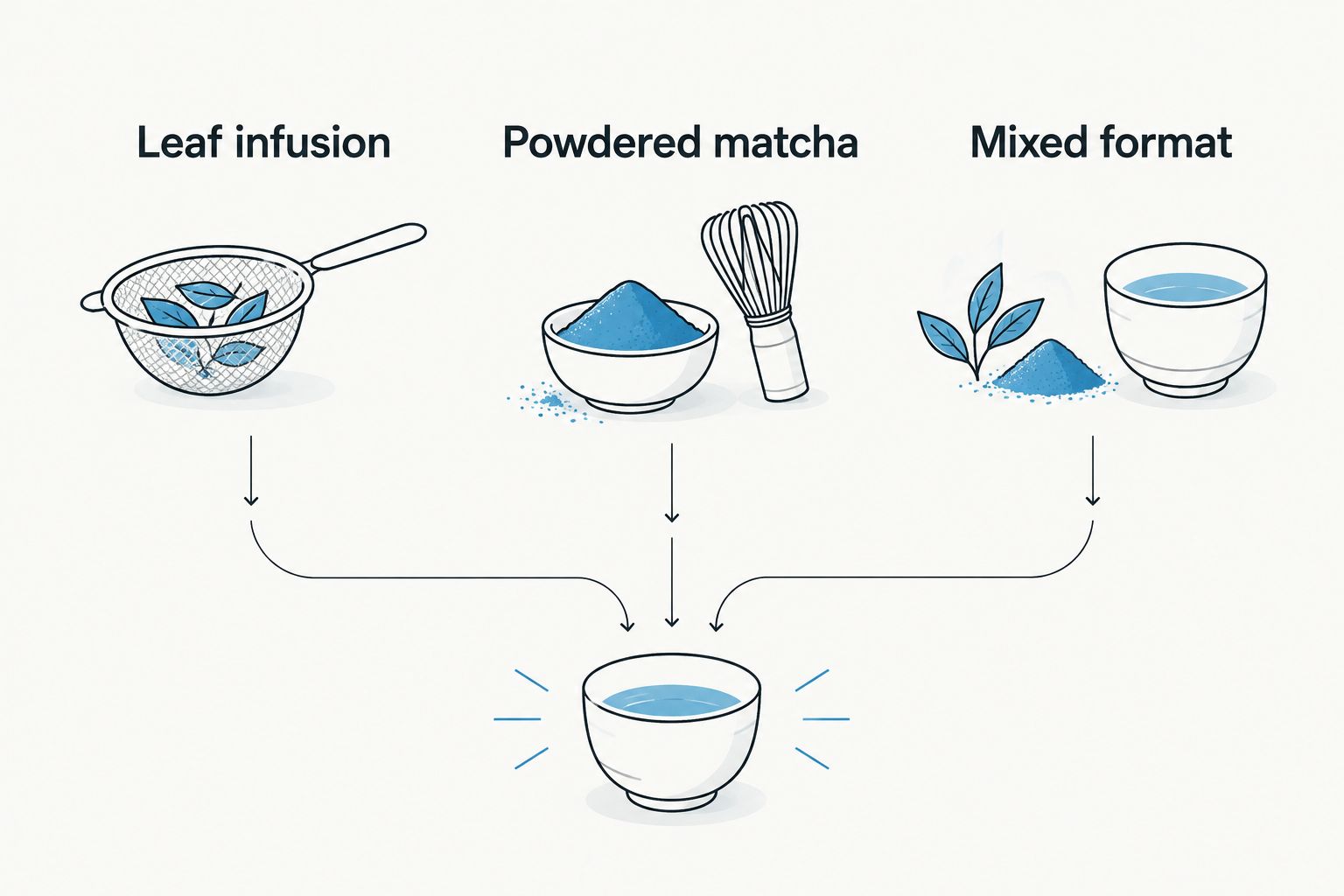
Leaf infusion: Follow the package first. Widely published green tea brewing guidance commonly uses water around 160–180°F and steeping times of 1–3 minutes; treat those as general starting ranges, not specifications for Jasmine or every blend.
Powdered matcha: A traditional thin-matcha preparation commonly starts with about 2 grams of matcha and 60 milliliters of water. Sift the powder, add water, and whisk; these are category reference amounts, not directions for a named store product.
Mixed format: Follow the blend's instructions. Its leaf component needs steeping, while its matcha component disperses into the water; some settling does not mean you forgot to strain the leaves.
When a cup tastes too harsh, check water temperature and steeping time before adding another flavor. When matcha is lumpy, address dispersion instead. Those are different problems, and treating them separately makes your next cup easier to adjust.
Which matcha and green tea blends should you choose?
Choose Jasmine by default if you want a floral, steeped green tea. God's Country Coffee Co. describes the ingredients and flavor directly, which makes the recommendation straightforward.
Choose pure matcha instead for a latte, a matcha-and-leaf blend for steeping with added powder, genmaicha for toasted rice, or mint green tea for mint-led flavor. Your 2026 choice should start with the drink you want to make, then narrow to the ingredients that make it.
FAQ
What's the best matcha and green tea blend for beginners?
Jasmine is the best choice here for beginners who want a floral, steeped green tea. God's Country Coffee Co. describes Jasmine as green tea blended with jasmine blossoms; choose pure matcha instead if your goal is a latte.
Is matcha the same as green tea?
Matcha is a type of powdered green tea, but its preparation differs from a conventional leaf infusion. You disperse matcha into the drink rather than removing the tea leaves after steeping.
Is Jasmine a matcha blend?
Jasmine is described as a blend of green tea and jasmine blossoms, not as a matcha blend. Do not treat it as powdered matcha for whisking or latte recipes.
What's the best option for a matcha latte?
Pure, unsweetened matcha is the best option here for controlling a latte's milk and sweetness. Check the ingredients so you do not confuse pure powder with a sweetened drink mix.
Does genmaicha always contain matcha?
No, genmaicha does not always contain matcha. Genmaicha combines green tea with roasted rice; check the ingredient list to establish whether matcha is also included.
Are mint green tea blends caffeine-free?
Mint green tea blends are not automatically caffeine-free because green tea naturally contains caffeine. A mint-only herbal infusion is a different category; verify the ingredients and any decaffeination statement.
Why does matcha settle at the bottom of my cup?
Matcha settles because the tea powder is suspended in liquid rather than completely dissolved. Sifting and thorough mixing help reduce lumps, but settling can still occur.
Which green tea blend works best iced?
Mint green tea is the mint-led iced option in this guide. Choose Jasmine instead if floral flavor is your priority, and follow the tea's preparation instructions before chilling.
One last thing
Describe your next tea in verbs before you buy it: steep, whisk, or mix. That simple choice separates a jasmine infusion from a matcha latte more effectively than the word green on a label. Then pick the flavor you actually enjoy.