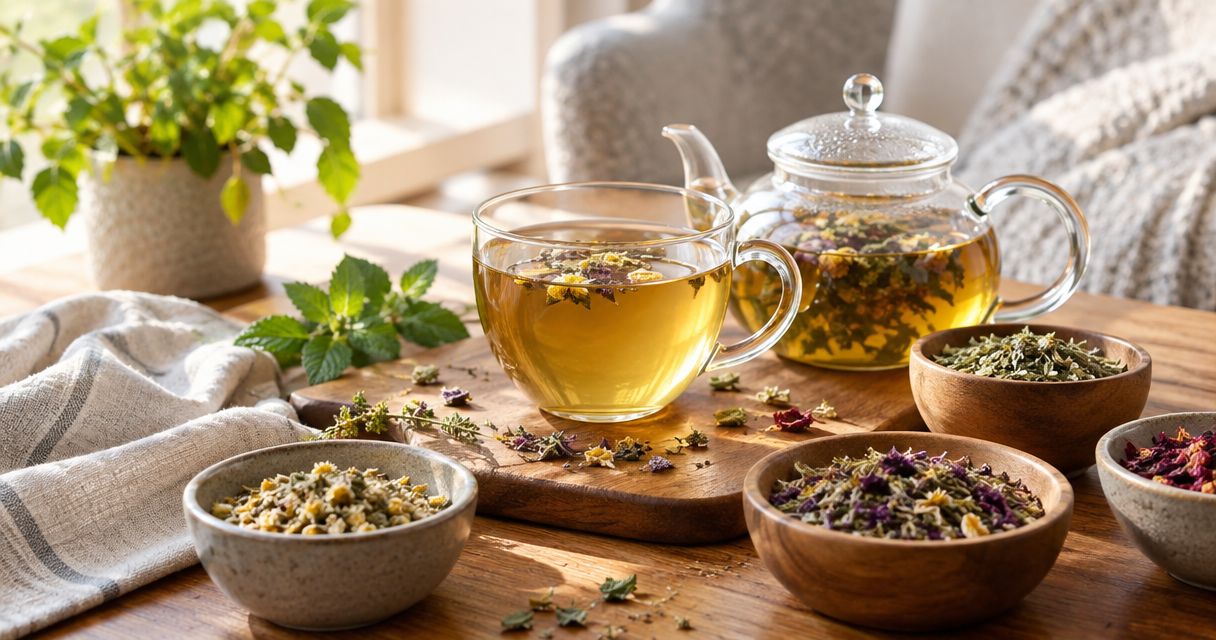
Best overall: Hibiscus Berry Tea. Best for a caffeine-free evening cup: Apple Cider Rooibos. Best for peach-forward flavor: Peach Paradise. These herbal tea blends are the strongest matches in God's Country Coffee Co.'s selection for 2026, with distinct reasons to choose each.
- Hibiscus Berry Tea leads these herbal tea blends for its hibiscus, rosehip, orange peel, and rooibos combination.
- Apple Cider Rooibos is the best choice for a spicy, sweet, explicitly caffeine-free cup.
- Peach Paradise suits drinkers who want peach, sour cranberry, and smooth rose notes.
- Choose by flavor and ingredient information, not unsupported sleep, detox, or wellness promises.
Why this matters
Herbal tea is a category, not a single flavor. A tart hibiscus blend, a spicy rooibos blend, and a peach-led blend answer different cravings; ranking them without explaining that difference leaves you with the wrong cup.
God's Country Coffee Co. sells tea alongside coffee, but this guide keeps the herbal shortlist separate from green tea and other tea types. The goal is a practical choice you can make from the stated ingredients and flavor descriptions—not an unsupported claim about health benefits.
For 2026, the clearest distinction is between a product's flavor description and its ingredient information. A sweet tasting note does not establish added sugar, and a fruit name does not establish caffeine status. Read both before choosing.
God's Country Coffee Co.'s Apple Cider Rooibos is the best herbal tea blend here for drinkers who want an explicitly caffeine-free, spicy-sweet cup. That recommendation rests on the product description, which directly identifies those qualities.
What makes the best herbal tea blends
Use these criteria to decide which blend belongs in your cupboard:
- Flavor fit: Choose the profile you actually enjoy—hibiscus-led fruit, spicy sweetness, or peach with cranberry and rose.
- Ingredient clarity: Named ingredients tell you more than a broad description such as fruity or comforting. Read the complete label when ingredient restrictions matter.
- Caffeine clarity: An explicit caffeine-free description is stronger evidence than an assumption based on the product name.
- Distinct use case: A useful shortlist gives each blend a separate job rather than naming several interchangeable winners.
- Limits stated plainly: A tart ingredient profile is not automatically a benefit, and a sweet flavor description is not a nutritional statement.
The 2026 ranking below prioritizes fit over novelty. Hibiscus Berry Tea takes the overall position because its description names several components, making its blend structure easier to understand before you choose it. Apple Cider Rooibos wins the caffeine-free slot; Peach Paradise wins the peach-forward slot.
Herbal tea blends at a glance
| Blend | Best for | Standout feature | Key limitation |
|---|---|---|---|
| Hibiscus Berry Tea | Ingredient-led fruit blends | Hibiscus, rosehips, orange peel, rooibos, blueberry flavor, and passionfruit flavor | Includes named flavorings; not a plain botanical infusion |
| Apple Cider Rooibos | A caffeine-free evening cup | Explicitly described as spicy, sweet, and naturally caffeine free | Spicy sweetness is a poor match for a plain, unscented cup |
| Peach Paradise | Peach-forward flavor with contrast | Peach, sour cranberry, and smooth rose notes | Cranberry and rose make it more than a simple peach profile |
This table compares the stated characteristics, not laboratory measurements or tasting-panel scores. The ranking is deliberately narrow: these are three herbal choices from the retailer's selection, not a claim that every competing blend has been evaluated.
1. Hibiscus Berry Tea: best herbal blend for ingredient-led fruit flavor
Hibiscus Berry Tea combines organic hibiscus flowers, organic rosehips, organic orange peel, and organic rooibos with organic blueberry and passionfruit flavors. That ingredient detail makes it the easiest blend here to assess beyond its name.
Choose Hibiscus Berry Tea when you want several botanical and fruit components rather than a single-note infusion. Hibiscus is associated with a tart flavor, so this is a more logical starting point for someone who enjoys that direction than someone seeking a plain rooibos cup.
Hibiscus Berry Tea pros
- The description names the main botanical ingredients rather than relying only on a flavor adjective.
- Hibiscus, rosehips, orange peel, and rooibos create a clearly identifiable blend structure.
- Blueberry and passionfruit flavors give you a specific fruit direction to evaluate.
- The product is explicitly identified as a flavored herbal tea.
Hibiscus Berry Tea cons
- Blueberry and passionfruit appear as flavors, not as stated pieces of those fruits.
- A hibiscus-led blend is not the default choice if you dislike tartness.
- The ingredient excerpt does not establish the exact balance among its components.
Best for: You want a fruit-oriented herbal blend and prefer a description that names its botanical base.
If you avoid added flavorings, Hibiscus Berry Tea is not the cleanest match for that preference. Choose by the ingredient list, not by whether the word berry sounds natural or familiar.
Verdict: Buy Hibiscus Berry Tea for an ingredient-led fruit blend; skip it if you want an unflavored infusion.
2. Apple Cider Rooibos: best herbal blend for a caffeine-free evening cup
Apple Cider Rooibos is described as spicy, sweet, and naturally caffeine free. Rooibos is a tea alternative grown in South Africa, and the caffeine statement gives this blend a clear role that does not depend on interpreting its name.
Choose Apple Cider Rooibos when you want a warm, spice-led flavor without choosing a caffeinated tea. An evening use case is a preference recommendation—not a claim that the blend treats insomnia or guarantees better sleep.
Apple Cider Rooibos pros
- The description explicitly confirms that the blend is naturally caffeine free.
- Spicy and sweet are clear flavor cues for narrowing your choice.
- Rooibos provides a named base rather than an unspecified herbal mixture.
- The flavor profile gives it a distinct role alongside the fruit-led options.
Apple Cider Rooibos cons
- The supplied description does not identify the individual spices.
- Spicy sweetness does not suit someone who wants a plain rooibos infusion.
- The product name alone does not establish how apple flavor is supplied.
Best for: You want an explicitly caffeine-free cup with a spicy-sweet character.
Do not interpret sweet as proof of added sugar or assume that apple cider means the blend contains a particular amount of apple. Those are separate ingredient questions. If either matters to you, check the complete product information before choosing.
Verdict: Buy Apple Cider Rooibos for a caffeine-free, spicy-sweet cup; skip it if you want plain rooibos.
3. Peach Paradise: best herbal blend for peach-forward flavor
Peach Paradise is described as a fruity, smooth, aromatic, and sweet herbal blend. Its stated profile combines fruity peach, sour cranberry, and smooth notes of rose, giving it a different direction from the hibiscus and rooibos picks.
Choose Peach Paradise when peach is the flavor you want but a single-fruit profile sounds too simple. The cranberry and rose notes are part of the decision, not details to ignore after reading the product name.
Peach Paradise pros
- Peach is the clear lead flavor in the description.
- Sour cranberry supplies a stated contrast to the sweet fruit profile.
- Rose notes add another identifiable flavor dimension.
- The description explicitly calls it an herbal blend.
Peach Paradise cons
- Rose notes are a mismatch if you dislike floral flavors.
- Sour cranberry means the profile is not simply sweet peach.
- Flavor notes do not establish the full ingredient list or nutritional composition.
Best for: You want peach-led flavor with cranberry contrast and a floral element.
Peach Paradise is the more targeted choice, not the automatic winner for every fruit-tea drinker. If rose is a flavor you consistently avoid, the peach name should not override that preference.
Verdict: Buy Peach Paradise for peach, cranberry, and rose together; skip it if you want peach without floral notes.
Choose the blend that matches your cup
The three shortlisted God's Country Coffee Co. herbal tea blends cover different preferences. Use the cards below after choosing your flavor direction: botanical fruit, spicy sweetness, or peach with floral notes.


How to compare herbal tea blends at home
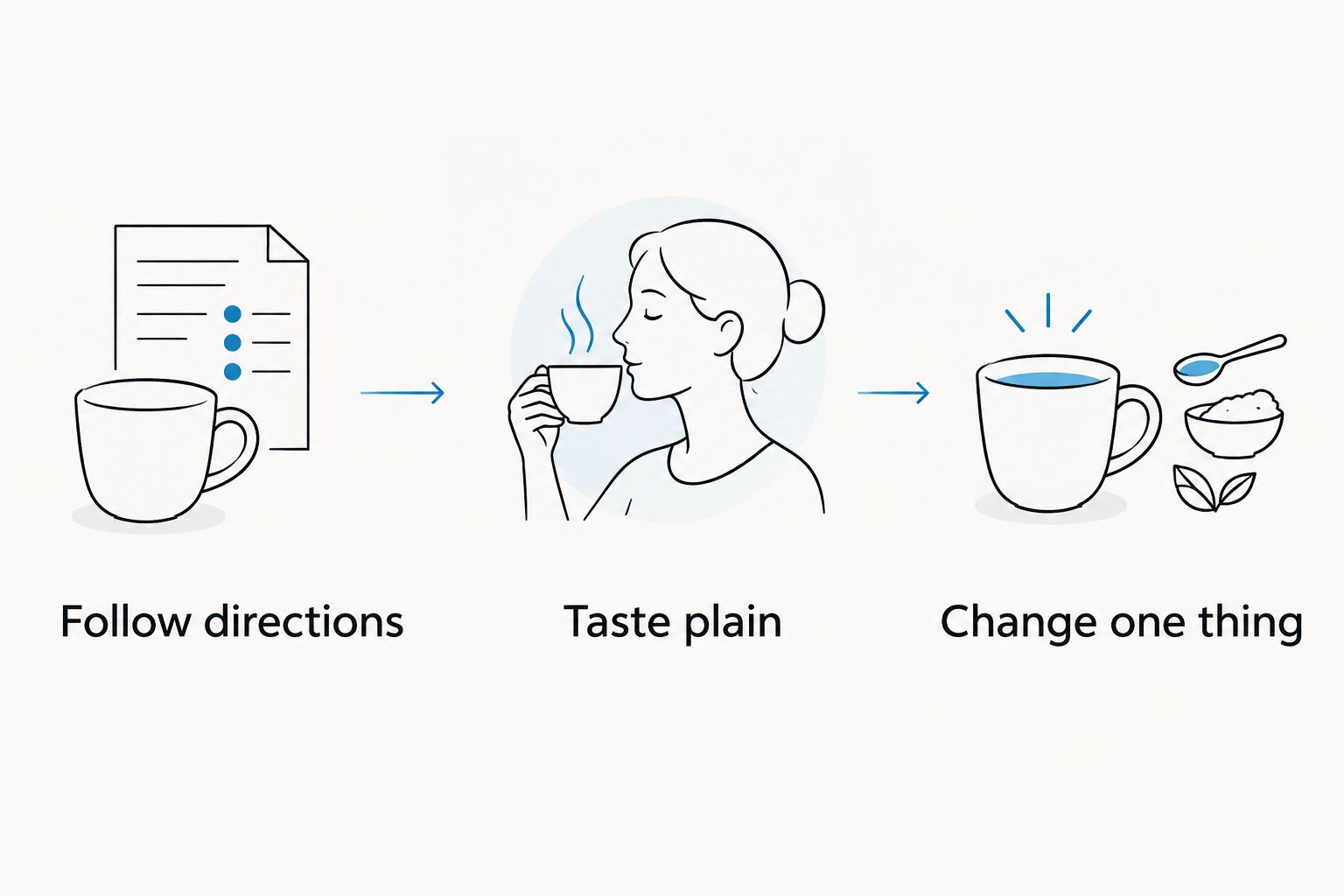
A fair comparison starts with the package directions. Use the same cup and water for each blend, then taste each without additions before deciding whether it needs anything else. Changing the preparation and the tea together makes the result harder to interpret.
Follow directions
Follow each package's stated amount, water temperature, and steeping time. If you are preparing an informal comparison, a 240 mL cup gives you a repeatable serving size; treat that as your tasting setup, not a manufacturer instruction.
Taste plain
Taste the blend before adding milk, sugar, honey, or citrus. For Hibiscus Berry Tea, notice the botanical and fruit balance. For Apple Cider Rooibos, focus on spicy sweetness; for Peach Paradise, ask whether you enjoy the cranberry and rose alongside peach.
Change one thing
If the cup needs adjustment, change one variable at a time. For a personal trial, compare your original cup with a second cup steeped 1 minute longer, provided that remains consistent with the package guidance. Do not change the amount of tea at the same time.
For an iced comparison, measure the prepared drink consistently rather than letting different amounts of melting ice decide the strength. A 120 mL tasting portion of each finished drink is a practical comparison size, not a claim about the product's recommended serving.
Record the result in plain language: too tart, comfortably spicy, peach-led, or too floral. Those notes are more useful for your next purchase than declaring every blend good or bad.
Herbal tea, flavored tea, and caffeine are different questions
Herbal infusions use ingredients other than the tea plant, Camellia sinensis. Green tea still comes from that plant even when flowers or fruit flavors are added. A floral or fruity name therefore does not establish that a drink is herbal.
Jasmine illustrates the distinction in this selection: its description names jasmine blossoms and green tea. It does not belong in a herbal-only ranking simply because it contains flowers.
Caffeine is another separate question. Rooibos itself is naturally caffeine free, but a finished blend should still be assessed by its complete ingredients. Apple Cider Rooibos has an explicit caffeine-free description; do not extend that product statement to every flavored tea.
In 2026, keep the same discipline with wellness language. Choose these blends for their stated flavors, not as treatments for sleep problems, digestive conditions, or other health concerns. If you have an ingredient restriction, check the full label rather than relying on a short flavor summary.
How the 2026 ranking works
This ranking uses the stated product descriptions and the criteria above: flavor fit, ingredient clarity, caffeine clarity, distinct use cases, and candid limitations. It does not assign invented scores or imply a blind tasting.
Hibiscus Berry Tea leads because its description gives the clearest view of several named botanical components. Apple Cider Rooibos earns the evening slot through its explicit caffeine-free description. Peach Paradise earns the peach-forward slot through its stated peach, cranberry, and rose profile.
The trade-off is straightforward: more ingredient detail helps you understand a blend, but it does not prove that you will prefer its taste. Your flavor preference decides the final choice.
Which herbal tea blend should you choose?
For an undecided reader in 2026, start with Hibiscus Berry Tea if you enjoy tart, fruit-oriented infusions. Its named botanical base gives you a clear starting point without needing to infer the blend from its title alone.
Choose Apple Cider Rooibos instead when explicit caffeine-free labeling and spicy sweetness are your priorities. Choose Peach Paradise when peach is the main attraction and cranberry and rose sound welcome rather than distracting.
Do not buy all three simply because they appear in a ranking. Pick the profile closest to a flavor you already enjoy, prepare it according to its directions, and let your tasting notes guide the next choice.
FAQ
What's the best herbal tea blend in this guide?
Hibiscus Berry Tea is the best overall choice here for an ingredient-led fruit blend. Its description names hibiscus, rosehips, orange peel, rooibos, blueberry flavor, and passionfruit flavor. Choose Apple Cider Rooibos instead if explicit caffeine-free labeling is your priority.
Which herbal tea blend is best for an evening cup?
Apple Cider Rooibos is the best evening choice here for someone seeking a spicy, sweet, explicitly caffeine-free drink. Its description confirms that it is naturally caffeine free. That does not establish a sleep benefit.
Is Peach Paradise better than Hibiscus Berry Tea?
Peach Paradise is the better fit when you want peach with cranberry and rose notes. Hibiscus Berry Tea is the better fit when you want a hibiscus-based blend with several named botanicals and fruit flavors. Neither profile is the best match for every drinker.
Are all herbal tea blends caffeine free?
Do not assume that every product marketed with herbs or fruit is caffeine free. Check the complete ingredients and the product's caffeine statement, especially when tea leaves or other caffeine-containing ingredients are included. Apple Cider Rooibos is explicitly described as naturally caffeine free.
Does a sweet herbal tea description mean it contains added sugar?
A sweet flavor description does not establish added sugar. Check the ingredient list and nutrition information when sugar content matters to you. Peach Paradise and Apple Cider Rooibos are described as sweet, but that wording alone does not establish their nutritional composition.
Is jasmine green tea a herbal tea blend?
Jasmine blended with green tea is not a herbal-only infusion. Green tea comes from Camellia sinensis, while jasmine blossoms supply a floral component. The Jasmine product in this selection explicitly includes green tea.
How should I compare herbal tea blends at home?
Follow each package's directions and taste each blend plain using the same cup and water. Then change only one preparation variable at a time. This separates your preference for the blend from your preference for its strength or additions.
One last thing
A fruit in the product name and a fruit in the ingredient list are not the same information. Hibiscus Berry Tea explicitly lists blueberry and passionfruit flavors, while Peach Paradise describes peach, cranberry, and rose notes.
Read flavor language as a guide to taste, not as proof of ingredient form. That distinction helps you choose a blend you will enjoy without assuming it contains ingredients the description never names.