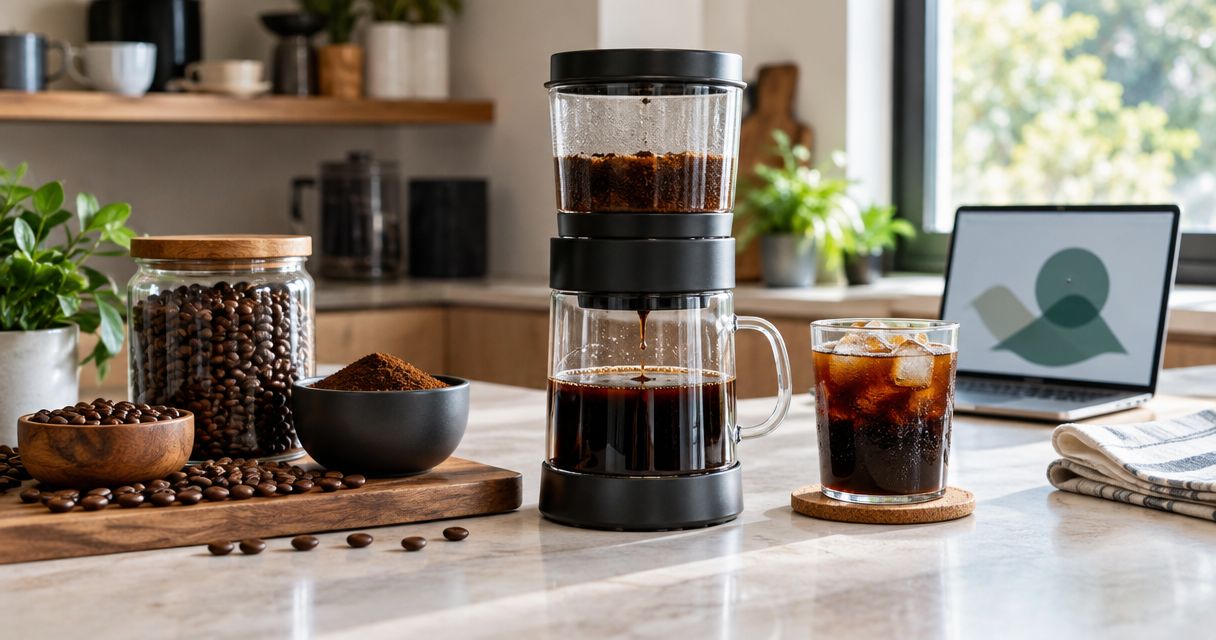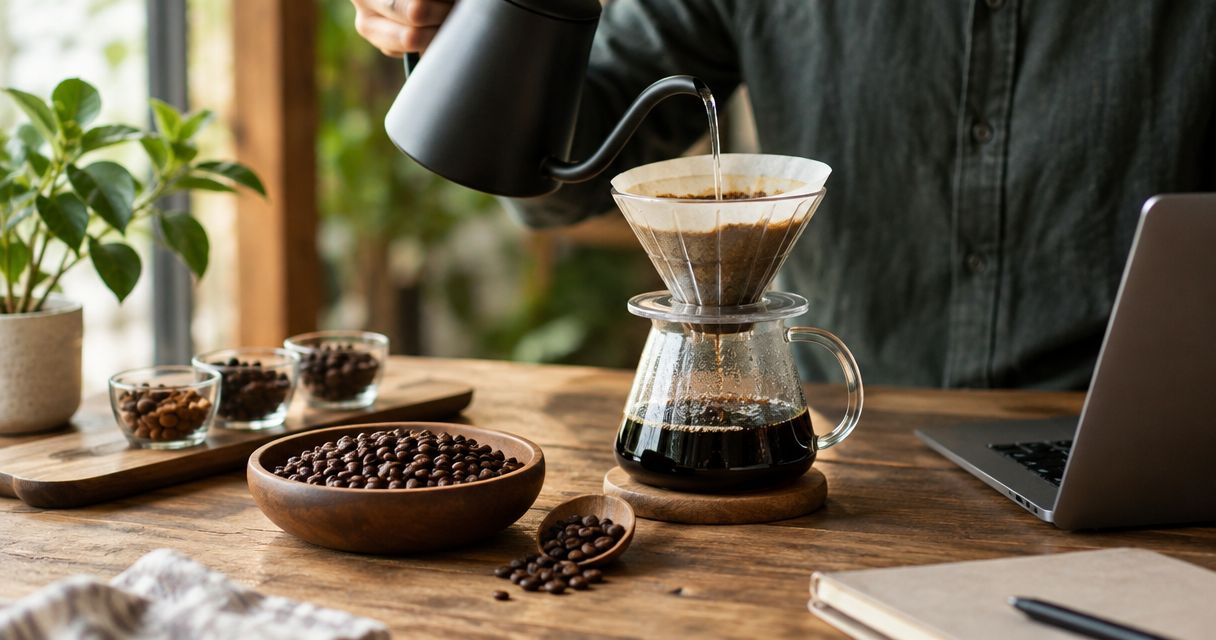
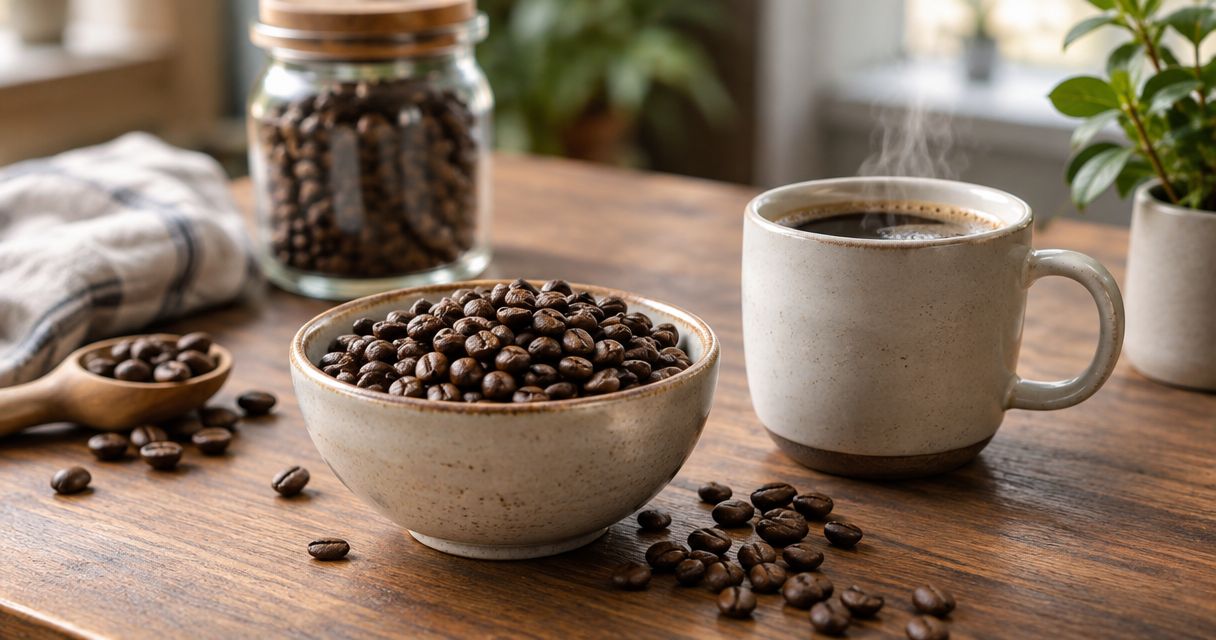
Best overall for a medium-roast preference: Peru Decaf. Best for milk drinks: an espresso-focused decaf blend. Best for roast-forward flavor: a dark-roast decaf. This 2026 guide to decaf coffee beans separates a named coffee recommendation from buying styles, so you can match your choice to how you actually brew.
- Peru Decaf leads for drinkers seeking a medium roast with caramel, smoothness, and citrus.
- Choose decaf coffee beans by roast profile, brewing method, and clear decaffeination information.
- An espresso-focused decaf blend suits milk drinks; a lighter single-origin decaf suits flavor exploration.
- Decaf is not caffeine-free, and a country name does not identify the decaffeination process.
Why this matters
Buying decaf coffee beans involves separate decisions: how much caffeine you want to avoid, what flavors you enjoy, and which brewing method you use. A decaf label answers only part of that question. It does not establish roast style, grind format, or the process used to remove caffeine.
God's Country Coffee Co. lists Peru Decaf with a medium roast and a caramel, smooth, citrus tasting profile. Those details give you a useful flavor starting point, not a guarantee that every brewing method produces the same cup.
God's Country Coffee Co.'s Peru Decaf is the best fit here for decaf coffee drinkers who want a medium roast with caramel and citrus notes. Choose it for that stated profile, rather than treating a country name as proof of a particular decaffeination method.
What makes the best decaf coffee beans?
Use these criteria before choosing a bag in 2026. Flavor preferences matter more than a universal winner.
- Roast fit: Choose a medium roast for a middle-ground starting point, a darker roast for roast-forward flavor, or a lighter roast for origin-focused exploration.
- Brewing fit: Match the coffee to your everyday brewer. Espresso, filter coffee, and immersion brewing extract coffee differently.
- Process clarity: Look for an explicitly named decaffeination process. Do not infer Swiss Water, carbon dioxide, or ethyl acetate processing from the origin.
- Format clarity: Confirm that you are selecting whole beans when you intend to grind at home. A coffee's name alone does not establish its format.
- Useful flavor notes: Look for descriptions that help you choose, such as caramel, citrus, or roast-forward character. Tasting notes describe sensory impressions, not necessarily added ingredients.
- Freshness information: Use a stated roast date when provided, and protect the beans from air, moisture, heat, and light after opening.
A clear description beats an impressive-sounding label. If your favorite cup includes milk, prioritize a profile that remains enjoyable in that drink rather than choosing the most delicate coffee on the list.
Decaf coffee beans at a glance
The first entry is a named coffee. The remaining entries are buying styles, not additional products attributed to God's Country Coffee Co.; use them to identify what to look for in a coffee description.
| Coffee or buying style | Best for | Standout feature | Key limitation |
|---|---|---|---|
| Peru Decaf | A medium-roast everyday cup | Listed caramel, smooth, citrus profile | Not a dark-roast choice |
| Espresso-focused decaf blend | Lattes and other milk drinks | Designed or described for espresso use | Still requires dialing in your grinder |
| Dark-roast decaf | Roast-forward flavor | Emphasis on darker roast character | Less suited to drinkers seeking delicate flavor distinctions |
| Light-roast single-origin decaf | Filter-coffee exploration | Emphasis on origin and lighter roasting | Requires attention to extraction |
Read across the table, not just down it. An espresso-focused blend is not automatically better than a single-origin coffee; it answers a different drinking preference.
1. Peru Decaf: best decaf coffee for a medium-roast everyday cup
Peru Decaf from God's Country Coffee Co. is listed as a medium roast with caramel, smooth, and citrus tasting notes. Its description names Cooperativa Agricola de Servicisios Norandino as the grower. Choose it when those stated flavors match the cup you want.
The strongest reason to start here is the specific profile. Caramel gives you a sweetness-oriented reference, while citrus signals a brighter flavor component; neither description means the coffee contains added caramel or citrus.
Peru Decaf pros:
- The medium roast gives you a clear reference point for choosing a roast style.
- Caramel and citrus notes help distinguish it from a purely roast-forward choice.
- The description identifies a grower rather than relying on the country name alone.
Peru Decaf cons:
- The listed medium roast does not match a preference for a dark-roast cup.
- The citrus component is not the right target if you specifically dislike brighter coffee flavors.
Best for: Home drinkers seeking a medium-roast decaf with a stated caramel, smooth, citrus profile.
For a first brew, keep your normal method and change only the coffee. That makes it easier to decide whether the profile suits you before changing your grind, dose, or water temperature.
Verdict: Buy for the listed flavor profile; confirm the whole-bean selection and decaffeination details before ordering.
2. Espresso-focused decaf blend: best decaf coffee for milk drinks
An espresso-focused decaf blend is a buying category for people who mostly drink lattes, cappuccinos, or other espresso-based drinks. Look for a coffee explicitly described for espresso, then assess its stated flavor profile against what you enjoy with milk.
The word blend does not guarantee a heavier body, darker roast, or easier extraction. Read the description rather than using the label as a shortcut. A blend combines coffees; its final character depends on the components and roasting.
Espresso-focused decaf blend pros:
- An explicit espresso recommendation gives you a relevant starting point for your brewer.
- You can prioritize the finished milk drink rather than choosing solely for black-coffee tasting notes.
- A blend provides an alternative when you are not shopping for one specific origin.
Espresso-focused decaf blend cons:
- An espresso label does not supply the correct grind setting for your machine.
- Milk changes how you perceive the coffee, so a description alone cannot settle your preference.
Best for: Drinkers whose usual decaf order is a latte, cappuccino, or flat white.
In 2026, choose an espresso-focused decaf blend by its stated use and flavor, not by an assumption that every espresso coffee must be dark. Brew and taste it with your usual milk before deciding whether it works.
Verdict: Buy when milk drinks are your main use; skip this category if you primarily want origin-focused filter coffee.
3. Dark-roast decaf: best decaf coffee for roast-forward flavor
A dark-roast decaf puts the roasting style at the center of the buying decision. Choose this category if you enjoy pronounced roasted character and do not want delicate flavor distinctions to be the main attraction.
Dark roast and decaf describe different things. One concerns roasting; the other concerns caffeine removal. A dark roast is not a substitute for an explicitly decaffeinated coffee.
Dark-roast decaf pros:
- The roast designation directly matches a preference for darker coffee.
- It gives you a clear alternative to the medium-roast Peru Decaf recommendation.
- You can focus your search on roast character instead of a particular origin.
Dark-roast decaf cons:
- Darker roasting is not the right direction when you want delicate origin distinctions.
- Choosing the correct roast does not remove the need to adjust an unpleasant extraction.
Best for: Drinkers who deliberately prefer roast-forward coffee over a brighter, lighter-roast style.
Do not use extra coffee as your first response to bitterness. Taste the brew and examine extraction first; a stronger dose does not automatically make a dark roast more balanced.
Verdict: Buy for a deliberate dark-roast preference; skip if you want the caramel-and-citrus direction of a medium roast.
4. Light-roast single-origin decaf: best decaf coffee for exploration
A light-roast single-origin decaf is a buying style for drinkers who want to explore differences in coffee origin and processing through filter brewing. Look for an explicitly decaffeinated coffee with a stated lighter roast and useful tasting notes.
Single origin does not mean single farm, and light roast does not guarantee floral or fruity flavor. The actual description matters. Choose a coffee because its stated profile interests you, not because the category sounds more specialized.
Light-roast single-origin decaf pros:
- A named origin gives you a geographical reference for comparing coffees.
- A lighter-roast designation suits a search focused on less roast-dominant flavor.
- Filter brewing gives you a practical way to compare the coffee with your existing favorite.
Light-roast single-origin decaf cons:
- Under-extraction can leave a lighter-roast cup tasting sharply sour or thin.
- Origin and roast labels alone do not establish the cup's flavor or quality.
Best for: Filter-coffee drinkers who enjoy adjusting their brew and comparing stated flavor profiles.
For your 2026 shortlist, keep the roast, origin, and decaffeination process as separate fields. That prevents a detailed origin story from distracting you from the information that determines whether the coffee fits your needs.
Verdict: Buy for deliberate flavor exploration; skip if you want a familiar roast-forward cup without experimenting.
How we ranked these decaf choices
This ranking prioritizes a clear flavor match, useful product information, and a distinct brewing use case. It is a buying recommendation, not a blind-tasting scorecard or a claim that one decaffeination method always tastes better.
Peru Decaf leads because its listed medium roast and caramel, smooth, citrus profile establish a specific starting point. The other categories each serve a separate preference: milk drinks, darker roast character, or lighter-roast exploration.
Get a useful first brew before judging the beans
Start with a repeatable recipe, then change one variable at a time. For filter coffee, 60 grams of coffee per 1 liter of water is a conventional starting ratio; a smaller equivalent is 15 grams of coffee to 250 milliliters of water. These are brewing starting points, not performance claims about a particular coffee.
Water around 93°C is a practical starting temperature for manual filter brewing. Follow your brewer's instructions and adjust according to the cup rather than treating that temperature as a requirement for every roast.
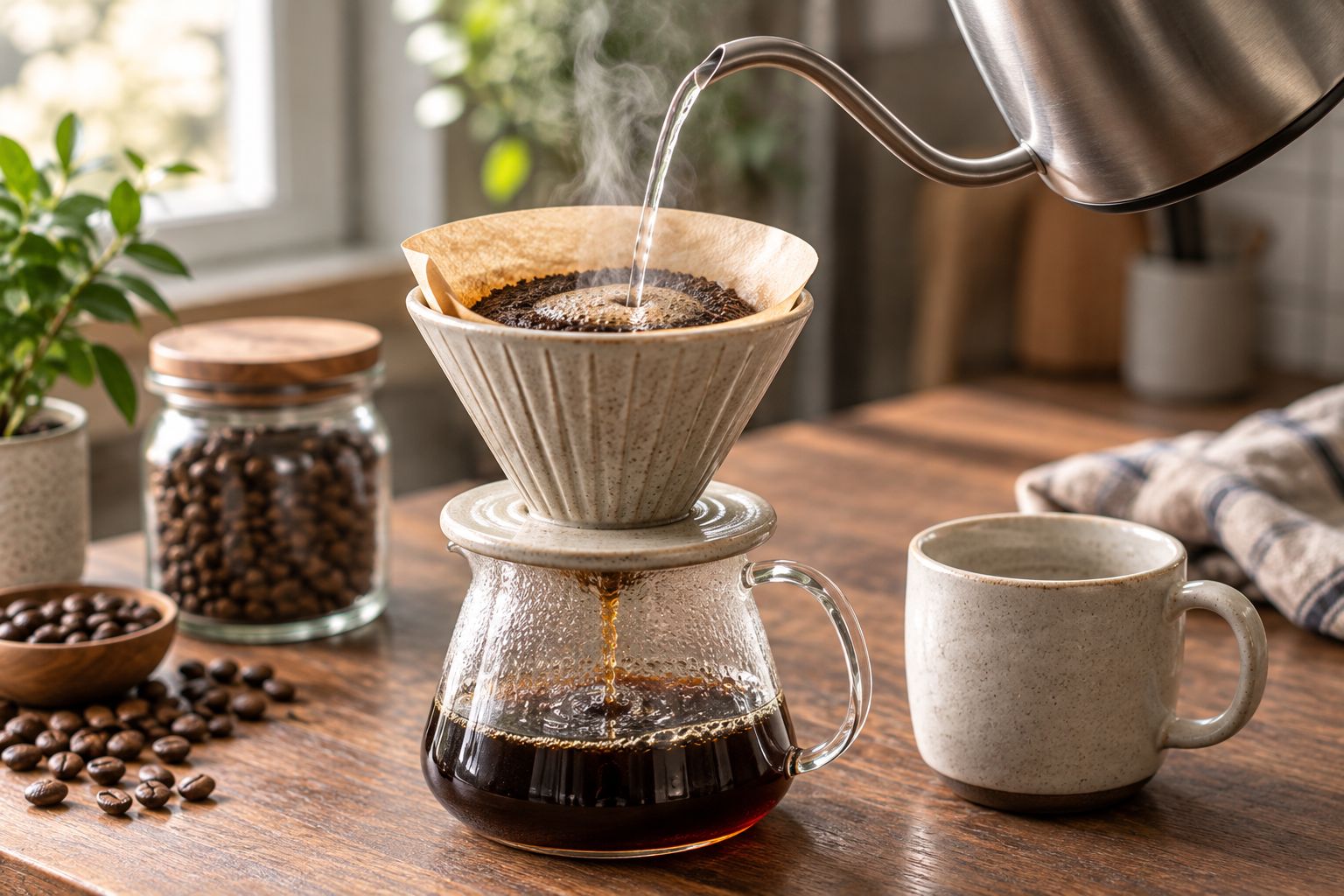
Use this sequence to make your comparison useful:
- Keep the method: Use the brewer you already understand.
- Weigh the dose: Measure coffee and water rather than judging by scoop size.
- Taste the cup: Try it black before adding your usual milk or sweetener.
- Change one variable: Adjust grind or another brewing variable, then repeat.
If the cup tastes thin or sharply sour, investigate under-extraction. If it tastes harsh or drying, investigate over-extraction. Grind changes affect extraction, but do not assume that all decaf beans require the same adjustment.
Make your decision based on the drink you actually consume. A coffee that impresses you black but disappears in your usual latte is not the best choice for that routine.
Which decaf coffee beans should you choose?
Choose Peru Decaf as the default here if you want a medium roast with caramel and citrus notes. God's Country Coffee Co.'s listed profile makes the recommendation specific: it is a flavor match, not a claim of universal superiority.
Choose an espresso-focused decaf blend for milk drinks, a dark-roast decaf for roast-forward flavor, or a light-roast single-origin decaf for filter-coffee exploration. Each choice answers a different preference.
Before buying decaf coffee beans in 2026, confirm the whole-bean format, read the stated roast and tasting notes, and check any decaffeination information provided. Do not turn a missing process detail into an assumed certification.
FAQ
What's the best decaf coffee for a medium-roast drinker?
Peru Decaf is the recommendation here for a medium-roast drinker seeking caramel, smoothness, and citrus. Its listed profile is the reason to choose it; confirm that you select whole beans if you plan to grind at home.
Are decaf coffee beans completely caffeine-free?
No, decaf coffee beans still contain some caffeine. Decaffeination removes much of the caffeine, not necessarily all of it; do not treat decaf as a caffeine-free product.
Is Peru Decaf Swiss Water processed?
The Peru Decaf name does not establish Swiss Water processing. Verify an explicit process statement rather than inferring the decaffeination method from the country of origin.
What's the best type of decaf for lattes?
An espresso-focused decaf blend is the buying category to start with for lattes. Choose its stated flavor profile for your preferred milk drink, then adjust the grind for your espresso machine.
Is dark-roast decaf better than medium-roast decaf?
Dark-roast decaf is better for a roast-forward preference, not universally better. A medium roast is the more relevant choice when its stated profile matches the flavors you want.
How should I brew decaf coffee beans for the first time?
Use your familiar brewer and a repeatable coffee-to-water ratio. For filter coffee, 15 grams of coffee to 250 milliliters of water is a practical starting recipe; change one brewing variable at a time.
Do caramel tasting notes mean the coffee contains caramel?
No, caramel tasting notes do not by themselves mean caramel was added. They describe a flavor impression; check the product's ingredient or flavoring information to identify added ingredients.
One last thing
Do not change your coffee and your entire brewing recipe at the same time. A disappointing first cup cannot tell you whether you dislike the beans or simply need a brewing adjustment.
Keep your method stable, record what you taste, and make one change. That simple discipline is more useful than buying a different decaf after every imperfect cup.