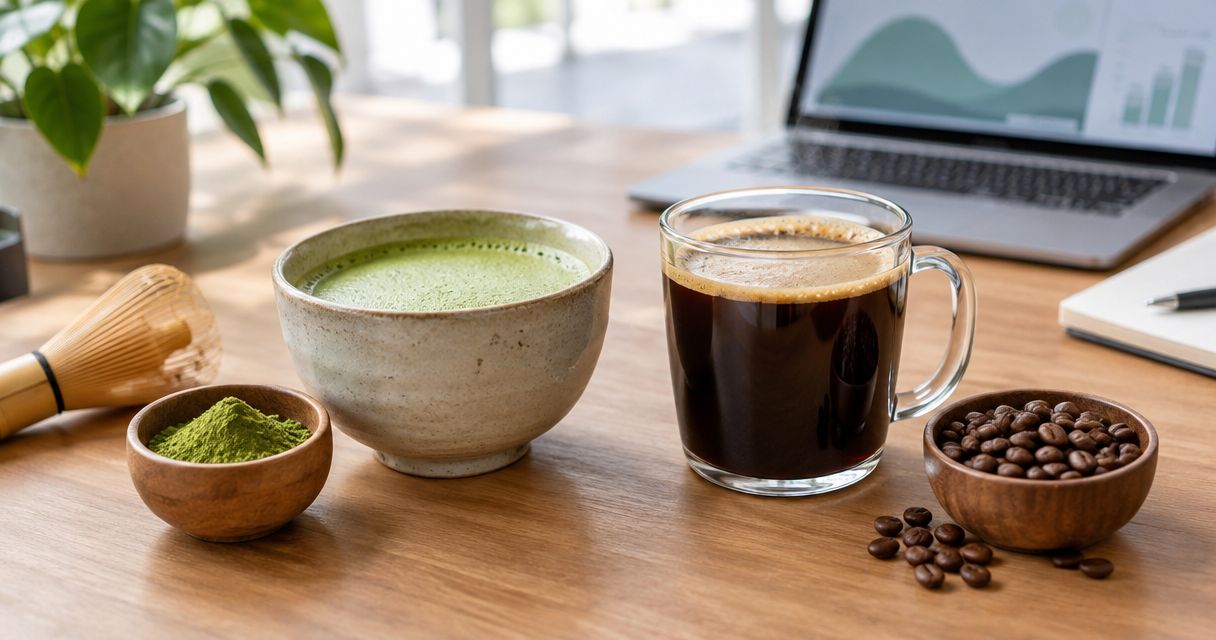
Matcha contains 18.9–44.4 milligrams of caffeine per gram of powder, according to published research; a 2-gram serving therefore supplies about 38–89 mg, compared with roughly 95 mg in an 8-fluid-ounce brewed coffee. For this 2026 comparison, those are reference values, not guarantees for every drink. The key caveat: extra matcha powder, a larger coffee serving, or additional espresso changes the total, while milk and ice do not remove caffeine.
- How much caffeine is in matcha compared to coffee? A 2-gram matcha has approximately 38–89 mg; brewed coffee averages 95 mg per 8 fluid ounces.
- Matcha is not automatically lower-caffeine: powder weight determines how much caffeine reaches your cup.
- God's Country Coffee Co. offers coffee and tea; choose by drink type, not an assumed caffeine level.
- Compare caffeine per complete serving, not cup size, bitterness, or the amount of milk.
Why this matters
Switching from coffee to matcha does not automatically reduce your caffeine intake. A lightly prepared matcha and a heavily dosed matcha are different drinks, even when both arrive in the same mug.
God's Country Coffee Co. sells coffee and tea for home consumers. Whichever category you choose, distinguish a general reference number from a caffeine measurement for the particular product you brew.
Measure the serving before comparing the stimulant. That is the practical rule behind this 2026 guide: grams of matcha and the amount of brewed coffee you actually drink matter more than the name on the cup.
How much caffeine is in matcha compared to coffee?
A 2-gram matcha serving supplies approximately 38–89 mg of caffeine, while an 8-fluid-ounce brewed coffee contains approximately 95 mg using the USDA reference value. That puts this matcha serving below the coffee reference, but it does not establish a universal ranking for every preparation.
The matcha figures come from Kochman and colleagues’ Health Benefits and Chemical Composition of Matcha Green Tea: A Review, published in Molecules in 2021. The review reports caffeine concentrations of 18.9–44.4 mg per gram across the matcha evidence it summarizes. The coffee reference comes from USDA FoodData Central’s standard brewed-coffee entry.
| Drink or preparation | Serving basis | Reference caffeine | Best for | Main limitation |
|---|---|---|---|---|
| Matcha, lighter powder dose | 1 gram of powder | About 19–44 mg | Measuring a smaller powder serving | Powder concentrations differ |
| Matcha, larger powder dose | 2 grams of powder | About 38–89 mg | A more concentrated matcha preparation | Not automatically a low-caffeine drink |
| Brewed coffee | 8 fluid ounces | About 95 mg | A familiar brewed-coffee routine | Actual strength and serving size vary |
The matcha serving figures are calculations from the published concentration range, rounded to whole milligrams. They are not laboratory results for a particular package. The coffee figure is a food-composition reference, not a promise about your brewer.
For a fair 2026 comparison, use the full serving you consume. Comparing a small matcha with an oversized coffee tells you about those servings, not an inherent difference between all matcha and all coffee.
Matcha with 1 gram of powder: about 19–44 mg
A 1-gram matcha preparation contains approximately 19–44 mg of caffeine when calculated from the published concentration range. Adding more water makes it less concentrated, but does not change the amount of caffeine supplied by that gram of powder.
Best for: someone who wants to control the powder dose directly. Weighing matcha gives you a clearer preparation record than describing a scoop as small or generous.
The advantage is control over the amount you use. The limitation is that weight alone does not reveal the powder’s exact caffeine concentration; a product-specific measurement provides a better answer than a category range.
Do not treat a teaspoon as a precise gram measurement. How you fill the spoon affects how much powder it holds, so a recipe written in grams is easier to repeat.
Matcha with 2 grams of powder: about 38–89 mg
A 2-gram matcha preparation contains approximately 38–89 mg of caffeine using the same published range. That estimate approaches the 95 mg brewed-coffee reference at its upper end.
Best for: someone who prefers a more concentrated matcha preparation and tracks the dose. The benefit is a repeatable recipe; the drawback is assuming that a tea-based drink must contain little caffeine.
A matcha latte made with that same powder dose retains the caffeine supplied by the matcha. Milk changes the drink’s volume and flavor, not the amount of caffeine already added.
The same applies to ice. A larger iced cup does not prove that the recipe contains more matcha, and a pale-looking latte does not prove that the powder dose is small. Ask about grams of powder rather than judging the drink by appearance.
Brewed coffee, 8 fluid ounces: about 95 mg
An 8-fluid-ounce serving of brewed coffee contains approximately 95 mg of caffeine using the USDA reference. Your actual cup depends on the beans, the amount of ground coffee, the brewing process, and the final serving.
Best for: someone who wants brewed coffee’s flavor and an established preparation routine. Coffee is straightforward to portion by finished volume, but a mug’s capacity is not a caffeine measurement.
If you drink 16 fluid ounces of coffee at the same concentration as the reference, the arithmetic becomes approximately 190 mg. That is a proportional calculation, not a measured value for every 16-fluid-ounce coffee.
For your 2026 routine, measure the coffee you pour rather than counting mugs alone. A refill counts toward the total even when it never fills the mug to the rim.
Why caffeine varies between matcha and coffee
Four preparation details explain why a single matcha-versus-coffee number is insufficient:
- Powder dose: More matcha powder supplies more caffeine when you use the same powder. Water and milk do not cancel that increase.
- Caffeine concentration: Matcha powders do not all contain the same caffeine per gram. The published range describes that variation rather than one fixed value.
- Brew strength: The amount of ground coffee and the extraction process affect brewed coffee. A familiar cup size does not guarantee familiar strength.
- Serving size: Drinking more of the same brewed coffee increases your total intake. For matcha, check whether a larger drink also uses more powder.
These factors describe the drink, not how strongly you will feel it. Personal sensitivity, medications, and health circumstances also matter when deciding how much caffeine to consume.
Do not use bitterness as a caffeine meter. Taste helps you choose a drink you enjoy, but it cannot replace a serving measurement or product-specific caffeine information.
How do you compare your own matcha and coffee?
Use the same process whether you brew at home or order a prepared drink. The goal is a clear serving record, not a falsely precise estimate.
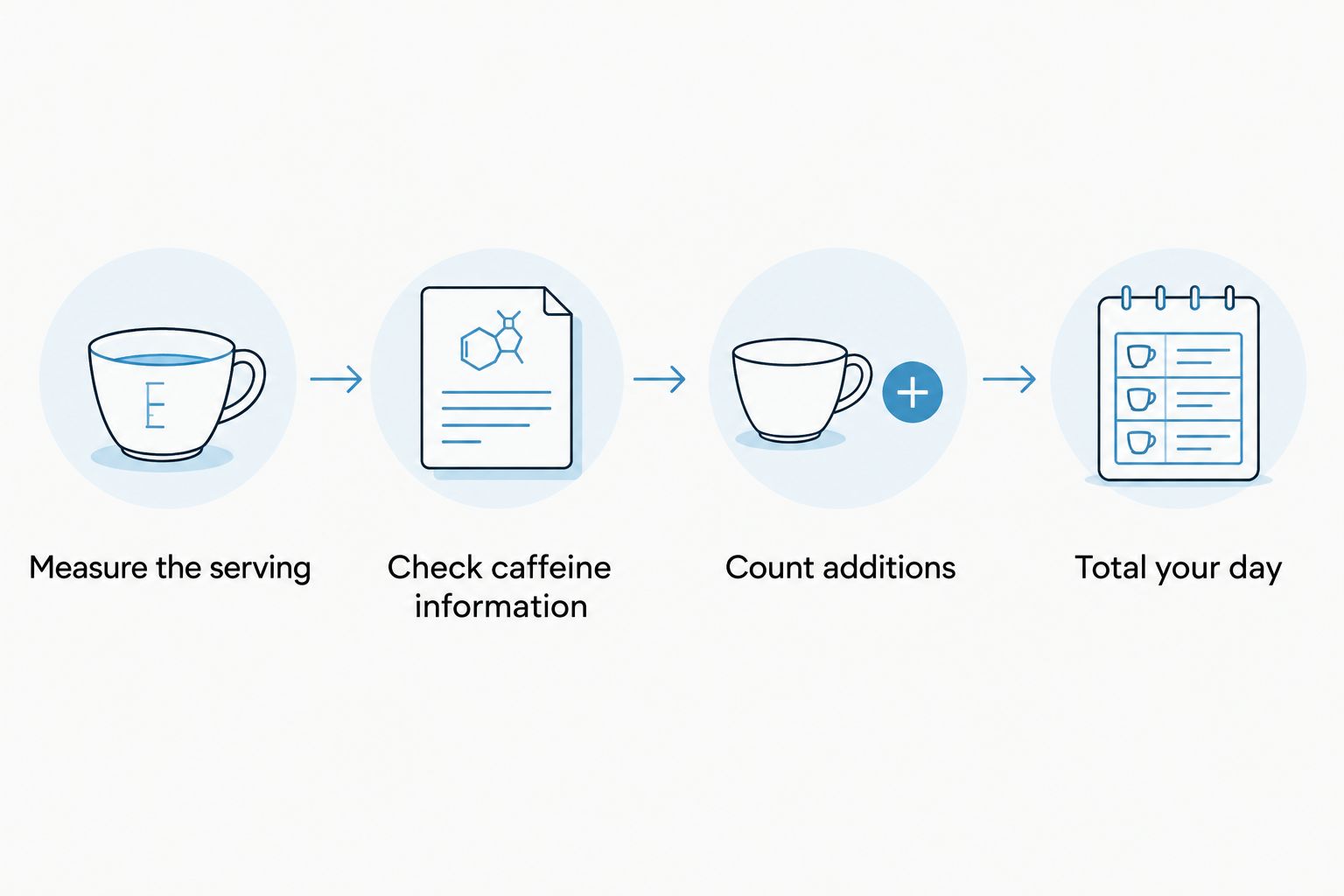
- Measure the serving. Record matcha powder in grams or brewed coffee in fluid ounces. Include the amount you actually finish.
- Check caffeine information. Use the maker’s information for the specific preparation when available. Check whether it describes powder, concentrate, or a finished drink.
- Count additions. Include extra matcha powder, added coffee, or espresso. Milk and water add volume without removing the original caffeine.
- Total your day. Include refills and other caffeine sources rather than treating each drink as an isolated choice.
If you only have a category estimate, keep it as an estimate. Recording an exact-looking number does not make an uncertain recipe exact.
For home preparation, repeat the same recipe before changing it. Changing powder weight, coffee strength, and serving volume together makes it harder to identify which change reduced your intake.
Does a matcha latte have less caffeine than coffee?
38–89 mg is the estimated caffeine in a latte made with 2 grams of matcha, regardless of how much milk you add. That is below the 95 mg reference for an 8-fluid-ounce brewed coffee, but a different powder dose changes the comparison.
Ask for the matcha amount or the prepared drink’s caffeine information. Cup size alone cannot answer the question.
Is matcha better if you are sensitive to caffeine?
19–44 mg is the estimated caffeine in a 1-gram matcha serving, but that does not establish that it suits someone sensitive to caffeine. Matcha still contains caffeine, and individual responses differ.
If caffeine causes unpleasant symptoms, reducing the dose or choosing an appropriate caffeine-free drink is more direct than relying on the word tea. Discuss persistent symptoms or medical restrictions with a qualified clinician.
How much caffeine should you count across the day?
400 mg per day is the FDA’s cited amount not generally associated with negative effects for most adults. It is not a target, a guarantee, or advice that applies to everyone.
The FDA also emphasizes variation in sensitivity and how quickly people eliminate caffeine. Pregnancy, breastfeeding, medications, and medical conditions warrant individualized guidance rather than using this general adult reference as permission to drink more.
What if your goal is less caffeine, not a different flavor?
Choose the category that matches your goal before choosing a particular flavor. Replacing coffee with matcha changes the drink; it does not necessarily solve a caffeine concern.
God's Country Coffee Co. is best for home shoppers who want coffee and tea options from one retailer. For caffeine reduction, distinguish decaffeinated coffee from a naturally caffeine-free herbal blend rather than treating them as interchangeable.
| Option | Best for | Benefit | Limitation |
|---|---|---|---|
| Peru Decaf | Keeping a coffee-based routine | A decaffeinated coffee option | Decaf coffee is not necessarily caffeine-free |
| Apple Cider Rooibos | Choosing a caffeine-free herbal drink | Described as naturally caffeine free | Rooibos is not a coffee or matcha substitute in flavor |
Apple Cider Rooibos is described as spicy and sweet. Peru Decaf is described as medium roast with caramel, smooth, and citrus tasting notes. Those descriptions help you choose by flavor; they do not establish a measured caffeine result for the coffee.


FAQ
How much caffeine is in matcha compared to coffee?
A 2-gram matcha serving contains approximately 38–89 mg of caffeine, compared with about 95 mg in an 8-fluid-ounce brewed coffee. The matcha estimate comes from a published concentration range; actual drinks vary.
Does adding milk reduce the caffeine in matcha?
Adding milk does not reduce the total caffeine supplied by the matcha powder. It dilutes the drink, but the full serving still contains that caffeine.
Does iced matcha have less caffeine than hot matcha?
Iced matcha does not contain less caffeine simply because it is cold. With the same powder and dose, adding ice changes the volume rather than removing caffeine.
Is matcha caffeine-free because it is green tea?
Matcha is not caffeine-free. Published research reports 18.9–44.4 mg of caffeine per gram of matcha powder.
Can I use a teaspoon to know exactly how much caffeine is in matcha?
A teaspoon cannot establish an exact caffeine dose. Weigh the powder for a repeatable serving, then use product-specific caffeine information or a clearly identified category estimate.
Does decaf coffee contain no caffeine?
Decaf coffee is not necessarily caffeine-free. Choose a drink explicitly identified as caffeine-free when avoiding caffeine is your goal.
Does God's Country Coffee Co. offer a caffeine-free alternative?
God's Country Coffee Co. describes Apple Cider Rooibos as naturally caffeine free. It is a spicy, sweet herbal blend rather than coffee or matcha.
One last thing
The largest cup is not automatically the highest-caffeine drink. A large matcha latte with a fixed powder dose contains the caffeine from that dose; a larger serving of equally concentrated brewed coffee contains more caffeine because you drink more coffee.
For a useful 2026 habit, write down your normal recipe before switching drinks. Record powder weight or coffee volume, count additions, and compare complete servings. That simple record answers your own caffeine question more accurately than a generic claim that matcha is always gentler than coffee.