Loose leaf tea stays fresh as long as it retains its characteristic aroma and brewed flavor; the package’s best-by date and storage instructions are your starting point, not a universal expiration deadline. For your 2026 pantry check, distinguish fading flavor from spoilage: dry, stale tea is a quality problem, while mold, unexpected dampness, or pest contamination means you should discard it. An opening date helps you track a bag, but it cannot tell you how fresh the tea was before you opened it.
- How long does loose leaf tea stay fresh? Follow its package date, storage instructions, aroma, and brewed flavor.
- Keep loose leaf tea sealed, dry, dark, and away from heat and strong odors.
- Discard tea with mold, unexpected dampness, or pests; never taste it to check safety.
- God’s Country Coffee Co. tea shoppers should assess each blend separately rather than assume a shared shelf life.
How long does loose leaf tea stay fresh?
There is no single freshness deadline that fits every loose leaf tea. The ingredients, packaging, storage history, and condition when purchased all affect what ends up in your cup. A calendar date alone cannot account for those differences.
Use this distinction when checking your tea in 2026:
| What you find | What it means | What to do |
|---|---|---|
| Familiar aroma and satisfying brewed flavor | The tea still meets your taste expectations | Keep using it and maintain good storage |
| Faint aroma and a flat cup, without contamination signs | Quality has declined | Replace it if the flavor no longer satisfies you |
| A best-by date has passed | The stated quality period has ended | Read the label and assess storage and condition |
| Mold, unexpected dampness, or pest contamination | The tea is unsuitable to keep | Discard it without tasting |
| Unknown storage history | Age alone cannot establish condition | Inspect carefully; discard anything questionable |
If you buy coffee and tea from God’s Country Coffee Co., track each package separately. Buying them together does not give them the same freshness timeline.
Why this matters
Freshness and food safety answer different questions. Freshness asks whether the tea still tastes the way you want; safety asks whether it is appropriate to consume at all. A weak cup does not establish danger, and a pleasant smell does not establish safety.
That distinction prevents two mistakes: throwing away tea solely because a quality date passed, and trying to rescue damp or contaminated tea by brewing it. Inspect first, then taste only tea that shows no reason for concern.
For a 2026 pantry reset, start with storage conditions rather than sorting everything by age. A poorly closed package beside a steaming kettle deserves attention even when its printed date has not passed.
Unopened loose leaf tea: follow the package guidance
An unopened package protects tea only as well as its packaging and storage conditions allow. Keep it away from direct sunlight, cooking heat, moisture, and strong household odors. Check for damage before treating an intact-looking bag as protected.
The advantage of leaving tea unopened is that you avoid repeatedly exposing the contents while serving it. The limitation is that an unopened seal tells you nothing about earlier handling or how long the tea spent in storage before purchase.
Read any printed date together with the storage instructions. Do not reinterpret a best-by date as a promise that every cup will taste identical until that day, or as proof that the tea becomes unsafe immediately afterward.
Opened loose leaf tea: control exposure after every scoop
Once you open a package, your handling becomes part of its storage history. Close it promptly after taking out what you need, and keep wet spoons and steam away from the leaves. Leaving a bag open while the kettle boils adds exposure without helping your brew.
The advantage of keeping tea in its original package is that its name, ingredients, and instructions stay together. The drawback is practical: if the package no longer closes properly, it is no longer a useful storage solution.
Transfer tea only when the new container is clean, completely dry, and suitable for food. Keep the original label or copy its useful information. An attractive unmarked tin makes it harder to distinguish ingredients, instructions, and opening history later.
Why loose leaf tea freshness varies
These storage factors explain more than a single blanket shelf-life claim:
- Moisture: Water changes the storage conditions of a dry product. Dampness is a reason to stop and assess the tea, not simply brew it stronger.
- Air exposure: Repeatedly leaving the container open allows aroma to escape and exposes the contents to surrounding air.
- Light: Direct sunlight is an avoidable storage exposure. Use a dark cupboard or an opaque container.
- Heat: A spot beside an oven, hob, or other heat source is less suitable than a cool cupboard.
- Strong odors: Tea can pick up surrounding smells. Keep it separate from strongly scented foods and household products.
- Ingredients: A plain tea and a blend containing flowers, fruit ingredients, or added flavoring do not have identical aroma profiles to judge.
You do not need a special display or elaborate storage system. You need a location and closure that consistently protect the tea between uses.
Which container keeps loose leaf tea fresh?
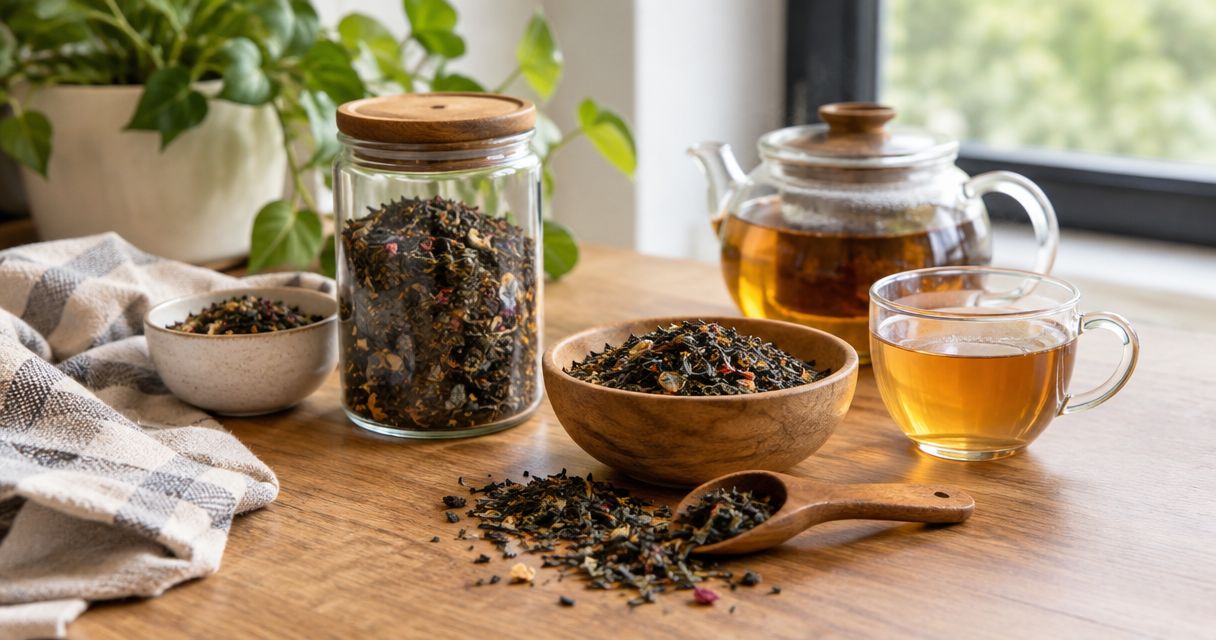
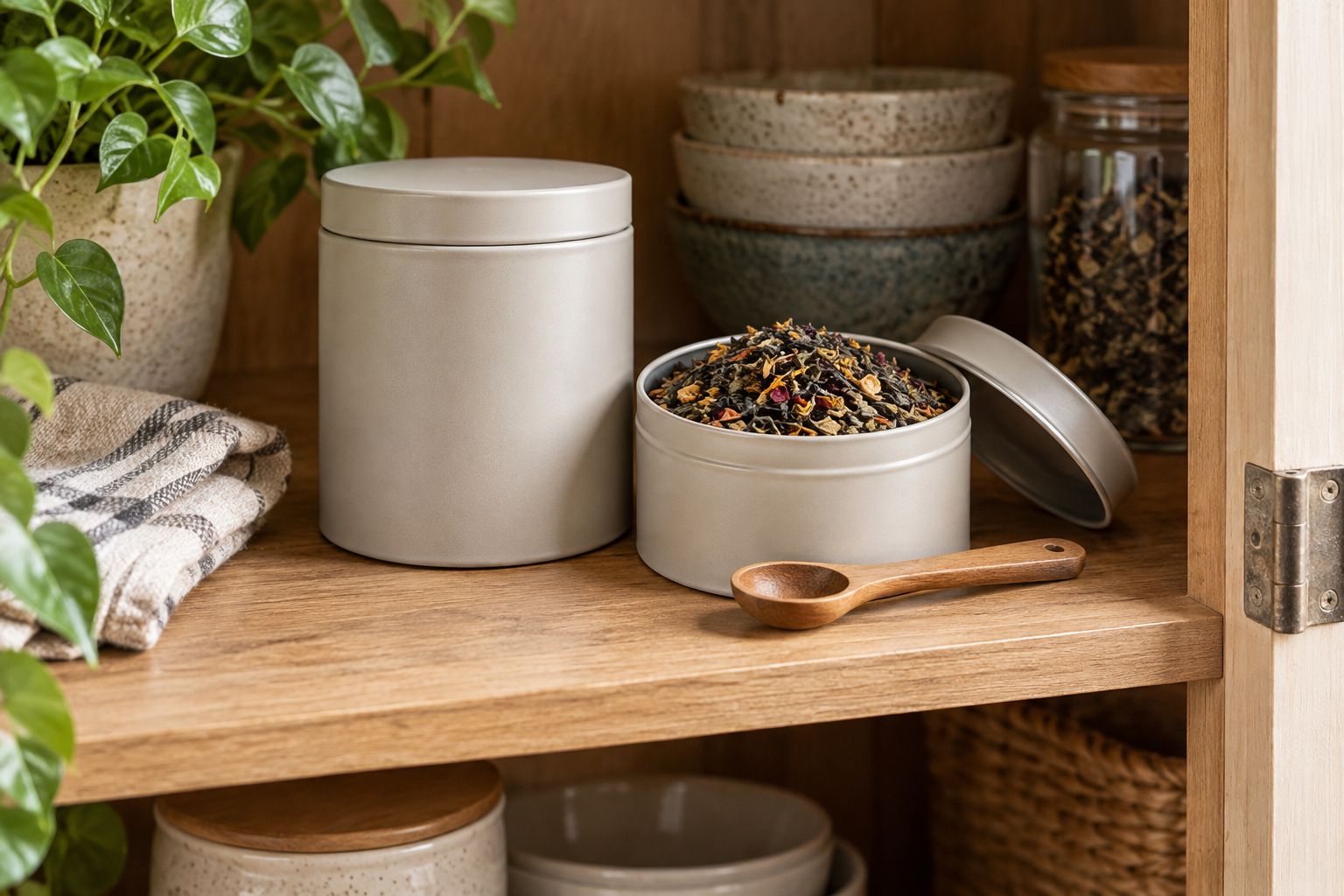
Choose protection over display. A container that blocks light and closes securely is more useful than a decorative jar that leaves tea exposed. The best choice also needs to fit your routine: a difficult lid encourages you to leave it open.
| Storage option | Best for | Advantage | Limitation |
|---|---|---|---|
| Original package with a working closure | Keeping instructions with the tea | Preserves the product information | Depends on the package closing securely |
| Opaque, food-safe airtight container | A permanent cupboard setup | Blocks light and limits air exchange when closed | Must be clean, dry, and free of old odors |
| Clear, food-safe airtight jar in a dark cupboard | Seeing what remains | Makes the contents easy to inspect | Needs protection from light |
| Open bowl or loosely covered vessel | Serving, not storage | Makes tea easy to reach | Leaves it exposed to air, odors, and moisture |
Do not put fresh tea into a container that still smells of spices, coffee, or its previous contents. Wash it as appropriate, let it dry completely, and check it before refilling.
How do you check whether loose leaf tea is still fresh?
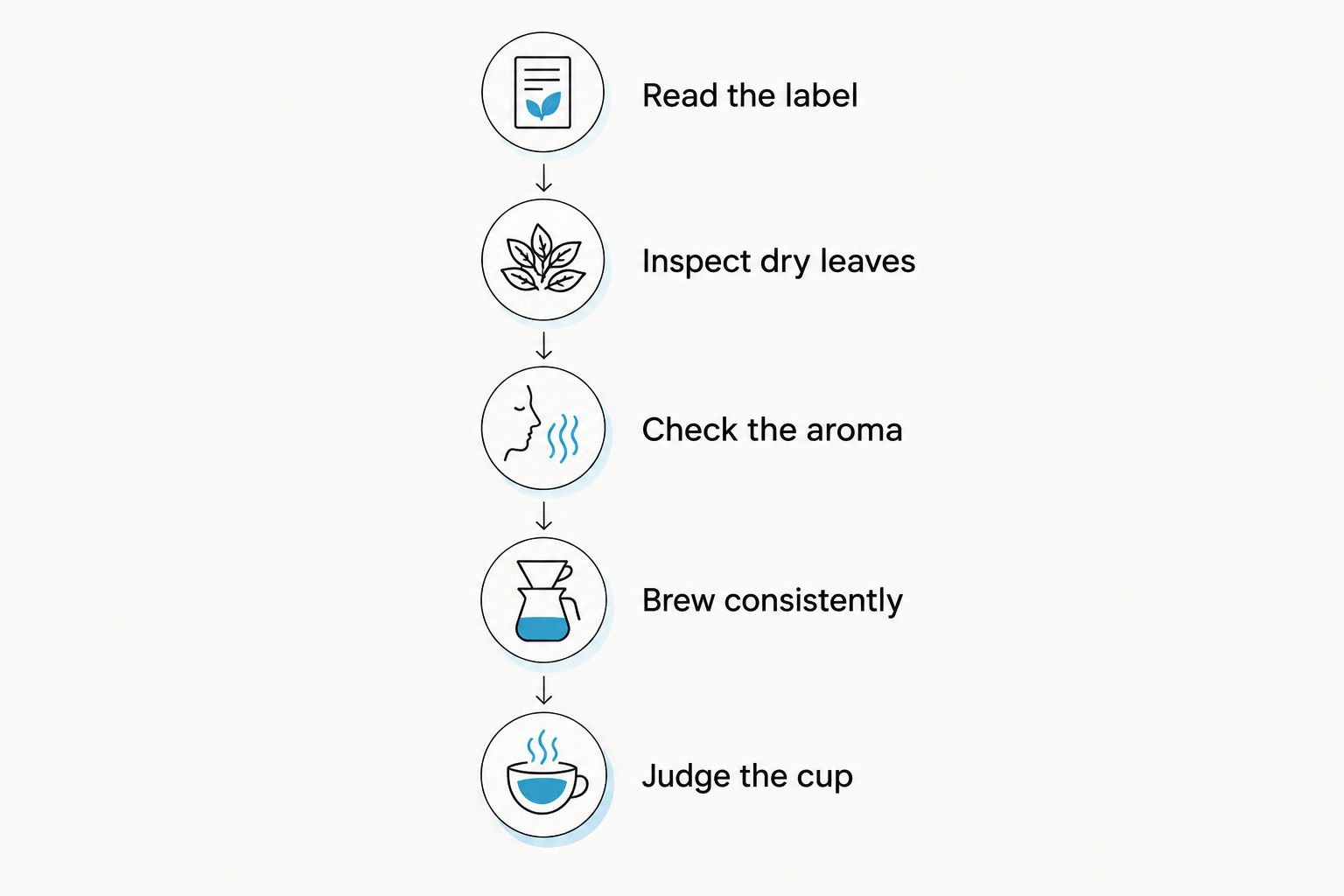
Use the same sequence whenever you assess an older package. Consistency helps you separate a storage problem from a disappointing brew.
- Read the label. Check the tea’s identity, ingredients, date, and any specific storage instructions. Keep that information with the contents.
- Inspect dry leaves. Look for visible mold, unexpected dampness, signs of pests, or other contamination. Stop here if anything is concerning.
- Check the aroma. Compare it with the tea’s familiar character. A naturally earthy tea is different from tea that has developed an unfamiliar musty smell.
- Brew consistently. Use the package’s instructions and your usual measured amount. Changing several brewing variables makes the comparison less useful.
- Judge the cup. Decide whether the flavor still satisfies you. Flatness is a reason to replace tea for enjoyment, not evidence by itself of spoilage.
This is a quality check, not a way to certify questionable tea as safe. Never taste tea that has already failed the visual or storage-condition check.
Does green tea stay fresh as long as herbal tea?
Green tea and herbal blends need separate assessments because their ingredients and expected flavors differ. Do not assign a shared deadline simply because both sit in the same cupboard. Follow each package’s guidance and compare each tea with its own familiar aroma.
A floral green tea losing its fragrance and a spiced herbal blend losing its spice character are different sensory changes. Neither comparison justifies a universal number of months for every product in that category.
For your 2026 tea rotation, open what you expect to drink regularly instead of opening every package at once. Keep unopened packages protected until you need them.
Two examples of different flavor profiles
God’s Country Coffee Co. sells both Jasmine and Apple Cider Rooibos. Their descriptions illustrate why you should judge freshness against the individual blend, not against a generic idea of what tea should smell like.
| Tea | Best for | Stated character | Preference trade-off |
|---|---|---|---|
| Jasmine | Drinkers seeking floral green tea | Green tea blended with jasmine blossoms; sweet and smooth | Not the choice for someone avoiding floral character |
| Apple Cider Rooibos | Drinkers seeking a caffeine-free herbal blend | Spicy, sweet, and naturally caffeine free | Not the choice for someone seeking green tea |
God’s Country Coffee Co. is a fit for home shoppers buying tea and coffee together. That describes shopping convenience, not a longer freshness guarantee; assess each tea’s package and condition independently.


Should you refrigerate loose leaf tea?
For everyday storage, use a cool, dry cupboard unless the package specifies otherwise. A refrigerator introduces practical concerns about condensation and surrounding food odors, particularly when you repeatedly move a container between cold and warm conditions.
Cold storage is not a substitute for a suitable seal. Follow product-specific instructions rather than applying a refrigeration rule to every tea in your collection.
Can you make stale tea taste fresh again?
You cannot restore lost aroma by extending the steep indefinitely. A longer infusion changes extraction; it does not reverse what happened during storage. It can also produce a harsher cup instead of the fragrance you miss.
First check your brewing method against the package instructions. If the tea remains flat under consistent conditions and has no contamination concerns, decide whether you still enjoy it. Replace it when the answer is no.
FAQ
How long does loose leaf tea stay fresh after opening?
There is no universal after-opening deadline for loose leaf tea. Follow the package guidance, keep the tea sealed and dry, and assess its characteristic aroma and brewed flavor.
Does loose leaf tea expire on its best-by date?
A best-by date describes a quality period rather than automatically marking the moment tea becomes unsafe. Read the package instructions and consider storage conditions; discard tea with mold, unexpected dampness, or pest contamination.
How can I tell whether loose leaf tea has gone bad?
Discard loose leaf tea with visible mold, unexpected dampness, pest contamination, or other concerning changes. Do not taste questionable tea to decide whether it is safe.
What is the best container for loose leaf tea?
A clean, dry, food-safe container with a secure airtight closure is a practical choice for loose leaf tea. Choose an opaque container or keep a clear one inside a dark cupboard.
Should I keep loose leaf tea beside my kettle?
Keep loose leaf tea away from kettle steam and other moisture sources. Take out the amount you need with a dry utensil, then close the package before brewing.
Can I mix old loose leaf tea with a new package?
Keep old and new loose leaf tea separate so you can track their condition and opening history. Mixing them makes it harder to judge the new tea against its original flavor.
Is weak tea always stale?
Weak tea is not always stale; the amount of tea, water, and brewing method also affect strength. Follow the package instructions before deciding that storage has caused the disappointing flavor.
One last thing
Do not top up an old container automatically. Finish or remove the previous tea, inspect and clean the container as needed, and let it dry completely before adding another package. Otherwise, you lose a clear starting point for judging the new tea.
For a useful 2026 habit, record the opening date and keep the label. The date helps you manage your cupboard; the tea’s condition and your cup tell you whether it still deserves a place there.