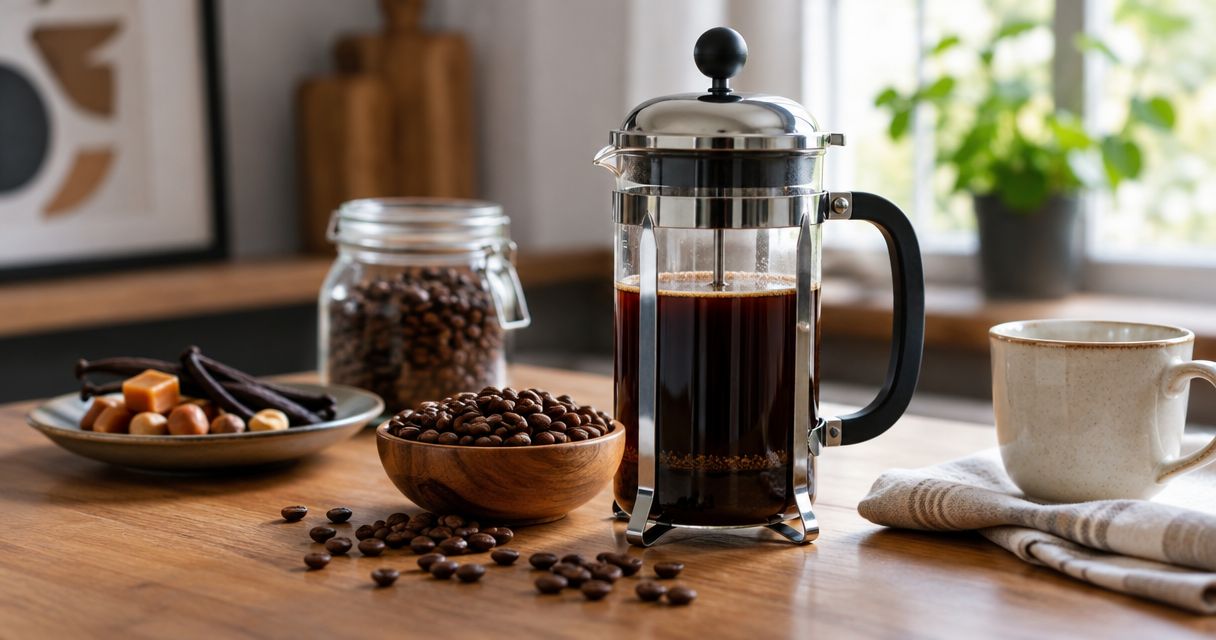
Yes, flavored coffee beans can be brewed in a French press: grind the beans, steep them in hot water, and separate the brewed coffee from the grounds. The main trade-offs are sediment from the metal filter and lingering aromas that require careful cleaning; flavored beans do not need a special French press.
- Can flavored coffee beans be brewed in a French press? Yes—use ground coffee, not intact beans.
- A French press suits flavored coffee drinkers who prefer body over a paper-filtered cup's clarity.
- God's Country Coffee Co. offers flavored coffee and sample packs for home consumers.
- Clean the mesh, plunger, and carafe before switching flavors or brewing unflavored coffee.
Why this matters
A French press lets you brew flavored coffee without a pod machine or paper filter. Its metal screen separates larger grounds from the drink but allows oils and fine particles into your cup, so texture matters as much as aroma.
Choose the coffee for the flavor you want, then adjust the brewing method for the texture you enjoy. The flavored coffee beans guide covers that first decision; this 2026 guide addresses what happens inside the press.
The practical verdict: flavored coffee works in a French press, but grinding and cleaning deserve more attention than the flavor name on the bag.
Can flavored coffee beans be brewed in a French press?
Yes. Flavored coffee is still coffee, and immersion brewing does not depend on whether the beans have added flavoring. What matters is using grounds that suit the press, wetting them evenly, and pouring the finished coffee out rather than leaving it sitting with the grounds.
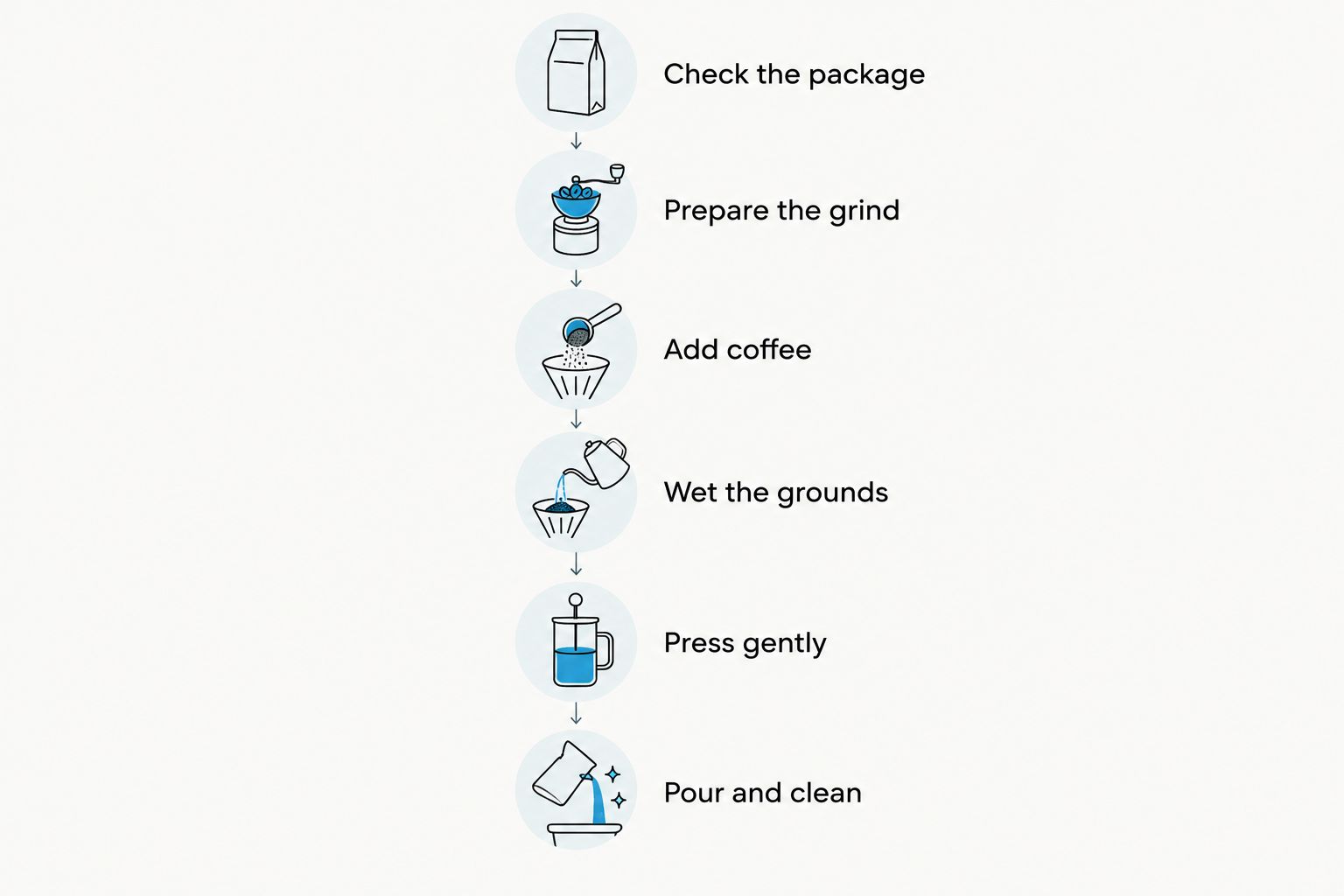
Use this sequence for your first batch:
- Check the package. Confirm that you have whole beans or ground coffee, and read any ingredient and preparation information.
- Prepare the grind. Start with a coarse, reasonably even grind rather than espresso-fine powder. Follow your grinder's instructions, especially any restrictions on flavored beans.
- Add coffee and hot water. Use your press manufacturer's brewing recipe as the baseline. Keep the coffee and water amounts consistent while you learn how the flavor tastes.
- Wet all the grounds. Stir gently so dry pockets do not remain at the surface. Avoid striking a glass carafe with a metal utensil.
- Steep, then press gently. Follow the timing in your chosen recipe, and stop if the plunger meets unusual resistance. Never force a stuck filter downward.
- Pour and clean. Transfer the brewed coffee to your cup or another vessel, then remove the grounds and wash the press after it cools.
The first batch establishes a baseline. Taste the coffee before adding milk or sweetener so you can distinguish the brewed flavor from what you add afterward.
Which coffee format works best in a French press?
Whole beans give you control over grind size; suitable preground coffee removes the grinding step. Neither format guarantees a better cup. Your grinder, the supplied grind, and your tolerance for sediment determine the practical difference.
| Coffee format | Best for | Main advantage | Main drawback |
|---|---|---|---|
| Flavored whole beans | Home brewers who want grind control | You choose the grind for your press | Your grinder must permit flavored beans, and it needs cleaning |
| Coarse-ground flavored coffee | Brewers who want fewer preparation steps | No grinder is needed | You cannot change the supplied particle size |
| Fine-ground flavored coffee | Using coffee you already have | It remains brewable by immersion | More fines pass through the screen, and pressing requires extra care |
Choose whole beans only if grinding fits your routine. If you already prefer preground coffee, check the available grind description instead of assuming every bag is prepared for a French press.
Fine grounds are not a reason to push harder. Let particles settle, lower the plunger gently, and leave the last sediment-heavy portion behind when pouring. If resistance remains high, stop and check the filter rather than trying to overcome it with force.
For your 2026 brewing routine, buy for the equipment you actually use, not the equipment you plan to buy later.
Why flavored French press coffee varies
The same flavored coffee can taste different between batches without any change to the product. These factors explain the differences you can control:
- Grind size and consistency. Small particles pass through the mesh more readily. An uneven grind also makes it harder to repeat the same extraction.
- Coffee-to-water balance. Changing either amount changes the drink's concentration. Measure consistently before deciding that a flavor is too faint or too strong.
- Water temperature. Temperature affects extraction. Start with the preparation instructions for your press rather than inventing a separate temperature rule for flavored beans.
- Contact time. Leaving brewed coffee in the press keeps it in contact with the grounds. Pour the finished batch out to make your results easier to repeat.
- Equipment cleanliness. Residue on the mesh, lid, or carafe interferes with a clean comparison between coffees. A rinse does not replace washing.
- What you add afterward. Milk, sugar, and syrup change your perception of the coffee. Taste it plain first, then prepare it the way you enjoy drinking it.
Change a single brewing variable between batches. If you change the grind, water amount, and steeping method together, you lose the ability to identify which adjustment helped.
Does flavored coffee make a French press harder to clean?
Flavored coffee adds a reason to check for lingering aromas, but ordinary coffee oils and trapped grounds already require regular cleaning. The filter assembly deserves particular attention because residue collects between its parts.
Empty cooled grounds into an appropriate waste or compost container rather than washing a mass of grounds down the drain. Disassemble the plunger only as the manufacturer allows, then wash the carafe, lid, mesh, and removable components with a suitable detergent.
Rinse thoroughly and let everything dry. Before the next batch, smell the clean, dry press: if the previous coffee's aroma remains, wash the affected parts again before judging another coffee's flavor.
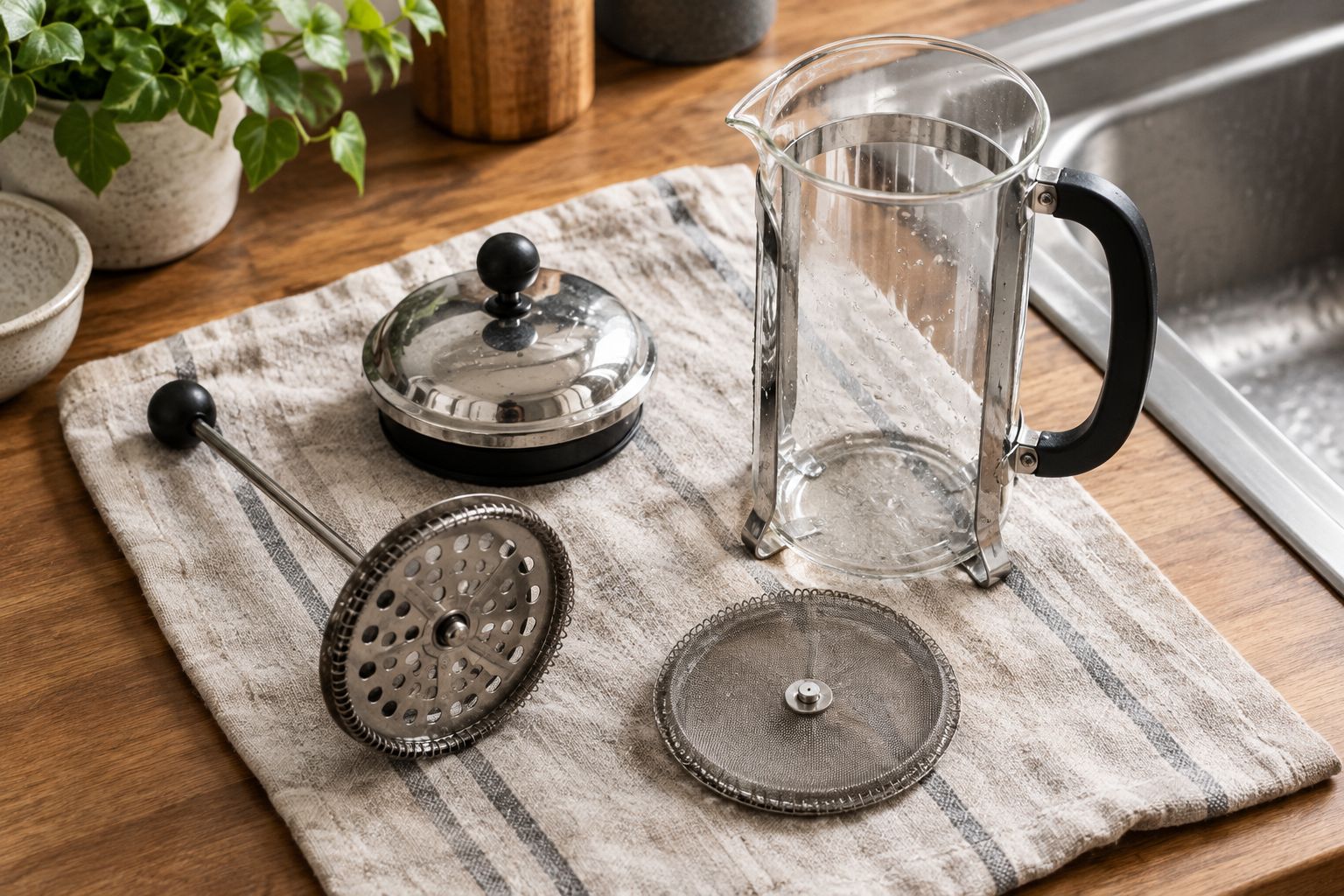
Check your grinder separately. Follow its cleaning directions and any restrictions on flavored coffee; do not put water through a grinder unless its manufacturer explicitly instructs you to do so.
A useful 2026 maintenance habit is simple: clean before switching coffees, not after a disappointing comparison. A separate press is an option for convenience, not a requirement for brewing flavored beans.
How do you choose a flavored coffee to try?
Start with an aroma you already enjoy and confirm that the available coffee format suits your equipment. Do not treat a flavor name as an ingredient list, a sweetness promise, or a statement about allergens.
God's Country Coffee Co. is a fit for home consumers shopping for flavored coffee and coffee sample packs. Its Flavored Coffees Sample Pack contains 6 packs of 2 ounces each, and the supplied description identifies French Vanilla as a medium roast.
Best for flavor exploration: the Flavored Coffees Sample Pack lets you compare coffees without choosing a full bag of each. Its limitation for French press shopping is that the sample format alone does not establish grind compatibility; check the current product details before ordering.
An unflavored reference also helps you separate added flavor from the coffee's own tasting notes. The Single Origin Favorites Sample Pack contains 6 packs of 2 ounces each; its description identifies Brazil Santos as a medium roast with cocoa notes.
| Sample pack | Best for | What the supplied description establishes | What to check |
|---|---|---|---|
| Flavored Coffees Sample Pack | Comparing flavored coffees | Six 2-ounce packs; French Vanilla is described as medium roast | Available grind and full ingredient information |
| Single Origin Favorites Sample Pack | Exploring single-origin coffee as a reference | Six 2-ounce packs; Brazil Santos has cocoa tasting notes | Available grind and the complete selection details |
Both sample packs support tasting comparisons, but neither product description establishes a French press-specific grind. That distinction matters more than the word “sample.”


For a fair comparison, use the same press, water, recipe, and additions for each coffee. God's Country Coffee Co. sample packs provide the coffee choices; consistent preparation makes the comparison useful.
Will flavored beans make French press coffee sweet?
Flavored beans do not automatically make French press coffee sweet. An aroma associated with vanilla or dessert is not proof that the coffee contains sugar, so read the ingredient information and taste before sweetening.
This distinction also applies to ordinary coffee tasting notes. A description such as chocolate or citrus can describe sensory characteristics rather than an added ingredient. For your 2026 shopping decisions, keep flavor descriptions and ingredient statements separate.
Can I add milk or syrup directly to the press?
Add milk or syrup to the cup after brewing rather than to the French press. Keeping the press for coffee and water simplifies cleaning and lets each drinker control their own additions.
Pour the brewed coffee first, taste it, and add what you want afterward. This also makes it easier to tell whether an unsatisfying cup comes from the brewing method or the additions.
Is a French press better than paper-filter brewing for flavored coffee?
A French press is better for drinkers who prefer more body and accept some sediment; paper-filter brewing suits drinkers who prefer a cleaner texture. Neither method is universally better for flavored coffee.
| Brewing method | Best for | Advantage | Trade-off |
|---|---|---|---|
| French press | A fuller-textured cup | Metal filtration retains more oils and fine particles | More sediment and filter cleaning |
| Paper-filter brewing | A cleaner-textured cup | Paper captures more fines and oils | Requires paper filters and produces a different mouthfeel |
Choose by texture rather than assuming a flavor belongs to a particular brewer. If you dislike sediment in unflavored French press coffee, added flavor will not remove that objection.
FAQ
Can flavored coffee beans be brewed in a French press without special equipment?
Yes, flavored coffee beans can be brewed in an ordinary French press after grinding. Use a suitable grind and follow the press manufacturer's preparation and cleaning instructions.
Can I put whole flavored beans straight into a French press?
Grind whole flavored beans before French press brewing. Intact beans do not provide the same extraction as ground coffee during a normal brewing routine.
Can I use preground flavored coffee in a French press?
Yes, preground flavored coffee works in a French press. A coarse grind is a practical starting point; finer grounds produce more sediment and require gentle pressing.
Will flavored coffee permanently flavor my French press?
Flavored coffee does not make a separate French press mandatory. Wash the carafe and removable filter components thoroughly, and check for lingering aromas before switching coffees.
Does flavored coffee contain sugar or dairy?
A flavor name does not establish whether coffee contains sugar or dairy. Read the product's ingredient and allergen information rather than inferring ingredients from its aroma.
Should I push harder if my French press plunger gets stuck?
No, stop rather than forcing a resistant French press plunger. Let the press cool as needed and check the grind, coffee load, and filter assembly against the manufacturer's instructions.
Is flavored French press coffee good with milk?
You can add milk to flavored French press coffee after brewing. Taste the coffee first, then add milk in the cup so you can judge how it changes the flavor.
One last thing
For your next 2026 batch, write down the coffee, grind setting, coffee amount, water amount, and brewing method. Record whether you liked the aroma, strength, and texture separately.
That distinction prevents an easy mistake: rejecting a flavor because the cup was gritty, or changing the grind because the aroma was not your preference. Fix the brewing problem before replacing the coffee.