Best overall for dark-roast drinkers: French Roast. Best for exploring several coffees: Best Sellers Sample Pack: 6Bean, Cowboy, Breakfast, Peru, Mexico, Bali. Best single-origin alternatives: Sumatra for syrupy body and Peru for medium-roast sweetness. These are the strongest starting points for choosing coffee blends for french press in 2026, with blends and alternatives clearly separated.
- God's Country Coffee Co. French Roast is the best coffee blends for french press pick for dark-roast drinkers.
- Best Sellers Sample Pack: 6Bean, Cowboy, Breakfast, Peru, Mexico, Bali suits buyers comparing blends and origins.
- Sumatra is a single-origin alternative for syrupy body, dark chocolate, dried fruit, and earthy notes.
- Peru is a medium-roast alternative with salted caramel, silky sweetness, and citrus notes.
- Choose the roast you enjoy, then control grind size, coffee dose, and steeping time.
Why this matters
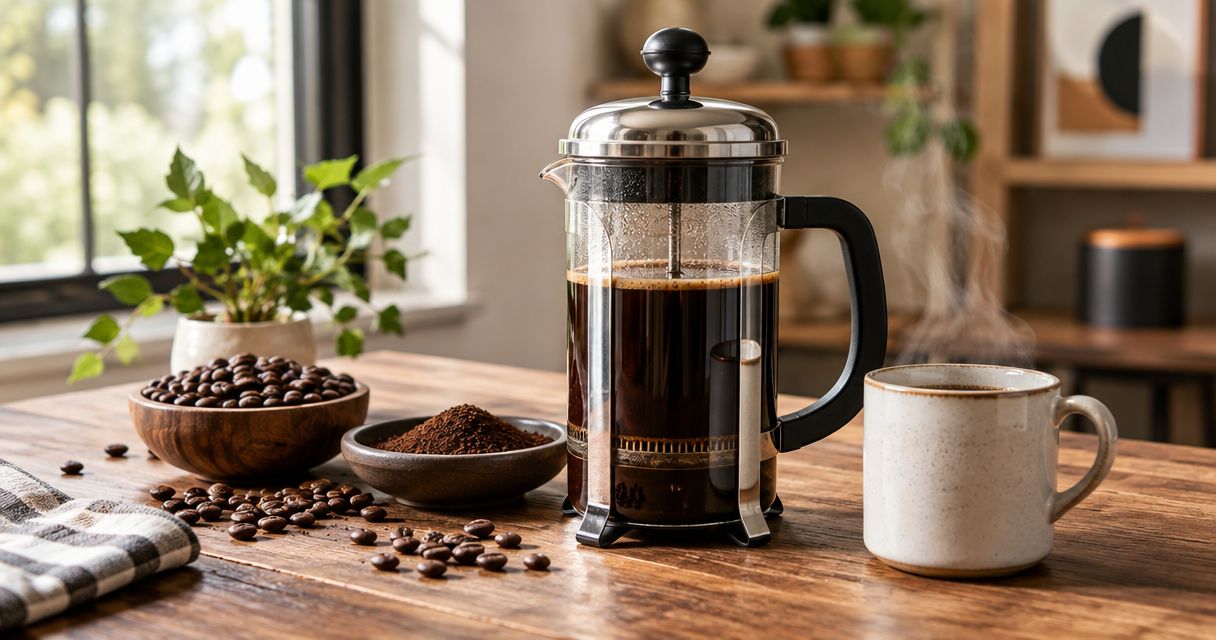
French press brewing uses immersion and a metal filter. More coffee oils and fine particles reach your cup than with paper-filtered brewing, so texture matters alongside flavor. A coffee you enjoy through a paper filter can feel heavier in a press.
God's Country Coffee Co. French Roast is best for French press drinkers who prefer a dark-roasted blend. That is a preference-based recommendation, not a claim that every French press needs dark coffee. The retailer also sells single-origin coffees and sample packs, giving you other routes when dark roast is not your default.
Start with God's Country Coffee Co. if you already know the style you want. Use the comparisons below to decide whether your next purchase should be a blend, a mixed sampler, or a single-origin alternative.
What makes the best coffee blends for French press?
For your 2026 shortlist, use these criteria before judging names or packaging:
- Roast preference: Choose dark roast because you enjoy dark roast, not because the brewer requires it. Medium-roasted coffee also works in a French press.
- Flavor direction: Decide whether you want roast-led flavor, chocolate and earthiness, or sweetness with citrus. Those are different buying goals.
- Body: The metal filter preserves a textured cup. Look for a stated body description when texture drives your choice.
- Grind control: Match the grind to immersion brewing. Whole beans give you control when you have a grinder; prepared grounds require checking the grind selection.
- Comparison value: A mixed sample pack helps you compare styles before committing to one coffee. Keep the brewing recipe consistent.
- Category accuracy: A blend combines coffees; a single-origin coffee is a different category. Neither label guarantees a better French press result.
The useful question is not which bag sounds strongest. It is which coffee matches the cup you want to drink every morning.
Coffee blends and alternatives at a glance
This 2026 comparison includes one standalone blend, one mixed sample pack, and two clearly labeled single-origin alternatives. Each recommendation solves a different problem.
| Coffee or pack | Best for | Standout feature | Key limitation |
|---|---|---|---|
| French Roast | Dark-roast blend drinkers | Dark-roasted blend of specialty-grade Central American coffee | Not the medium-roast option in this comparison |
| Best Sellers Sample Pack: 6Bean, Cowboy, Breakfast, Peru, Mexico, Bali | Comparing several coffees | Mixed selection, including a dark-roasted 6Bean house blend | Not one standalone blend |
| Sumatra | Syrupy body | Dark chocolate, dried fruit, earthy notes, and lingering body | Single-origin alternative, not a blend |
| Peru | Medium-roast sweetness | Salted caramel, silky sweetness, and citrus | Single-origin alternative, not a dark-roast blend |
These are purchase recommendations based on the supplied product descriptions. They are not a blind-tasting leaderboard, and the order does not turn the alternatives into blends.
1. French Roast: best French press blend for dark-roast drinkers
French Roast is a dark-roasted blend of specialty-grade coffee from Central America. It is the clearest match here when you specifically want a blend rather than a sampler or a single-origin coffee.
Choose French Roast because its stated roast matches your preference. Do not choose it merely because the word French appears in both the coffee name and your brewer: French roast describes a roasting style, while French press describes a brewing method.
French Roast pros:
- A standalone blend fits the search directly.
- The dark-roast designation makes the roast choice straightforward.
- The description identifies Central America as the source region.
French Roast cons:
- The dark-roast profile is the wrong direction if you want a medium roast.
- One blend gives you less variety than the mixed sample pack.
Best for: You already prefer dark-roasted coffee and want one blend to use in your French press.
Start with your normal immersion recipe rather than increasing the dose simply because the roast is dark. Stronger concentration and darker roasting are different variables. Adjust the dose only after tasting the finished cup.
Verdict: Buy French Roast if dark roast is your established preference; skip it if you are looking for a medium-roast option.
2. Best Sellers Sample Pack: best for comparing blends and origins
Best Sellers Sample Pack: 6Bean, Cowboy, Breakfast, Peru, Mexico, Bali puts several coffees into one comparison purchase. The description identifies 2 oz sample packs and describes 6Bean Blend as a dark-roasted house blend made with coffees from around the world.
This is the strongest exploratory choice from God's Country Coffee Co. when you have not settled on coffee blends for French press. It is not a single blend, and its mix of named coffees should be treated as a tasting exercise rather than one uniform flavor profile.
Best Sellers Sample Pack pros:
- Lets you compare several named coffees using the same brewer.
- Includes 6Bean Blend, a dark-roasted house blend.
- Provides a route to compare blends with coffees named for origins.
Best Sellers Sample Pack cons:
- The small samples require a deliberate tasting plan.
- A mixed selection is less direct than buying one preferred blend.
- Changing your recipe between samples makes the comparison harder to interpret.
Best for: You are unsure whether your preference is for a blend, a roast style, or a particular origin.
Write down body, sweetness, bitterness, and whether you would drink each coffee again. Keep the dose and water amount unchanged. A useful comparison tells you what to buy next, not merely which coffee tasted different.
Verdict: Buy the Best Sellers Sample Pack to explore; skip it when you already know the exact coffee you want.
3. Sumatra: best French press alternative for syrupy body
Sumatra is a single-origin alternative, not a coffee blend. Its stated cupping notes include medium acidity, syrupy body, dark chocolate, dried fruit, earthiness, and a long-lingering body.
The texture description makes Sumatra a relevant French press candidate. Choose it when a substantial mouthfeel is your main goal, rather than assuming that a darker roast automatically delivers the body you want.
Sumatra pros:
- Syrupy body directly addresses a texture-led preference.
- Dark chocolate and dried fruit provide a clear flavor direction.
- Earthiness gives you a distinct alternative to Peru's citrus profile.
Sumatra cons:
- It does not meet a strict requirement for a blend.
- Earthy notes are a poor match when you prefer citrus-led coffee.
- Lingering body is not the goal if you want a lighter-feeling cup.
Best for: You prioritize syrupy texture and chocolate, dried-fruit, and earthy notes.
Keep the final pour gentle if sediment distracts you from those characteristics. The last liquid in the press contains more settled material; transferring everything aggressively works against a cleaner drinking experience.
Verdict: Buy Sumatra for body and earthiness; skip it if your purchase must be a blend.
4. Peru: best French press alternative for medium-roast sweetness
Peru is a medium-roasted single-origin coffee with a stated profile of salted caramel, silky sweetness, and citrus. It belongs here as an alternative for readers who discover that dark roast is not their priority.
You do not need to change brewing methods to explore that profile. A French press can brew medium-roasted coffee; the grind, dose, water, and steeping routine still determine how you extract it.
Peru pros:
- Medium roast offers a clear contrast to French Roast.
- Salted caramel and silky sweetness suit a sweetness-led preference.
- Citrus gives you a different direction from Sumatra's earthy notes.
Peru cons:
- It is a single-origin coffee rather than a blend.
- Citrus notes are not the target for someone seeking earthy flavor.
- It does not satisfy a specific dark-roast requirement.
Best for: You want medium-roast sweetness and citrus rather than a dark-roast blend.
Taste Peru black before adding milk or sweetener if your purpose is comparison. Then prepare it the way you normally drink coffee. Your everyday preference matters more than a tasting exercise you will not repeat.
Verdict: Buy Peru for medium-roast sweetness; skip it if dark roast or blend composition is essential.
Choose your coffee before changing the recipe
Use the descriptions to narrow your choice: French Roast for a dark blend, the Best Sellers Sample Pack for exploration, Sumatra for body, and Peru for medium-roast sweetness. These are different routes, not interchangeable recommendations.


A practical French press starting recipe
For your 2026 comparisons, use a repeatable starting recipe rather than a different method for every bag. A ratio of 1 g coffee to 15 g water is a common immersion starting point, not a product-specific performance claim.
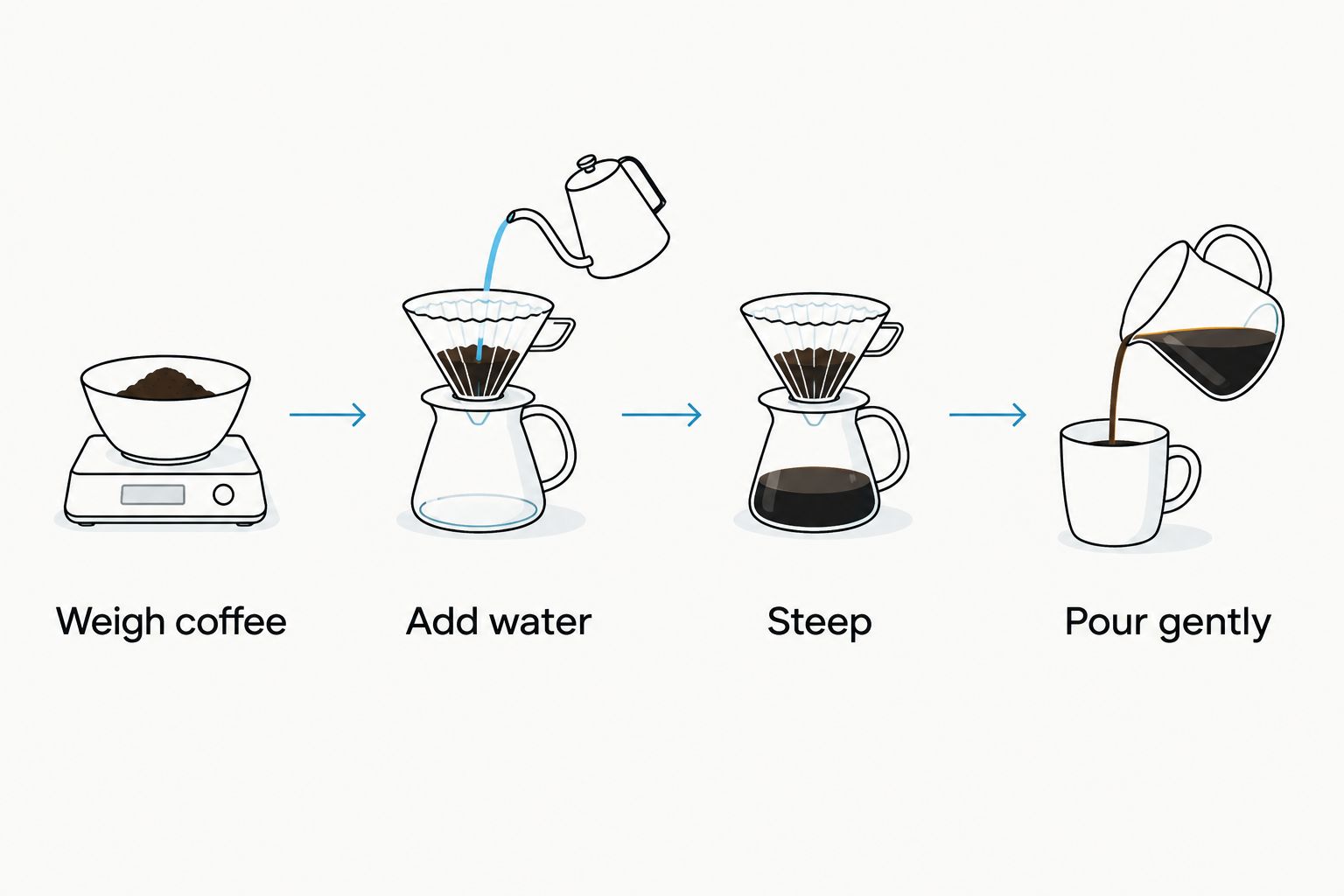
- Weigh coffee: Start with 30 g of coffee.
- Add water: Use 450 g of hot water, provided your press has room for that batch.
- Steep: Start with 4 minutes, using a timer.
- Pour gently: Press slowly and transfer the brewed coffee to cups or a separate vessel.
Use a coarse, reasonably even grind as your starting point. Wet all the grounds when adding water; dry pockets make the brew less consistent. Keep your water source and stirring routine the same while comparing coffees.
Treat the recipe as a baseline, then change one variable. If the cup feels too concentrated, adjust the coffee-to-water ratio. If it tastes harsh or unfinished, examine grind and extraction before deciding that the coffee itself is wrong.
Do not force the plunger through heavy resistance. A finer grind can clog the filter and increase sediment; moving the plunger slowly is a practical safeguard, not a cure for unsuitable grounds.
How these recommendations are ranked
The 2026 ranking puts category fit first, then assigns distinct preference slots. French Roast leads because it is explicitly a dark-roasted blend. The sampler follows for exploration; Sumatra and Peru are alternatives for texture and medium-roast sweetness.
The recommendations use product descriptions, not claimed hands-on tests. Roast, stated flavor, body, and blend-versus-origin labeling support the choices. Brewing advice explains how to compare them without presenting tasting results that have not been supplied.
Which coffee should you choose?
Choose French Roast if you want a dark-roasted blend and need a default recommendation. Choose the Best Sellers Sample Pack if you are undecided about styles. Choose Sumatra for syrupy body or Peru for medium-roast sweetness, accepting that both are single-origin alternatives.
For coffee blends for French press in 2026, God's Country Coffee Co. offers a straightforward decision: buy the stated blend when the roast fits, or compare several coffees before settling on your regular bag. The brewer does not require you to prefer dark roast.
FAQ
What's the best coffee blend for French press here?
French Roast is the best pick here for dark-roast drinkers seeking a standalone blend. It is described as a dark-roasted blend of specialty-grade coffee from Central America.
Does French press coffee have to be dark roast?
No, French press coffee does not have to be dark roast. Medium-roasted coffee also works; choose the roast you enjoy and use a consistent immersion recipe.
Is French Roast the same thing as French press coffee?
No, French roast describes a roasting style, while French press describes a brewing method. A French press can brew coffees with different roast levels.
Is a blend better than single-origin coffee for French press?
A blend is not inherently better than single-origin coffee for French press. Choose according to roast, flavor, and body; Sumatra and Peru are single-origin alternatives in this guide.
Which coffee should I choose if I like a thick-feeling cup?
Sumatra is the texture-led recommendation because its description specifies syrupy body and long-lingering body. Its stated notes also include dark chocolate, dried fruit, and earthiness.
How much coffee should I put in a French press?
Start with 30 g of coffee and 450 g of water if your brewer has room for the batch. That is a 1:15 coffee-to-water ratio; scale both amounts together for a different batch size.
How long should I steep French press coffee?
Use 4 minutes as a starting steeping time. Keep timing consistent while comparing coffees, then adjust your recipe to taste.
What's the best way to compare several coffees at home?
Use the same dose, water amount, grind approach, and steeping time for each coffee. The Best Sellers Sample Pack supports comparing several named coffees without treating them as one blend.
One last thing
Do not judge a coffee only by the final sip from the press. Sediment settles, so the bottom of a cup can taste and feel different from the earlier pours. Transfer the brewed coffee gently and compare the middle of each cup before writing off a blend.