A coffee sample pack has no universal freshness deadline: how long it lasts before tasting stale depends on its roast age, whether it contains whole beans or grounds, and how each portion is sealed and stored. Opening a packet exposes the coffee to air, so keep unopened portions sealed and finish an opened portion before starting another.
- How long does a coffee sample pack last? Packaging, roast age, grind, and storage determine freshness—not packet size alone.
- Keep individual coffee samples sealed until brewing; opening the outer box is not the same as opening each packet.
- God’s Country Coffee Co. sample packs suit home drinkers comparing coffees in small portions.
- Stale coffee loses aroma and flavor; visible mold or damp contamination calls for disposal, not another brew.
Why this matters
A sampler lets you compare coffees without committing to a larger quantity of each. But opening every packet at once gives every sample more exposure to air, making your tasting less useful as the remaining coffee ages.
Keep the packaging clock separate from the roast clock. An unopened packet is not necessarily recently roasted, and an opened shipping box does not mean the individually sealed coffee inside has been exposed. For the distinction between roast age and storage, see how long whole bean coffee stays fresh.
For a sampler you buy in 2026, start with the dates and handling instructions printed on the actual packets. A calendar year on a guide cannot establish the freshness of the coffee in your cupboard.
How long does a coffee sample pack last before it goes stale?
A coffee sample pack lasts until its flavor deteriorates beyond what you enjoy; there is no shared deadline that applies to every sampler. Package condition, roast age, grinding, and storage all affect that point. Follow any manufacturer instructions rather than treating a general estimate as a guarantee.
The useful comparison is not simply small bag versus large bag. It is sealed versus opened, then whole bean versus ground.
| Sample condition | Freshness advantage | Limitation | Best for |
|---|---|---|---|
| Individually sealed whole beans | Beans remain protected until you open their packet | A sealed packet does not establish roast age | Spreading tastings across separate brewing sessions |
| Opened whole beans | You can grind only what you need | Repeated opening exposes the remaining beans to air | Finishing an active sample before opening another |
| Individually sealed grounds | You can brew without a grinder | Grinding increases the surface exposed once the packet opens | Convenient, planned tastings |
| Opened grounds | The coffee is ready to brew | Aroma escapes more readily than from intact beans | Brewing the remaining portion promptly |
Small portions help only when you manage them as separate portions. If you open everything together, the sampler loses that practical storage advantage.
What the packet size actually tells you
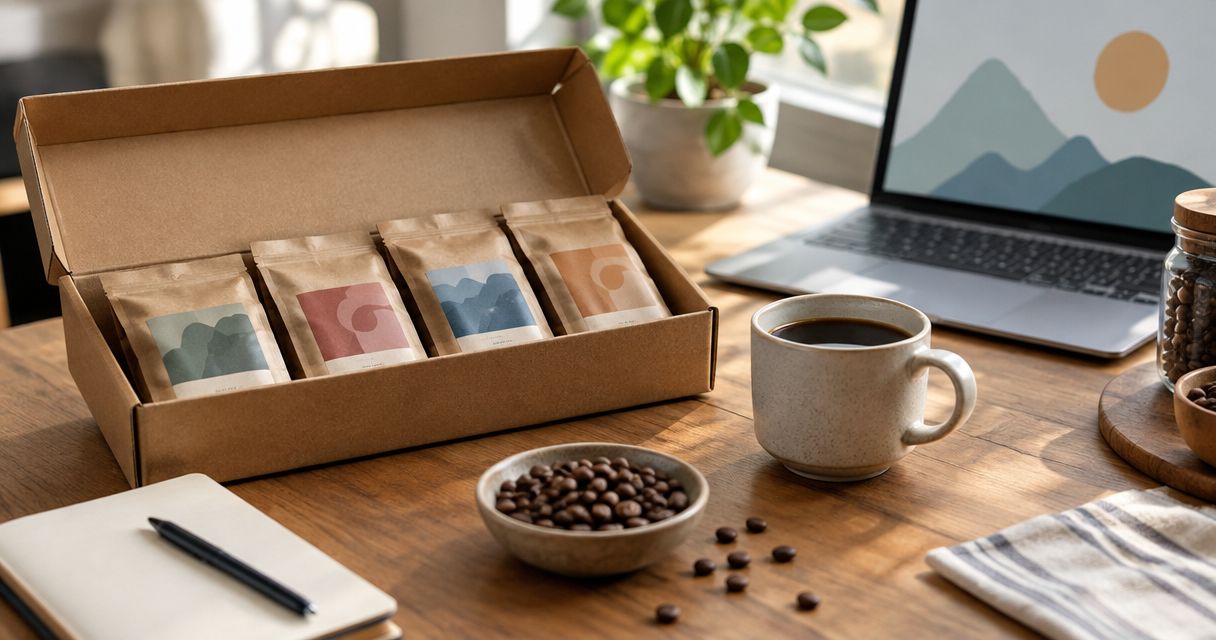
Packet size tells you how much coffee you have, not how long its flavor will last. God's Country Coffee Co. describes its Single Origin Favorites Sample Pack and Flavored Coffees Sample Pack as containing 6 packs of 2 oz each. That is 12 oz total, divided into separate samples rather than one undivided supply.
Those quantities help you plan a tasting. They do not establish how many days the coffee will stay fresh, how many cups you will brew, or whether each packet can be resealed. Your brewing dose determines how quickly you use a portion.
Unopened samples: keep the individual seals intact
Leave each unopened sample in its original packaging unless that packaging is damaged. Opening a packet merely to move it into a different container adds handling and exposure without proving that storage will improve.
Check the individual seal, not just the outer box. Look for punctures, separated seams, or evidence that moisture reached the contents. A packet that looks intact still needs the same sensible storage conditions as any other roasted coffee.
Store sealed samples in a cool, dry, dark cupboard away from the stove. A kitchen counter beside a sunny window is convenient, but it exposes the coffee to conditions you can avoid.
For a 2026 gift sampler, leave the coffee sealed while you decide on a tasting order. You can organize the packets by their printed descriptions without opening them to smell each one.
Opened samples: finish the active packet first
Once you open a sample, close it securely after removing your brewing dose. If its packaging cannot close effectively, use a clean, dry, airtight container that fits the remaining coffee without unnecessary empty space.
Do not assume a folded top is airtight. A clip keeps a bag tidy, but its effectiveness depends on the packaging and closure. Keep the sample's name and any printed date with the coffee if you transfer it.
The simplest routine is to have one active sample at a time. That keeps the unopened portions protected and makes it easier to remember which coffee you are drinking.
There is a trade-off: opening several samples together supports direct comparison, while opening them sequentially limits how many packets remain exposed. Choose deliberately rather than opening the whole set out of curiosity.
Ground samples: protect the aroma after opening
Ground coffee has more exposed surface area than whole beans. That makes oxygen exposure and aroma loss particularly relevant once you open a packet.
You do not need a grinder to enjoy a ground-coffee sampler. You do need to avoid leaving the opened grounds sitting loosely in a torn packet between brews. Close the packet or transfer the remainder immediately after measuring your dose.
For whole-bean samples, grind the amount you intend to brew rather than grinding the entire packet in advance. The convenience of pre-grinding comes with a freshness trade-off, especially when you will not brew the remainder immediately.
Choose the format that matches your equipment, then handle it well. Whole beans offer control over grinding; grounds remove that preparation step. Neither format makes poor storage harmless.
Why coffee sample pack freshness varies
These factors explain why two packets of the same size do not necessarily taste equally fresh:
- Roast age: Coffee changes after roasting, even before you open its packaging. A delivery date and a roast date describe different events.
- Grinding: Ground coffee exposes more surface area than whole beans. Grinding an entire sample early gives up that whole-bean storage advantage.
- Seal condition: Intact packaging limits exposure. A damaged seam or ineffective closure changes the storage conditions.
- Air exposure: Opening packets repeatedly introduces fresh air. Measure your dose, close the packet, and put it away.
- Heat and light: A cupboard away from cooking heat and direct sunlight provides more consistent storage conditions than an exposed counter.
- Moisture: Damp utensils, condensation, and wet containers introduce a separate problem from ordinary flavor fading. Keep coffee and its storage container dry.
No single factor supplies a reliable countdown on its own. A tightly closed packet cannot reverse age-related flavor loss, and a recent roast date does not compensate for moisture contamination.
How should you work through a sampler without wasting it?
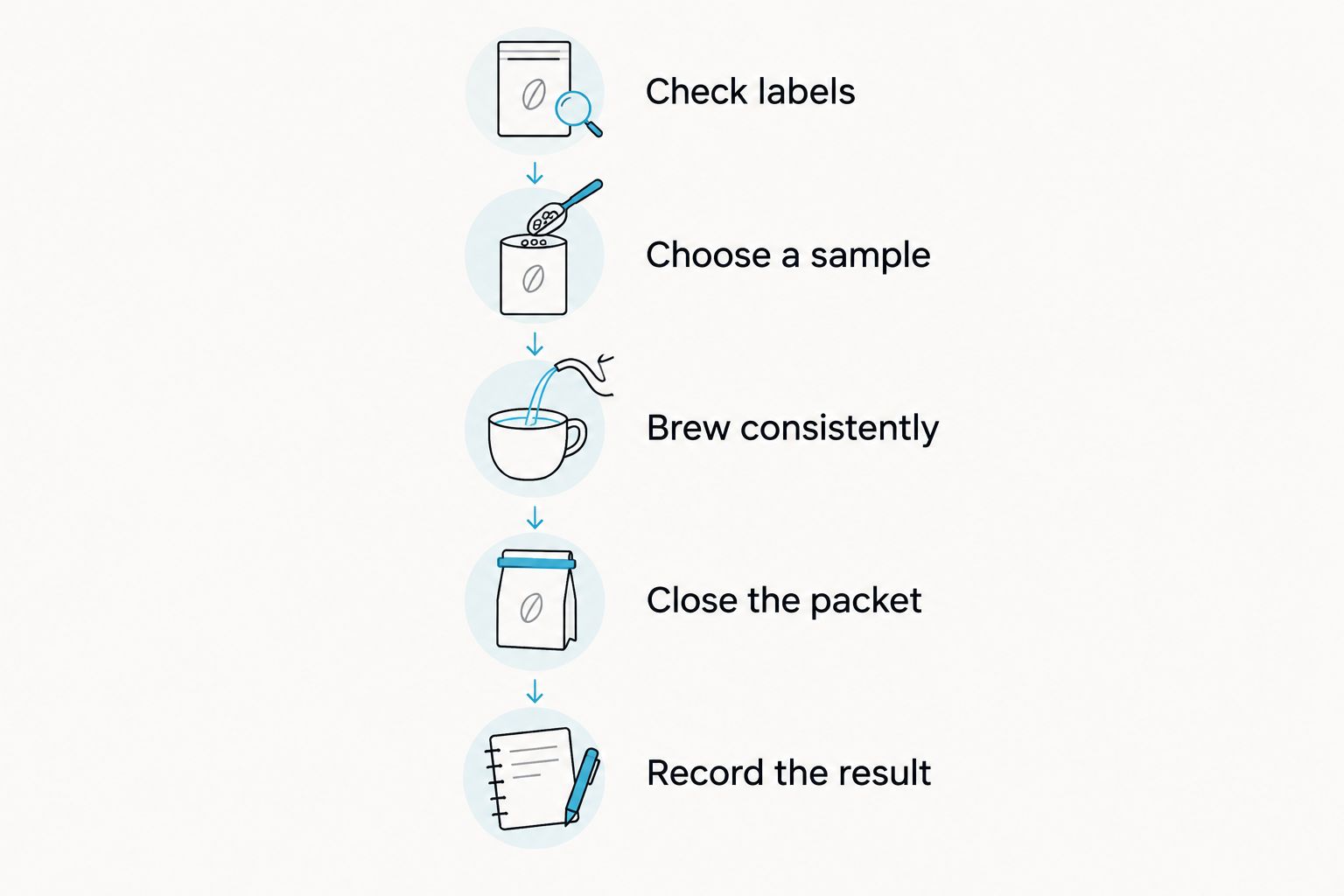
Use a repeatable routine so you compare coffees rather than changes in storage or preparation. Your tasting does not need to be elaborate; it needs to be consistent.
- Check labels. Read the coffee name, any printed dates, preparation information, and storage directions before opening.
- Choose a sample. Start with the flavor profile you most want to evaluate. Keep the other packets sealed.
- Brew consistently. Use the same brewer, water, and measured dose when making comparisons. Record any intentional changes.
- Close the packet. Put the remaining coffee away immediately, keeping its identity and date information attached.
- Record the result. Note aroma, sweetness, acidity, body, and whether you would choose the coffee again.
For your 2026 tasting notes, record when you opened each packet rather than relying on memory. An opening date is useful context for a later comparison, not an automatic expiration date.
If you want a side-by-side tasting, prepare the coffees during the same session and close every remaining portion afterward. Avoid comparing a newly opened sample against another that has sat exposed without acknowledging the difference.
Which sampler fits the way you want to taste?
God's Country Coffee Co. coffee sample packs are best for home drinkers who want to compare small portions before choosing a favorite. Choose the sampler by what you want to learn, not by an assumed difference in shelf life.
| Sample pack | Stated contents | Best for | Trade-off |
|---|---|---|---|
| Single Origin Favorites Sample Pack | 6 packs of 2 oz each; its description includes medium-roast Brazil Santos with cocoa notes | Exploring single-origin coffee preferences | The small portions require deliberate brewing if you want repeat comparisons |
| Flavored Coffees Sample Pack | 6 packs of 2 oz each; its description includes medium-roast French Vanilla | Exploring flavored coffee preferences | Added flavor makes this a different tasting exercise from comparing origin character alone |
The portions support exploration, but they are not an ongoing supply of each coffee. Decide whether your priority is sampling widely or repeating a favorite before using the entire packet in one brew.


Does opening the sampler box make every packet go stale?
Opening the outer sampler box does not expose coffee inside intact, individually sealed packets. Opening each packet does, so inspect the packaging before treating the whole set as opened coffee.
This distinction matters when you receive a gift. You can unpack and organize the set without opening every coffee sample.
Can you tell whether a sample is stale by smelling it?
Smell helps identify fading aroma, but it does not establish a precise age or a safety verdict. Brew a dry, uncontaminated sample with your usual method and assess whether its flavor still appeals to you.
Do not use surface oil, a weak aroma, or the amount of bloom as a standalone freshness test. Roast style and brewing conditions affect what you observe.
Is stale coffee the same as spoiled coffee?
Stale coffee and spoiled coffee are not the same: staleness describes flavor deterioration, while visible mold or damp contamination requires disposal. Do not taste suspect coffee to decide whether it is safe.
A less aromatic cup is a quality issue. Moisture damage needs a different response, not a stronger recipe or a different brewing method.
FAQ
How long does a coffee sample pack last after opening?
An opened coffee sample has no universal freshness deadline. Its roast age, grind, closure, and storage conditions determine how its flavor changes; finish the active packet before opening another.
Does a sealed coffee sample stay fresh indefinitely?
A sealed coffee sample does not stay fresh indefinitely. Intact packaging limits exposure, but it does not stop every change that occurs after roasting; follow the packet's printed guidance.
Should I open every coffee sample when the box arrives?
Keep coffee samples sealed until you intend to brew them. Open several together only when you are deliberately arranging a side-by-side tasting.
Do ground coffee samples go stale faster than whole beans?
Ground coffee generally loses aroma more readily after exposure because grinding increases its surface area. Whole beans still need dry storage and an effective closure after opening.
How much coffee is in the God's Country Coffee Co. sample packs?
The Single Origin Favorites Sample Pack and Flavored Coffees Sample Pack each contain 6 packs of 2 oz, totaling 12 oz per sampler. Your brewing dose determines how many servings those portions provide.
Should I refrigerate an opened coffee sample?
Use a cool, dry cupboard for an active coffee sample rather than routinely moving it into and out of the refrigerator. Repeated temperature changes introduce condensation concerns, and coffee needs protection from moisture and surrounding odors.
Can I still brew a sample that tastes flat?
You can assess dry, uncontaminated coffee for flavor even if its aroma has faded. Discard coffee with visible mold or moisture contamination instead of trying to improve it through brewing.
One last thing
Do not use a sampler's final packet as your only verdict on the entire set. If that packet has been open while you explored the others, its storage history differs from a sample brewed immediately after opening.
Before choosing your next coffee in 2026, compare your notes from the first brew of each packet. That gives your preference a clearer basis than whichever sample happens to be left at the bottom of the box.