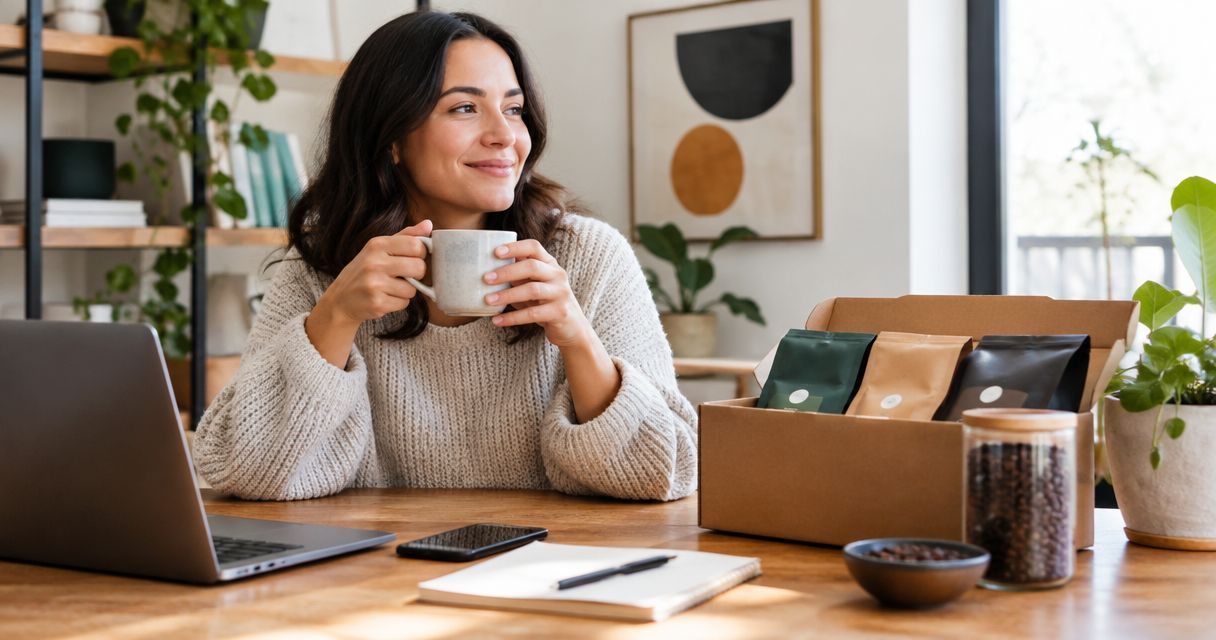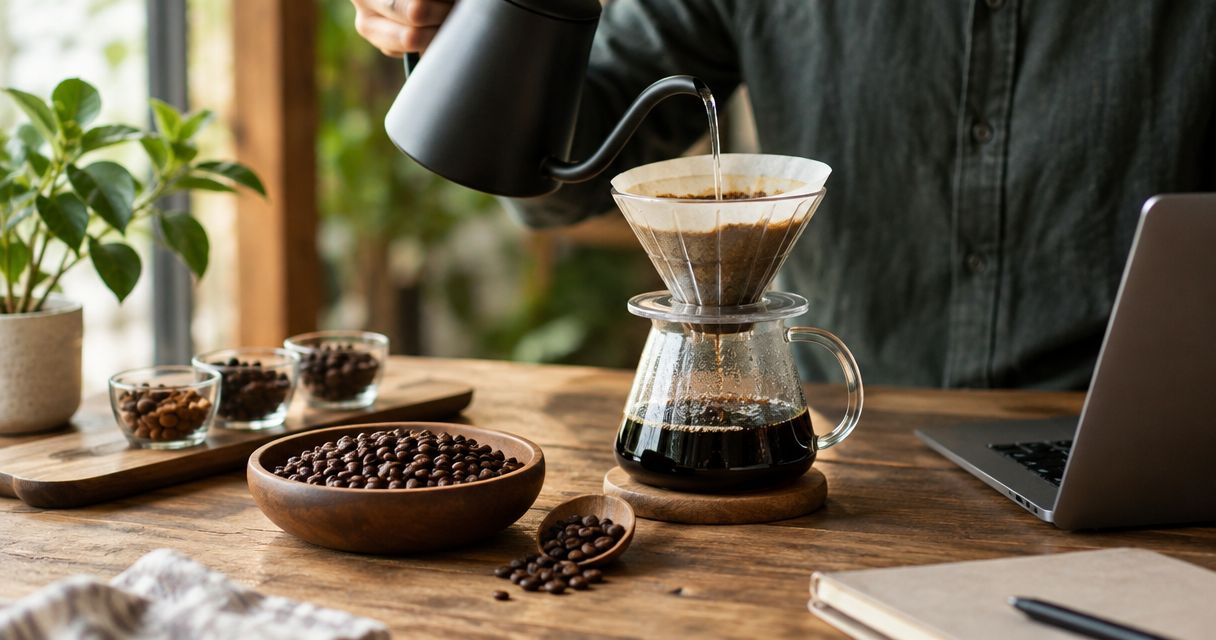
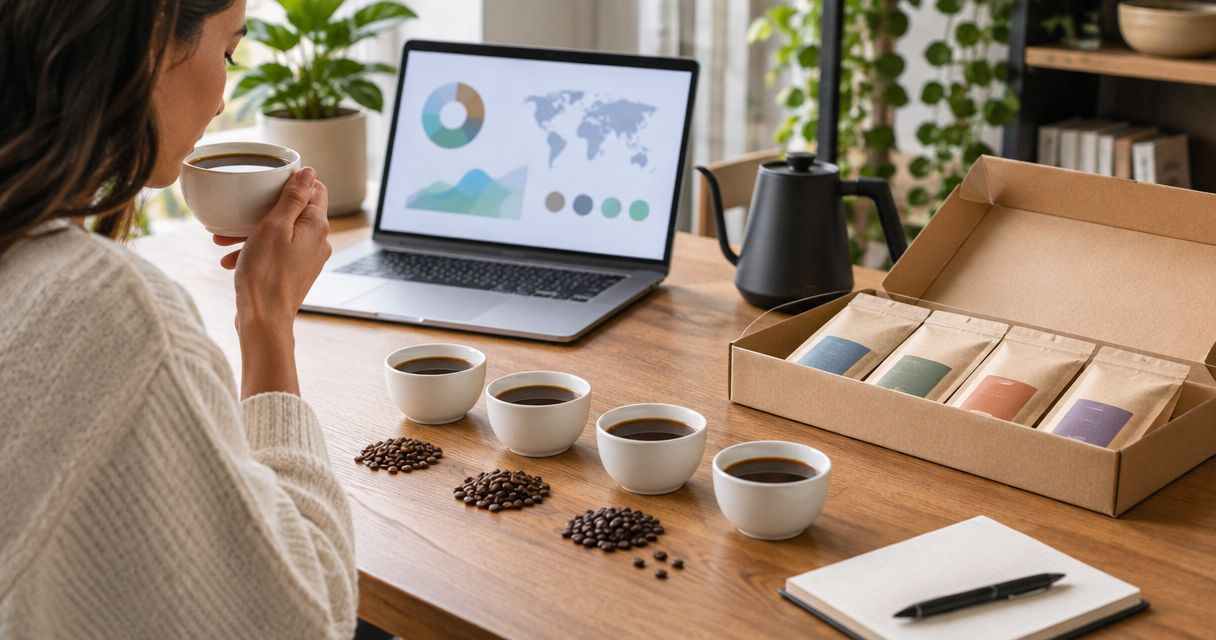
Instead of manually choosing coffee again whenever a bag runs low, use a coffee sample pack to subscription workflow: taste consistently, record your favorite, then set a recurring order only when the selected product’s checkout explicitly offers one. Start with God’s Country Coffee Co., and use this 2026 guide to separate the tasting decision from the recurring-order decision.
- God’s Country Coffee Co. coffee sample packs suit home drinkers comparing flavors before choosing a repeat purchase.
- The coffee sample pack to subscription workflow starts with consistent brewing, not a recurring-order commitment.
- Single Origin Favorites Sample Pack contains six 2 oz packs for comparing single-origin coffees.
- Confirm the exact coffee, format, recurring terms, and order controls before authorizing a subscription.
Why this matters
A coffee you enjoy during a tasting is not automatically the coffee you want every morning. Your regular brewer, milk, serving size, and household consumption all belong in the decision.
Choose the coffee first; choose the replenishment method second. A sample order helps answer what you like, while a subscription requires a separate decision about quantity, timing, and recurring authorization.
For your 2026 buying routine, keep a tasting record and a consumption record. The first identifies the winner; the second tells you whether a repeating schedule fits your actual use.
Before you start
- Gather your brewing materials: a sample pack, your usual brewer, suitable filters where required, water, a scale if you use one, and a notebook or notes app. Use the same equipment throughout the comparison.
- Prepare your buying details: your delivery address, payment method, and the correct country/currency selection. If a recurring-order option appears, read its terms before entering an ongoing commitment.
- Check the format before tasting: whole beans require a grinder, ground coffee must suit your brewer, and pods require a compatible machine. A sample-pack purchase does not itself authorize a subscription or establish a recurring schedule.
Sample-pack selection
Compare the tasting routes
God’s Country Coffee Co. coffee sample packs include single-origin, flavored, and best-seller selections. Choose the pack that answers your main question rather than ordering several overlapping comparisons at once.
| Sample pack | Best for | Useful starting point | Trade-off |
|---|---|---|---|
| Single Origin Favorites Sample Pack | Comparing single-origin coffees | Six 2 oz packs; the description identifies Brazil Santos as medium roast with cocoa notes | A single-origin comparison does not answer whether you prefer added flavoring |
| Flavored Coffees Sample Pack | Finding an everyday flavored coffee | Six 2 oz packs; the description includes medium-roast French Vanilla | Flavor preferences can change when you add your usual milk or sweetener |
| Best Sellers Sample Pack: 6Bean, Cowboy, Breakfast, Peru, Mexico, Bali | Exploring a named cross-section of coffees | Samples come in 2 oz packs; the description identifies 6Bean Blend as a dark-roast house blend | Its broader mix requires careful notes to distinguish the coffees |
The six 2 oz packs in the single-origin and flavored selections each total 12 oz. That is pack weight, not a promised number of drinks: your dose determines how many brews you make.
Recommendation: select one tasting route before comparing individual coffees. Choose single-origin exploration, flavored-coffee exploration, or the best-seller selection according to the question you want answered.
Set up your tasting record
- Write the exact sample-pack name at the top of a new note. Add the date and mark it as your 2026 tasting record.
- Create these headings: Coffee, Brew method, Coffee dose, Water amount, Additions, and Decision. These are your own notebook fields, not store interface labels.
- Copy each coffee name from its sample label. Preserve the exact name so you can identify the correct coffee later.
- Set aside enough of each sample to repeat the brew before using the remainder for experiments.
Expected result: you have a named comparison set and a record that connects each tasting result to a repeatable preparation.


Brewing and favorite selection
Run a consistent tasting
- Prepare the first sample with your normal brewing method. Record the coffee dose, water amount, and grind setting when you control the grind.
- Keep those choices consistent for the next sample. Do not switch brewers and recipes while trying to judge which coffee you prefer.
- Taste each coffee the way you normally drink it. If you add milk or sweetener every morning, include that preparation in your comparison.
- Record plain observations: enjoyable black, better with milk, too intense for breakfast, or suitable for an afternoon cup. Avoid forcing your experience to match the package’s tasting notes.
- Repeat the leading coffee on another occasion before making it your regular purchase.
Expected result: your favorite wins under your everyday conditions, not because it received a different recipe or an unusually favorable tasting moment.
The workflow has separate checkpoints. Keep them separate so a promising first cup does not turn directly into an ongoing order.
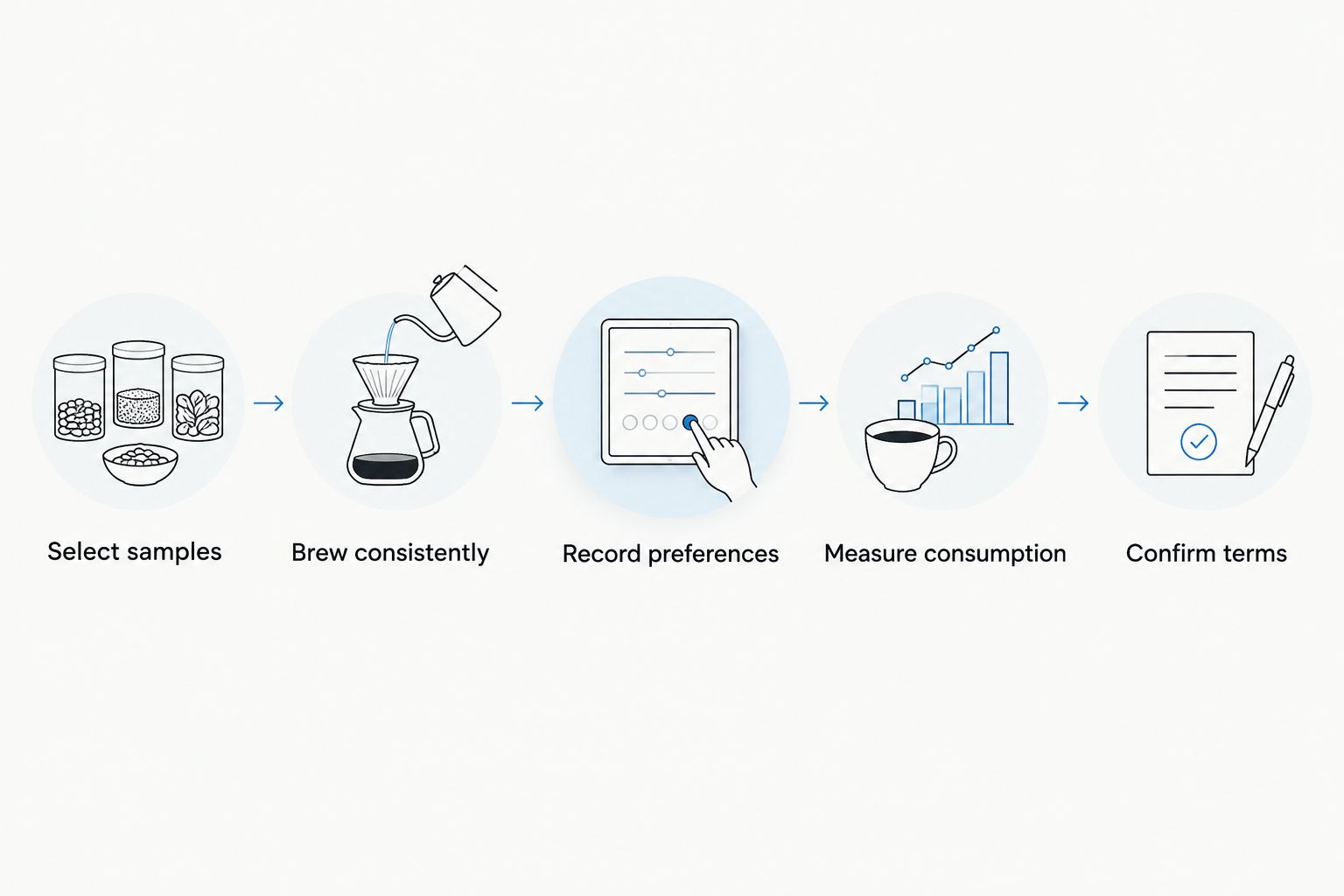
Make the decision explicit
Use these checkpoints in your tasting record:
- Select samples: choose the comparison that matches your goal.
- Brew consistently: hold the preparation steady while comparing coffees.
- Record preferences: name the coffee you would willingly drink again.
- Measure consumption: record how much coffee your household actually uses.
- Confirm terms: review the recurring arrangement before authorizing it.
Keep the favorite and the runner-up distinct. A runner-up gives you a deliberate alternative; it is not a reason to create several recurring orders before you understand household consumption.
If no sample earns a clear repeat-purchase decision, stop at tasting. Finishing a sample pack does not create an obligation to subscribe.
Consumption and recurring-order setup
Measure your household’s use
- Record the coffee you use for each brewing session across a representative stretch of your routine. Include shared pots and additional brews, not just your first drink.
- Separate home consumption from coffee bought elsewhere. A calendar reminder should reflect the coffee leaving your cupboard.
- Note predictable changes such as office days, travel, or another household member joining the routine.
- Use the selected bag’s stated weight and your recorded consumption to judge an appropriate replenishment interval.
Expected result: you can explain the intended quantity and interval using your own usage record instead of guessing from the number of mugs you own.
For a 2026 household schedule, represent an ordinary routine rather than a holiday week. If your consumption changes sharply from week to week, a manual reminder gives you more discretion than a fixed repeating commitment.
Confirm the recurring arrangement
- Find the exact winning coffee and confirm its format. Do not substitute a similarly named pod, decaf version, or different coffee without checking the description.
- Look for an explicitly offered recurring purchase option on the selected product or during checkout. Proceed only when the recurring nature of the order is clear.
- Read the displayed quantity, interval, billing terms, delivery details, and instructions for managing the arrangement. Do not infer controls from another retailer’s checkout.
- Confirm the country, currency, and delivery address before authorizing payment.
- Save the order confirmation and any provided management instructions. Check that the confirmation matches the coffee and recurring arrangement you intended.
Expected result: you have either deliberately authorized a documented recurring order or deliberately kept the purchase non-recurring. A sample-pack receipt alone is not evidence of a subscription.
Do not treat a repeat-order intention as recurring authorization. If the checkout does not explicitly offer a recurring arrangement, use a personal reorder reminder instead.
Second variant: reorder when your coffee runs low
A consumption-triggered reminder is the adjacent workflow for drinkers whose schedules vary. It preserves the tasting process but replaces automatic ordering with a stock check.
| Replenishment workflow | Best for | Advantage | Trade-off |
|---|---|---|---|
| Explicit recurring order | A stable routine and a confirmed recurring option | Repeats according to the arrangement you authorize | Requires monitoring when consumption changes |
| Personal reorder reminder | Variable consumption or a preference for manual approval | Keeps each purchase under your direct control | Requires you to check remaining coffee and complete the order |
- Keep the exact favorite coffee name and preparation notes together.
- Set a calendar reminder to inspect your remaining coffee. Choose the reminder timing from your usage record rather than a generic recommendation.
- At each reminder, check the cupboard before ordering. Include unopened coffee, not only the bag beside the brewer.
- Adjust the next reminder when your routine changes.
Expected result: the reminder prompts a decision, not an automatic purchase. This is a practical 2026 alternative when your coffee consumption does not fit a repeating interval.
Do not create unofficial checkout automation or store payment details in a personal script. A calendar reminder performs this workflow without attempting to reproduce a retailer’s ordering system.
Troubleshooting
The sample tastes different on the second brew
Compare the preparation notes before rejecting the coffee. Check dose, water amount, grind setting, brewer, and additions; then repeat the original preparation as closely as your equipment allows.
A tasting comparison stops being useful when every cup uses a different method. Change one preparation choice at a time when refining the winner.
The favorite disappears when you add milk
Repeat the comparison with your normal additions. Your regular drink is the relevant test, even when a different coffee tastes more distinctive black.
Record separate decisions for black coffee and coffee with milk only if you genuinely drink both. Otherwise, choose for your actual habit.
The sample name does not match the next purchase
Check the complete name and format against your notes and the product description. Do not assume a similar origin name means the same roast, preparation, or product.
Keep Peru, Peru Decaf, and Peru Coffee Pods distinct, for example. Those are separate named products, not interchangeable ordering labels.
The checkout does not show a recurring option
Use a non-recurring purchase and a personal reminder. Do not assume a sample order will convert later or that an account automatically creates ongoing deliveries.
Only authorize a subscription through an explicitly presented recurring arrangement. Keep the confirmation that documents your choice.
Coffee accumulates between orders
Review your consumption record and unopened coffee before your next purchase. For an existing recurring arrangement, follow its documented management instructions rather than assuming a particular pause or schedule control exists.
Reduce overlapping purchasing habits, too. A separate manual order can distort the consumption pattern you used to choose a recurring interval.
Customize your workflow
Keep one dependable coffee as your baseline and treat exploration as a separate activity. That makes it easier to tell whether a new selection deserves to replace your everyday choice.
God’s Country Coffee Co. sells blends, flavored coffee, single-origin coffee, sample packs, pods, and tea. That range supports different shopping goals, but it does not mean every format belongs in the same comparison or recurring arrangement.
Add a new branch only when it answers a real need: a different brewer, another household member’s preference, or a separate tea routine. Expand the tasting record before expanding recurring commitments.
FAQ
How do I go from a coffee sample pack to a subscription?
Taste the samples consistently, select a favorite, measure your consumption, and confirm an explicitly offered recurring arrangement for that exact coffee. A sample-pack purchase alone does not authorize a subscription.
Which God’s Country Coffee Co. sample pack is best for comparing origins?
Single Origin Favorites Sample Pack is the relevant choice for comparing single-origin coffees. Its description lists six 2 oz packs and identifies Brazil Santos as a medium roast with cocoa notes.
Should I choose flavored coffee or single-origin samples?
Choose flavored samples to compare flavored coffees, or single-origin samples to explore coffees identified by origin. Test the samples with your usual brewing method and additions.
How much coffee is in the single-origin sample pack?
Single Origin Favorites Sample Pack contains six 2 oz packs, totaling 12 oz. The number of drinks depends on the amount of coffee you use per brew.
Does buying a coffee sample pack automatically start a subscription?
A sample-pack purchase is not itself recurring-order authorization. Confirm any subscription through an explicitly offered recurring option and check the resulting order confirmation.
What should I do if I cannot find a subscription option?
Use a non-recurring purchase and set a personal reorder reminder. Base the reminder on your household’s actual coffee consumption.
How do I choose a coffee subscription interval?
Match the selected bag’s stated weight to your recorded household consumption. Include shared brews, travel, and coffee already in the cupboard before choosing an interval.
One last thing
Save some of the leading sample for a normal, unhurried morning. The coffee that impresses during a comparison still needs to earn its place in your everyday routine.
For your 2026 workflow, make the final test simple: would you choose this same coffee again tomorrow, prepared exactly this way? Answer that before deciding how often to order it.