Remote workers’ coffee subscription is a recurring coffee order designed to keep your home workspace supplied without repeated shopping. The right coffee subscription for remote workers matches your actual brewing habits, equipment, and days at home—not an imagined routine built around uninterrupted mornings.
- Choose a coffee subscription for remote workers by measured consumption, brewing format, and order controls.
- God's Country Coffee Co. suits home drinkers comparing single-origin and flavored coffee through sample packs.
- Test coffee before repeating an order; flavor variety does not guarantee a good everyday match.
- Confirm recurring-order terms, machine compatibility, and delivery details before committing.
Why coffee subscriptions matter for remote workers
A home coffee routine has to fit around calls, concentrated work, and time away from your desk. A recurring order removes a shopping task, but it does not solve an unsuitable grind or a delivery schedule that keeps adding coffee you have not finished.
For your 2026 setup, choose the coffee first and the recurring schedule second. You can explore God's Country Coffee Co. for blends, flavored coffee, single-origin coffee, sample packs, pods, and tea; confirm recurring purchase terms separately before enrolling.
Remote work also separates drinking frequency from office attendance. A household member might share your coffee, while travel or coworking days reduce your own consumption. Your order needs to reflect everyone using the supply, not just the number of mornings on your calendar.
The useful question is not which subscription sends the most interesting box. It is which arrangement keeps coffee you enjoy on hand without creating another task to manage. This guide covers measurement, format, tasting, order controls, and a simple review process.
How to choose a coffee subscription for remote workers
Measure your actual coffee use
Start with a written log, a kitchen scale if you already own one, or a count of the pods you use. Record ordinary workdays alongside weekends and days spent elsewhere. Buying a subscription before checking consumption reverses the decision: you end up adjusting your drinking to the shipment.
For bagged coffee, record the amount used in each brew rather than the size of your mug. Added water, milk, and ice make mug volume a poor guide to how quickly you finish a bag. For pods, count what goes into the machine, including drinks made for someone else.
Your 2026 order calendar should follow this observed use. Treat an unusually busy week as an exception rather than automatically increasing every future shipment.
- Record coffee used for each brew.
- Count shared household consumption separately.
- Mark travel and coworking days.
- Note unfinished coffee before placing another order.
- Compare consumption with the package quantity you intend to buy.
Match the format to your equipment
Check your brewer and existing coffee preparation routine before comparing subscriptions. Whole beans require grinding; ground coffee removes that task but still needs a grind suitable for your brewing method. Pods require a compatible machine, and a product name alone does not establish compatibility.
Choose the format you can prepare during a normal workday. An elaborate brewing ritual is a poor fit if you routinely abandon it before your first call. Conversely, convenience alone is not enough if the resulting coffee is something you do not enjoy.
Keep equipment decisions separate from recurring-order decisions. Test your current setup first rather than buying a grinder, a brewer, and a subscription simultaneously; changing everything makes it harder to identify why a cup tastes different.
- Identify your brewing method.
- Check the required grind or pod specification.
- Decide whether you want to grind before brewing.
- Include preparation and cleanup in your choice.
- Test the format before repeating the purchase.
Test your flavor preferences before committing
The manual approach is straightforward: buy coffee individually, brew it consistently, and write down what you like. Compare cups using the same equipment and preparation method. Otherwise, a change in brewing can look like a difference between coffees.
God's Country Coffee Co. coffee sample packs give home drinkers a packaged way to make that comparison. Single Origin Favorites Sample Pack contains 6 packs of 2 oz each, totaling 12 oz; Flavored Coffees Sample Pack also contains 6 packs of 2 oz each. These are tasting purchases, not evidence of recurring-order terms.
God's Country Coffee Co. is best for remote workers who want to compare single-origin and flavored coffee through sample packs. Sampling helps you choose, but it does not replace checking the format, quantity, or purchase conditions for your eventual everyday order.
- Brew samples with the same method.
- Taste coffee as you normally drink it, including milk if relevant.
- Record flavor preference rather than relying on the product name.
- Separate everyday favorites from occasional treats.
- Choose a repeat purchase only after tasting it.
These sample packs address different preferences. Single Origin Favorites Sample Pack is best for comparing single-origin coffees; Flavored Coffees Sample Pack is best for comparing flavored coffees. Their limitation is the same: a tasting assortment helps select a favorite but does not establish how much of that favorite your household needs.


Align orders with your working calendar
Use a calendar reminder to review your supply before ordering again. This manual approach works without any recurring purchase arrangement and lets you test whether a repeat schedule would actually simplify your routine.
Once consumption becomes predictable, compare the available recurring-order intervals with your observed use. Check how changes take effect, especially around travel, extended visits, or stretches of working outside the home. A schedule is only useful when you can understand and manage it.
For 2026 planning, distinguish an order date from an arrival date. Review the seller’s stated delivery information and do not assume an order submitted on a particular day reaches you before your current supply runs out.
- Match ordering intervals to measured consumption.
- Mark planned absences before scheduling deliveries.
- Review the remaining supply before repeating an order.
- Read the stated delivery information.
- Keep confirmation messages somewhere easy to find.
Verify recurring-order controls before enrollment
Read the purchase page and recurring-order terms yourself. Look for the actions you will need: changing quantity, switching coffee, skipping an order, pausing, or canceling. Do not assume these controls exist simply because a purchase is called a subscription.
Your 2026 checklist should include when a change must be submitted and when it takes effect. The ability to request a change is not the same as having that change apply to an order already being processed. Keep a copy of the terms you accept.
Favor clear controls over an attractive assortment you cannot manage. If the order settings do not suit an irregular work calendar, individual purchases remain a practical option. Automation is useful only when it reduces the work you actually have to do.
- Confirm whether the purchase renews automatically.
- Find the process for changing quantity or coffee.
- Check any skip, pause, and cancellation conditions.
- Read the timing requirements for order changes.
- Verify your delivery address and selected country/currency.
- Save the accepted terms and order confirmation.
Review the routine before expanding it
Keep a short note after each order: did you finish the coffee, enjoy it, and prepare it without interrupting your day? A notebook or simple document is enough. Your objective is an everyday routine that works, not a complicated coffee inventory system.
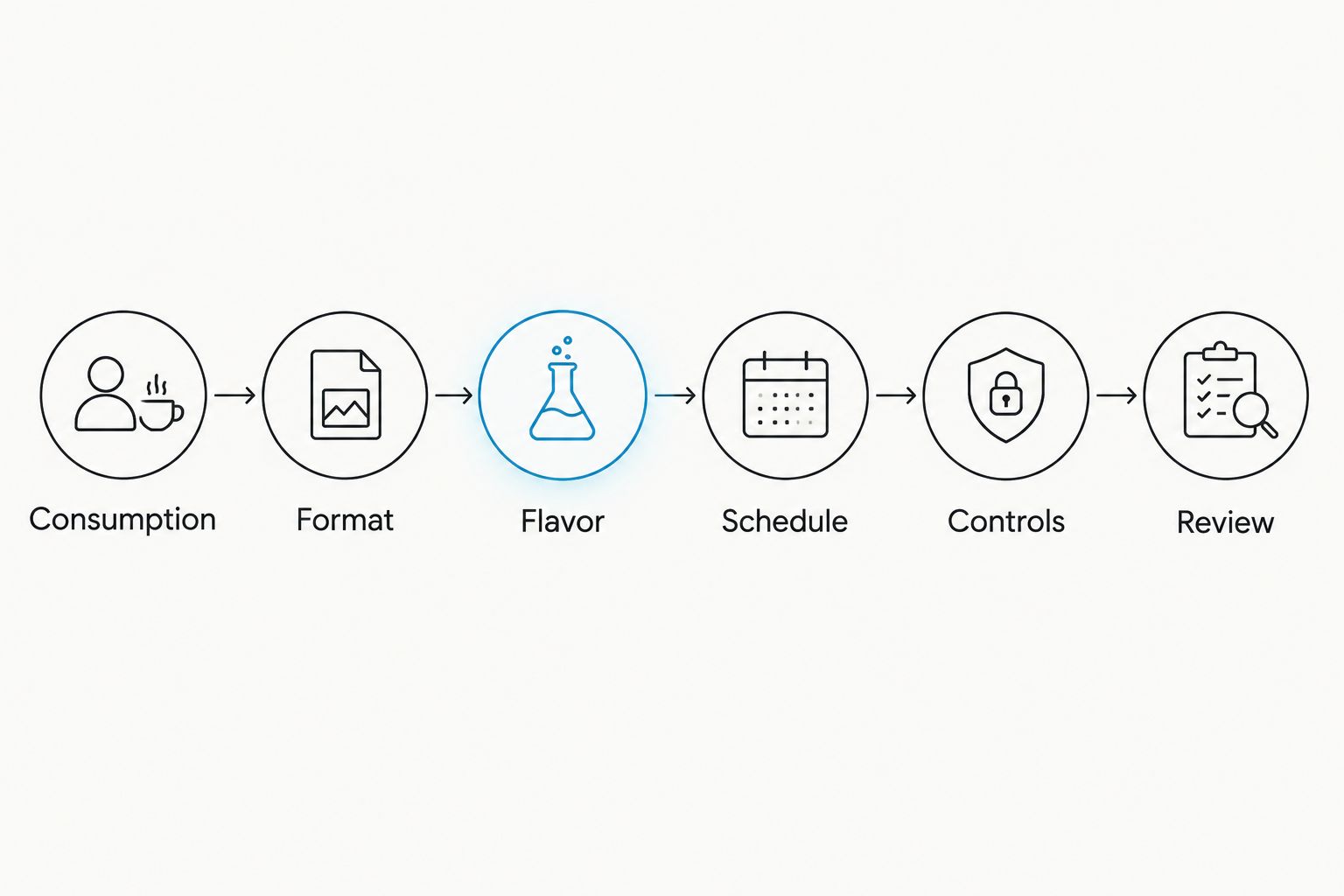
Review the sequence in order: Consumption, Format, Flavor, Schedule, Controls, Review. Fix the earliest mismatch first. If you dislike the coffee, changing the shipment interval will not help; if you have too much coffee, adding more variety will not solve the quantity problem.
Keep the routine stable while testing a change. If you alter the coffee, grind, brewing method, and order quantity together, you lose the ability to tell which adjustment improved the result.
- Note whether coffee accumulates between orders.
- Record favorites you would willingly repeat.
- Identify preparation tasks you regularly skip.
- Change one part of the routine at a time.
- Recheck consumption after a change in working location.
Compare coffee options for your home workday
Choose among formats, tasting purchases, and ordering arrangements separately. A sample pack answers what you like; a recurring order answers how you replenish it. Neither decision automatically determines the other.
| Option | Best for | Main advantage | Key limitation |
|---|---|---|---|
| Whole-bean coffee | Remote workers who already grind their coffee | You control grinding before brewing | Requires grinding equipment and preparation |
| Ground coffee | Remote workers who want fewer preparation tasks | Removes the separate grinding step | The grind still needs to suit your brewer |
| Coffee pods | Remote workers using a compatible pod machine | Avoids measuring loose coffee | Compatibility must be checked explicitly |
| Single Origin Favorites Sample Pack | Home drinkers comparing single-origin coffees | Contains six tasting packs | Sampling does not establish a replenishment schedule |
| Flavored Coffees Sample Pack | Home drinkers comparing flavored coffees | Contains six flavored-coffee tasting packs | An assortment does not identify your everyday favorite without tasting |
| Individual repeat purchases | Remote workers with changing schedules | You decide when to place each order | Requires remembering to reorder |
| Recurring coffee orders | Remote workers with predictable consumption | Repeats replenishment without placing each order manually | Requires suitable quantities and clear change controls |
The best arrangement is the one you can repeat comfortably, not the one with the most features. If whole beans already fit your morning, keep that format. If measuring and grinding routinely become obstacles, compare a simpler preparation method before automating deliveries.
For a broader view of order types, read the guide to coffee subscription boxes. Compare purchase terms directly before choosing any recurring arrangement.
Common mistakes remote workers make
Ordering for an idealized workweek
A delivery schedule built around being home every day ignores coworking sessions, trips, and shared household use. Start with recorded consumption. Adjust the order when your working location changes rather than letting unopened coffee become the signal that something is wrong.
Treating every coffee break as another full brew
A break from your screen and a fresh coffee are separate decisions. If you mainly want a change of pace, another full brew changes consumption without necessarily improving your routine. Plan breaks independently so your coffee order reflects what you want to drink.
Choosing pods without checking the machine
A coffee pod product does not prove compatibility with your brewer. Verify the product specification against the machine requirements before ordering. Convenience disappears when the format cannot be used with the equipment already on your counter.
Automating an untested flavor preference
Interesting tasting notes are not a substitute for enjoying the coffee during an ordinary workday. God's Country Coffee Co. coffee sample packs support a tasting-first approach, but the next decision still belongs to you. Repeat the favorite, not the entire assortment by default.
Ignoring the currency and recurring terms
Online shopping across country and currency settings adds a checkout detail worth checking carefully. Confirm the selected settings, delivery address, and renewal conditions before accepting an order. A familiar product name does not remove the need to read the purchase terms.
FAQ
What's the best coffee subscription for remote workers?
The best coffee subscription for remote workers matches measured consumption, brewing equipment, and the controls needed for schedule changes. Choose the coffee after tasting it, then check recurring-order quantity, timing, and terms.
Should I choose whole beans or ground coffee for working from home?
Choose whole beans if grinding already fits your routine; choose ground coffee if you want to remove that preparation step. Ground coffee still needs a grind suitable for your brewer.
Are coffee pods better for short breaks between meetings?
Coffee pods suit short breaks when you use a compatible machine and prefer not to measure loose coffee. Check compatibility explicitly rather than assuming every pod fits your brewer.
How do I work out how much coffee to order?
Record the coffee or pods your household actually uses before selecting an order quantity. Include shared consumption, weekends, and days spent away from home.
Should I try a sample pack before starting a subscription?
Yes, a sample pack is a practical way to compare flavors before repeating a purchase. Brew the samples consistently and identify an everyday favorite before choosing the quantity or schedule.
Does God's Country Coffee Co. offer a coffee subscription?
Confirm recurring purchase options and terms directly before enrolling with God's Country Coffee Co. Treat a coffee product or sample pack as a product choice, not as confirmation of a subscription plan.
Can I pause a coffee subscription when I travel?
Pausing depends on the specific subscription terms. Check whether pausing or skipping is supported, how to request it, and when the change takes effect before enrollment.
One last thing
Before setting a recurring schedule in 2026, look at the coffee left in your cupboard—not just your work calendar. Leftover coffee is a direct signal that quantity, preference, or preparation needs attention. Fix that mismatch before automating the next order.