No—decaf coffee is not completely caffeine free. Decaffeination removes most caffeine, but some remains, so decaf works for reducing your intake rather than guaranteeing zero caffeine; this 2026 guide explains how to read the label and choose accordingly.
- Is decaf coffee actually caffeine free? No—decaf retains some caffeine after processing.
- The FDA reports that decaf coffee typically contains 2–15 mg of caffeine per 8-fluid-ounce cup.
- Choose decaf to reduce caffeine, not to meet a strict zero-caffeine requirement.
- God's Country Coffee Co. shoppers should check individual coffee and tea details rather than infer caffeine content from category names.
Is decaf coffee actually caffeine free?
Decaf means caffeine reduced, not caffeine eliminated. The U.S. Food and Drug Administration's consumer guidance, Spilling the Beans: How Much Caffeine Is Too Much?, reports that decaf coffee typically contains 2–15 mg of caffeine per 8-fluid-ounce cup. That is a category reference, not a laboratory result for every coffee sold as decaf.
For this 2026 guide, that distinction is the central buying rule: a general range helps you understand decaf, but it cannot establish the caffeine content of your particular bag. The separate guide to how much caffeine is in decaf coffee explains the serving-size question in more detail.
If you shop for coffee and tea at God's Country Coffee Co., apply the same rule to individual product descriptions. A retailer's coffee category does not establish whether a particular product is decaffeinated or how much caffeine a brewed serving contains.
| Drink option | What the description establishes | Best for | Main limitation |
|---|---|---|---|
| Decaf coffee | Most caffeine has been removed | Reducing caffeine while keeping coffee in your routine | Residual caffeine remains; the amount varies |
| Regular coffee | It has not been sold as decaffeinated | People who want caffeinated coffee | Not the right category for deliberate caffeine reduction |
| Naturally caffeine-free herbal infusion | Its ingredients naturally contain no caffeine | Avoiding caffeine when the full ingredient list supports the claim | Herbal blends need checking for caffeinated additions |
The comparison is about caffeine, not a ranking of taste or quality. Choose the category that matches your caffeine goal before choosing a flavor, roast, or brewing method.
Why this matters
A label can answer the wrong question. Decaf tells you that coffee has undergone caffeine removal; it does not tell you that every serving contains none.
That difference matters when you switch an evening drink, count caffeine across the day, or follow instructions from a clinician. A lower-caffeine choice and a caffeine-free choice are different decisions. Treating them as interchangeable defeats the purpose of checking the label.
You also need to distinguish a serving from a vessel. The FDA's reference uses an 8-fluid-ounce cup, approximately 237 mL, not whatever volume your favorite mug happens to hold. If you compare drinks without checking their serving sizes, the numbers stop being useful.
Decaf coffee: typically 2–15 mg per 8-fluid-ounce cup
Decaf is the practical choice when your goal is less caffeine without giving up brewed coffee. You still prepare a coffee drink, but the beans have undergone a process intended to remove caffeine before brewing.
The benefit is straightforward: caffeine reduction without replacing coffee with an entirely different beverage. The limitation is equally clear: the word decaf does not provide a precise caffeine measurement. Use the FDA's 2–15 mg reference to understand the category, not to calculate a guaranteed intake from an untested product.
A labeled serving value is more useful when the manufacturer explains what it represents. Check whether the number refers to brewed coffee, a specified preparation, or a serving of a particular size. Numbers expressed on different bases are not directly comparable.
For your 2026 shopping decisions, separate three pieces of information: the decaf designation, any stated caffeine amount, and the serving instructions. A product can provide the first without providing the other two. That is not permission to fill the gaps with a category average.
Regular coffee: not a caffeine-reduction substitute
Regular coffee is suitable when caffeine is part of what you want from the drink. It is not a dependable substitute for decaf simply because the roast tastes smooth, the brew looks light, or the description emphasizes flavor rather than strength.
Taste intensity is not a caffeine measurement. A bitter cup does not tell you its caffeine content, and a mild-tasting cup does not establish that it contains little caffeine. Roast names and tasting notes answer flavor questions, not the question of whether a drink meets your caffeine limit.
If you need less caffeine, choose a clearly identified decaffeinated coffee rather than trying to judge regular coffee by appearance. If you need no caffeine, move beyond the coffee category and check the ingredients of your alternative.
Caffeine-free herbal infusions: check the whole blend
An infusion made entirely from naturally caffeine-free ingredients, such as pure peppermint or rooibos, is a different option from decaf coffee. It avoids relying on caffeine removal from coffee beans.
Best for: people who want a caffeine-free drink and are comfortable choosing something other than coffee. The trade-off is that an herbal infusion does not reproduce coffee's flavor or brewing experience, and the word herbal alone does not verify every ingredient in a blend.
Check for additions such as black tea, green tea, yerba mate, or guayusa, which naturally contain caffeine. A blend can include herbs without being caffeine free. Also remember that caffeine-free status does not establish whether every ingredient suits your medical circumstances or medications.
Why the caffeine in decaf coffee varies
Residual caffeine is not a single fixed amount across every bag and every brewing setup. These factors explain why a general decaf reference cannot act as a product guarantee:
- Starting beans: Coffee beans differ in their natural caffeine content, so decaffeination does not begin from one universal baseline.
- Decaffeination process: The method and execution affect how much caffeine remains in the processed beans.
- Coffee dose: The amount of ground coffee you use changes how much coffee contributes to the brew.
- Brewing method: Extraction conditions affect how caffeine moves from the grounds into the drink.
- Serving volume: A larger serving contains more caffeine than a smaller portion of the same prepared coffee.
Do not turn these factors into a home calculation unless you have the necessary measurements. Knowing your water volume does not reveal the caffeine left in the beans. Likewise, knowing a decaffeination method does not reveal a finished drink's caffeine content.
The useful response to variation is better label reading, not a more elaborate guess. Look for a stated caffeine amount tied to a defined serving and preparation.
How do you choose between less caffeine and none?
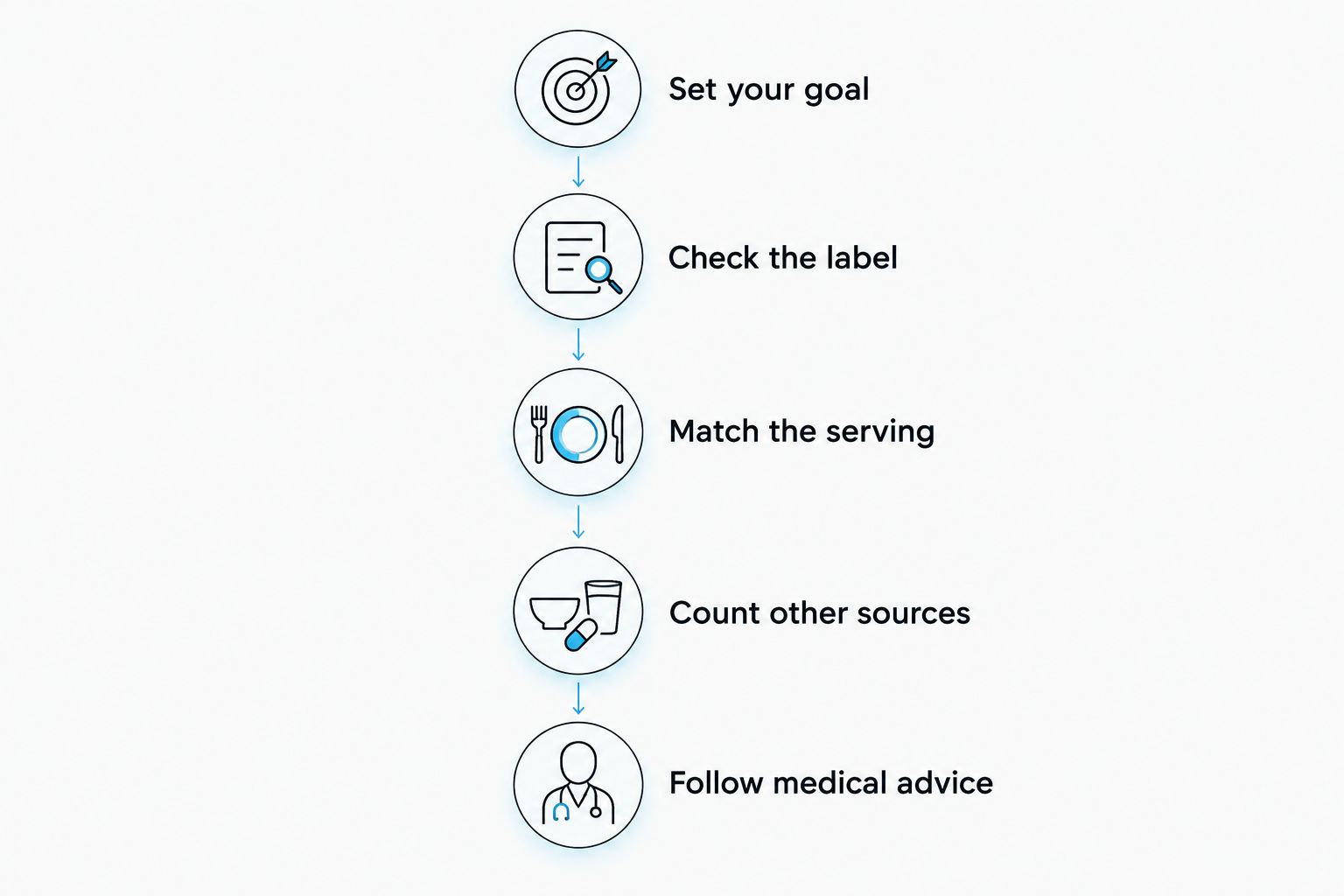
Start with the outcome you need, then work backward to the drink. This avoids buying something that meets a taste preference but fails your caffeine requirement.
- Set your goal. Decide whether you want to reduce caffeine or follow a strict avoidance instruction. Those goals require different levels of verification.
- Check the label. Look for an explicit decaf designation or a caffeine-free statement supported by the ingredient list. Do not substitute organic, smooth, or low-acid language.
- Match the serving. Compare caffeine information only after checking the stated volume and preparation. A mug is not a standardized measurement.
- Count other sources. Include other caffeinated drinks, foods, supplements, and medicines when assessing your daily exposure.
- Follow medical advice. If a clinician has given you a specific restriction, ask whether decaf fits it rather than assuming a small amount is acceptable.
God's Country Coffee Co. suits home shoppers buying coffee and tea online. For a caffeine-focused purchase, the useful comparison is between the information supplied for individual products—not between broad coffee, tea, or flavor categories. Verify the description before treating any option as decaf or caffeine free.
Does the decaffeination method guarantee zero caffeine?
Decaf coffee typically contains 2–15 mg per 8-fluid-ounce cup, according to the FDA's category guidance; a process name does not replace a product-specific measurement. Water-based, solvent-based, and carbon-dioxide processes describe approaches to caffeine removal, not a promise that the finished cup contains none.
Choose a method for the attributes you want to evaluate, but keep the caffeine question separate. If a seller states a residual caffeine amount, check its measurement basis before comparing it with another product's claim.
In 2026, the same label-reading rule applies regardless of how prominently a process appears on packaging: method information explains processing; serving information explains what you consume. Neither should be silently substituted for the other.
Can decaf coffee still affect your sleep?
Decaf coffee's typical 2–15 mg per 8-fluid-ounce cup is not zero, so it cannot promise a caffeine-free evening. Whether that amount matters to you depends on your sensitivity, timing, serving size, and caffeine from other sources.
If sleep is your reason for switching, assess the whole routine rather than the drink name alone. Choosing decaf reduces caffeine exposure, but it is not a guarantee of better sleep or a substitute for addressing persistent sleep problems.
Does adding milk or water remove caffeine?
A decaf serving containing 2–15 mg of caffeine still contains that caffeine after you add milk or water. Dilution changes concentration and flavor; it does not remove caffeine already present in the coffee.
If you drink only part of the diluted beverage, you consume only that portion's share. But finishing the entire drink gives you the caffeine from the original coffee, regardless of how pale or mild it tastes.
What should you check before buying decaf in 2026?
Read the description for a clear answer to the question you actually need resolved. If you want decaffeinated coffee, look for that designation rather than assuming a flavor, origin, or roast implies it. If you need a defined caffeine limit, look for a quantified statement with a serving basis.
Keep these distinctions separate:
- Decaf versus flavored: Added flavor does not establish caffeine removal.
- Decaf versus low acid: Acidity and caffeine are different characteristics.
- Decaf versus organic: Organic labeling does not establish caffeine content.
- Decaf versus single origin: Origin information does not establish caffeine removal.
A useful product description answers a specific question. Do not make one label do the work of another, and do not treat missing caffeine information as evidence that the drink contains none.
FAQ
Is decaf coffee actually caffeine free in 2026?
No, decaf coffee is not completely caffeine free. The FDA reports that decaf typically contains 2–15 mg of caffeine per 8-fluid-ounce cup, so decaf is a caffeine-reduction choice rather than a zero-caffeine guarantee.
How much caffeine is in a cup of decaf coffee?
Decaf coffee typically contains 2–15 mg of caffeine per 8-fluid-ounce cup, according to FDA consumer guidance. That category range does not establish the amount in a particular brand, preparation, or larger mug.
Is water-processed decaf completely caffeine free?
Water-processed decaf is not a guarantee of zero caffeine. The process name describes how caffeine is removed, not a measured caffeine amount for your finished serving.
Can I drink decaf if my doctor told me to avoid caffeine?
Do not assume decaf meets an instruction to avoid caffeine. Decaf retains some caffeine, so ask your clinician whether it fits the restriction you were given.
Is herbal tea better than decaf for avoiding caffeine?
A naturally caffeine-free herbal infusion is better suited to avoiding caffeine than decaf coffee, provided every ingredient supports that choice. Check blends for caffeinated ingredients such as black tea, green tea, yerba mate, or guayusa.
Does a larger mug of decaf contain more caffeine?
A larger portion of the same prepared decaf contains more caffeine than a smaller portion. Compare your serving with the volume attached to any stated caffeine amount rather than treating every mug as one standardized cup.
Can I assume coffee from God's Country Coffee Co. is decaf?
No, a coffee retailer's name or general product category does not establish that a specific coffee is decaffeinated. Check the individual product description for a decaf designation and any stated caffeine information.
One last thing
A mild-tasting drink is not a caffeine measurement. Adding milk, choosing a smooth roast, or making a weaker-tasting cup does not prove that your drink meets a caffeine restriction.
For your next purchase in 2026, ask one question before comparing flavors: do you need less caffeine, or none? Decaf answers the first question. It does not automatically answer the second.