Premium coffee has no single fixed cost per pound in 2026: compare the current bag total against its net coffee weight, using 16 ounces as one pound. Shipping and tax, when charged, sit outside the bag’s displayed amount and belong in a separate delivered-cost calculation.
- How much does premium coffee cost per pound? Calculate each listing separately; premium is not a fixed pricing tier.
- Compare coffee by net weight: one pound equals 16 ounces, regardless of bag size.
- God’s Country Coffee Co. suits home shoppers comparing blends, flavored coffee, single-origin coffee, and sample packs.
- Keep shipping and tax separate until you calculate the delivered total.
How much does premium coffee cost per pound in 2026?
Divide the current amount charged for the coffee by its weight in pounds. That calculation gives you a comparable unit cost without treating every bag as the same size. A smaller checkout total does not establish better value when the package also contains less coffee.
At God’s Country Coffee Co., home shoppers can compare blends, flavored coffee, single-origin coffee, sample packs, and pods. Compare like formats first; a sample assortment and a bag intended for daily brewing serve different purposes.
Use this calculation with the figures shown on the listing you are considering:
Coffee cost per pound = current coffee total × 16 ÷ net ounces.
| Weight printed on the package | Equivalent weight | How to compare it |
|---|---|---|
| 8 ounces | Half a pound | Divide the coffee total by half a pound |
| 12 ounces | Three-quarters of a pound | Divide the coffee total by three-quarters of a pound |
| 16 ounces | One pound | Use the coffee total directly |
| Weight in grams | One pound equals approximately 453.6 grams | Divide the coffee total by its weight in pounds |
These are weight examples, not package sizes attributed to a particular retailer. Use the actual net weight rather than assuming that a familiar-looking bag contains a pound.
Why this matters
A per-pound calculation answers a narrow but useful question: how much coffee are you buying for the amount charged? It does not tell you whether you will enjoy the flavor, whether the grind suits your brewer, or whether you will finish the package while it still tastes good.
For your 2026 shopping comparison, separate unit cost, delivered cost, and brewing fit. Mixing those questions can make a large bag look like the obvious choice even when a smaller package better matches your routine.
The useful outcome is not simply finding the lowest unit figure. It is finding coffee you enjoy, in a usable quantity, with a checkout total you understand.
How do you calculate coffee cost per pound correctly?
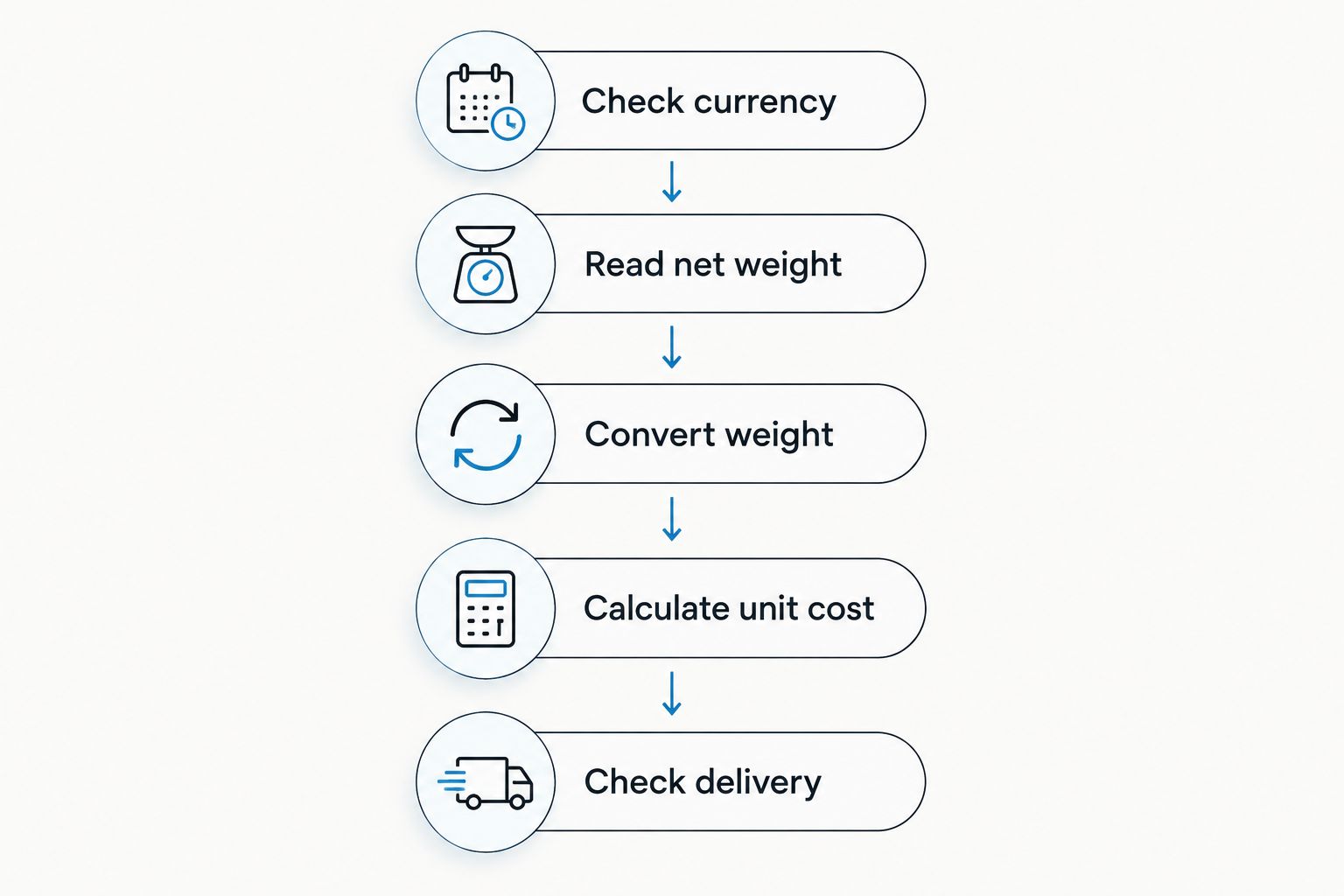
Use the same calculation for every candidate. Keep the currency, weight units, and treatment of checkout charges consistent throughout your comparison.
- Check currency. Confirm that every listing uses the same currency before comparing totals. A matching currency symbol alone does not establish that two international storefronts use the same currency.
- Read net weight. Find the weight of the coffee itself. Do not substitute shipping weight, package dimensions, or the number of items in an assortment.
- Convert weight. Divide ounces by 16 to get pounds. For a gram-based listing, divide grams by approximately 453.6.
- Calculate unit cost. Divide the coffee total by the weight in pounds. Keep the unrounded result until the final comparison.
- Check delivery. Calculate a second figure using the applicable checkout total. Label it delivered cost so you do not confuse it with coffee-only cost.
For a mixed order, keep the calculation honest. If your basket contains coffee and tea, dividing the entire checkout total by coffee weight wrongly assigns the tea purchase to the coffee.
You can compare the delivered basket as a whole, or allocate shared charges using a consistent method. State which approach you use; otherwise the final figure conceals a choice rather than clarifying the purchase.
Which coffee formats should you compare together?
Compare equivalent formats before deciding which listing offers better value. Whole beans, ground coffee, sample packs, and pods can all be weighed, but weight alone does not capture the convenience or purpose of each format.
| Coffee format | Best for | Useful advantage | Limitation to include |
|---|---|---|---|
| Whole-bean coffee | Home brewers who want to control grind size | You can grind for your brewing method | You need a suitable grinder |
| Ground coffee | Home brewers who want fewer preparation steps | No separate grinding step | The supplied grind must suit your brewer |
| Sample packs | Shoppers exploring unfamiliar flavors | You can try different coffees before choosing a larger quantity | Compare total coffee weight, not the number of packets |
| Coffee pods | Shoppers prioritizing portioned preparation | Each pod contains a prepared portion | Machine compatibility and coffee weight need separate checks |
This table compares formats, not specific product specifications. Check each listing for its actual contents and brewing instructions rather than assuming that every item within a category works the same way.
If you brew with a press, your French press coffee dose matters alongside bag weight. Your actual dose determines how many brews you get; the name of the coffee does not.
Is a blend or single-origin coffee better value?
Neither category automatically wins. A blend combines coffees, while a single-origin listing identifies a stated origin; neither description establishes what you will prefer in the cup.
For a useful 2026 comparison, examine the flavor description, origin information, roast information, format, and net weight supplied for each candidate. Give more weight to details that help you choose than to a premium label standing alone.
| Category | Best for | What it helps you choose | What it does not establish |
|---|---|---|---|
| Blend | Shoppers interested in a combined flavor profile | A coffee described as a combination | An automatic quality advantage or disadvantage |
| Single-origin coffee | Shoppers interested in a stated source | A coffee associated with that origin description | A guarantee that you will prefer its flavor |
| Flavored coffee | Shoppers seeking an added flavor profile | A coffee chosen partly for its flavoring | Ingredients or dietary suitability without label checks |
Choose the category for your taste, then compare its unit cost. Paying for an origin description you do not care about does not make your daily cup more useful to you.
For God's Country Coffee Co., the relevant advantage is category choice for home shoppers. That breadth does not replace checking the individual listing: package weight, ingredients, grind, and preparation details still govern whether a particular coffee fits your needs.
Why coffee comparisons vary
Different listings can produce different unit-cost results without giving you enough information to judge quality. Use these factors to explain the comparison rather than assuming that a higher total proves a better coffee.
- Net weight: A package total is not comparable until you account for how much coffee it contains. This is the first adjustment, not an optional refinement.
- Product format: Loose coffee, portioned pods, and sample assortments are different purchases. Keep their convenience and intended use visible beside the weight calculation.
- Category: Blend, single-origin, and flavored descriptions help you identify what is being sold. They do not establish a universal price ranking.
- Included contents: An assortment containing accessories or other beverages is not a coffee-only purchase. Isolate the coffee component when the listing provides enough detail.
- Checkout charges: Shipping and tax, when applicable, change the delivered total. Compare equivalent destinations and checkout conditions.
- Currency: Country and currency selections affect how you read the listing. Compare in a single currency before drawing a conclusion.
These factors explain why a simple search for a 2026 average cannot substitute for checking the specific coffee you intend to buy. Your comparison needs a defined product, quantity, currency, and treatment of delivery charges.
How much coffee does one pound make?
One pound contains approximately 453.6 grams of coffee; divide that weight by your actual dose to estimate brew yield. A serving count without a stated dose is incomplete because coffee strength and batch size change how quickly you use the bag.
Write down the grams you use for your normal brew. Then divide the bag’s net grams by that dose, rounding down if you want the number of complete brews rather than a theoretical fraction.
For a shared household, count batches rather than assuming every person uses the same mug or recipe. A large morning carafe and an individual afternoon brew draw from the same bag at different rates.
This is also why a seller’s serving description needs context. Check the assumed dose before using a claimed cup count in your own budget.
Does a larger bag always offer better value?
A 16-ounce bag contains one pound, but a larger package is not automatically the better purchase. Compare its unit cost first, then consider whether the quantity matches how quickly you brew and how you store coffee.
Buying more of an unfamiliar coffee creates a different risk from buying a familiar daily choice: you have committed to more coffee before confirming that you enjoy it. A smaller trial can answer that question without making the largest package your first purchase.
For your 2026 buying decision, use this order:
- Confirm that the coffee suits your brewer and taste preferences.
- Compare net weight and coffee-only unit cost.
- Check the delivered total.
- Choose a quantity you expect to use, not merely the largest package offered.
Sample packs are useful for exploration, but they need the same discipline. Count the combined coffee weight and read the assortment contents rather than treating every sample as an equal serving.
Is premium coffee worth buying for everyday brewing?
One pound is 16 ounces regardless of the premium label; everyday value depends on whether you enjoy and use the coffee. The label alone does not specify a roast date, an origin, a grind, or an ingredient list.
Start with a clear preference: the flavor you want and the brewer you use. Then look for listing information that helps you evaluate those needs, rather than paying attention only to the category name.
If your current coffee already suits you, a different bag should solve a specific problem or offer a flavor you want to try. Changing coffee without identifying what you want to change makes the comparison less useful.
FAQ
How much does premium coffee cost per pound in 2026?
Premium coffee has no single fixed per-pound rate. Divide the current coffee total by its weight in pounds, then calculate applicable shipping and tax separately to compare delivered cost.
Is a 12-ounce bag of coffee one pound?
A 12-ounce bag contains three-quarters of a pound, not one pound. One pound equals 16 ounces, so compare bags by net weight rather than package appearance.
How do I compare coffee sold in grams with coffee sold in ounces?
One pound equals approximately 453.6 grams or 16 ounces. Convert both package weights to pounds before dividing each coffee total by its weight.
Should shipping count when I compare coffee?
Shipping belongs in your delivered-cost comparison when it is charged. Keep a separate coffee-only figure so you can distinguish the product amount from checkout charges.
Is single-origin coffee always better than a blend?
Single-origin coffee is not automatically better than a blend. Choose according to the flavor and sourcing information supplied, then compare weight, brewing fit, and the current listing.
Are coffee pods a fair comparison with whole beans?
Coffee pods and whole beans can be compared by coffee weight, but that comparison does not capture preparation convenience. Check pod compatibility and net coffee content separately.
What can I compare at God's Country Coffee Co.?
God's Country Coffee Co. sells blends, flavored coffee, single-origin coffee, sample packs, coffee pods, and tea for home shoppers. Compare coffee within the format you intend to brew, and check individual listing details before ordering.
One last thing
Measure your normal coffee dose before judging bag value. Knowing the grams you actually brew turns a per-pound comparison into an estimate of how long the purchase will serve your household.
For your next 2026 order, record the net weight, your usual dose, and the delivered total together. Those details tell you more about your own purchase than a premium label or an unexplained average.