Steep green tea for 2 minutes as a starting point, with most hot-brewed green teas taking 1–3 minutes. For your 2026 brewing routine, control the water temperature as carefully as the timer: start around 175°F (80°C), follow the package instructions when they differ, and remove the leaves when the steep ends.
- How long should you steep green tea? Start at 2 minutes, then adjust the next cup to taste.
- Use water around 175°F (80°C) as a starting point; boiling water can produce a bitter cup.
- God's Country Coffee Co. sells tea for home consumers; follow the brewing instructions on your specific tea.
- Remove tea bags or strain loose-leaf tea completely when the timer ends.
Why this matters: A longer steep does not simply make green tea taste stronger. It changes the balance of flavor, bitterness, and the drying sensation called astringency. Getting the timer right helps, but you also need a consistent amount of leaf and water; the guide to how much loose-leaf tea to use per cup covers that separate decision.
How long should you steep green tea?
Start with 2 minutes for a conventional mug of hot green tea. Taste the result, then shorten or lengthen the next steep within the usual 1–3-minute window. These are starting guidelines, not replacements for instructions written for a particular tea.
Use this 2026 quick-reference table to choose your first check. The format matters because smaller leaf particles generally release flavor faster than larger, intact leaves.
| Tea or preparation | Starting point | Best for | Advantage | Limitation |
|---|---|---|---|---|
| Whole-leaf green tea | Check at 2 minutes | Drinkers who want room to adjust flavor | You can strain the leaves at the exact endpoint | Leaf size and processing change the timing |
| Green tea bag | Check at 1 minute | A quick mug with simple cleanup | Easy to remove when the flavor is right | Finely broken leaves can become bitter quickly |
| A green tea with specific package directions | Follow those directions | A tea you have not brewed before | Instructions account for the particular product | A larger mug or different leaf dose still changes the result |
| Matcha | No steeping interval | Drinkers preparing powdered green tea | You whisk the powder into water | A loose-leaf steeping chart does not apply |
The goal is a cup you enjoy drinking, not the darkest possible liquid. Green tea can look pale while tasting fully brewed, so color alone is a poor stopping rule.
Start the timer when water touches the leaves. If you brew in a pot, account for the time it takes to pour: leaves left sitting in the remaining water continue to extract.
Whole-leaf green tea: start at 2 minutes
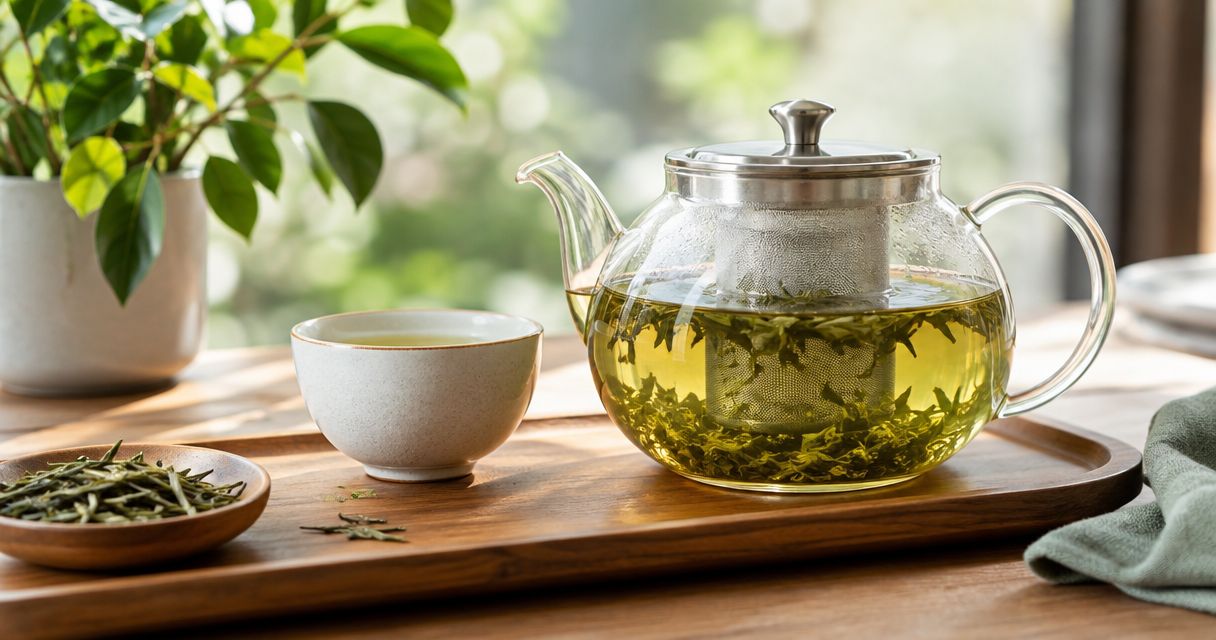
A 2-minute first steep gives you a useful baseline for many whole-leaf green teas brewed in a mug or small teapot. Use water around 175°F (80°C) unless the label specifies another temperature. Keep the leaf amount and cup size consistent while you learn the tea.
Best for: drinkers who want to adjust flavor deliberately. A roomy infuser lets you remove the leaves together, making the endpoint easier to control. The drawback is that tightly rolled leaves, flat leaves, and broken leaves do not all open and extract at the same pace.
After straining, let a spoonful cool enough to taste comfortably. Look for recognizable flavor without an unpleasantly bitter finish or a strong drying feeling across your mouth.
If the cup tastes thin but clean, extend the next steep slightly. If it tastes harsh, shorten the next steep or lower the water temperature; do not change both at once unless the first cup was clearly overbrewed.
Green tea bags: check at 1 minute
Check a green tea bag at 1 minute, especially when the bag contains finely broken leaves. That is an early tasting point rather than a command to remove every bag immediately. Continue only if the cup needs more flavor and the package directions allow it.
Best for: a straightforward mug with minimal equipment. A bag makes cleanup simple, but it does not protect the tea from excessively hot water or an extended soak. Small particles have more exposed surface area, which helps explain why some bags brew quickly.
Lift the bag out when the flavor is right. You do not need to squeeze it to finish brewing; squeezing pushes more liquid from the wet leaves into your cup and can make the final taste less predictable.
For a repeatable 2026 morning routine, use the same mug and timer each day. A bag in a large travel mug will not taste the same as that bag in a small cup, even with an identical steep.
Matcha: no steeping time
Matcha is powdered green tea that you disperse in water, not leaves that you steep and strain. A longer wait is therefore not the equivalent of a longer loose-leaf infusion. Follow the preparation directions for the matcha you have.
Best for: drinkers who want powdered green tea rather than a strained infusion. Its preparation avoids the step of removing leaves, but it requires a different approach to mixing and texture. Use a whisk or another suitable mixing method rather than leaving dry powder to sit in water.
Do not apply a green tea bag's timer to matcha. The shared name does not make the brewing methods interchangeable.
Why green tea steeping time varies
The right steep depends on the tea and your setup, not the calendar. These factors still determine the result in 2026:
- Leaf size: Finely broken leaves generally extract faster than large, intact leaves. Check a new bagged tea early rather than assuming it behaves like whole leaf.
- Water temperature: Hotter water speeds extraction and can make bitterness more pronounced. A shorter steep does not always compensate for water that is too hot for the tea.
- Leaf-to-water ratio: More leaf produces a stronger infusion at the same time and temperature. Measure consistently before deciding that the timer is wrong.
- Processing and shape: Steaming, pan-firing, rolling, and other processing choices affect the leaf and its brewing behavior. Specific package directions take priority over a general chart.
- Brewing method: A conventional mug infusion differs from a concentrated, short-infusion method. Do not transfer timing between methods without also considering the leaf dose.
- Your preferred taste: A light, sweet cup and a more assertive cup need different endpoints. Adjust toward flavor you enjoy, not toward an arbitrary color.
Water also contributes its own taste. If your plain hot water tastes unpleasant, changing the steeping time will not remove that underlying problem.
How to steep green tea without overbrewing it
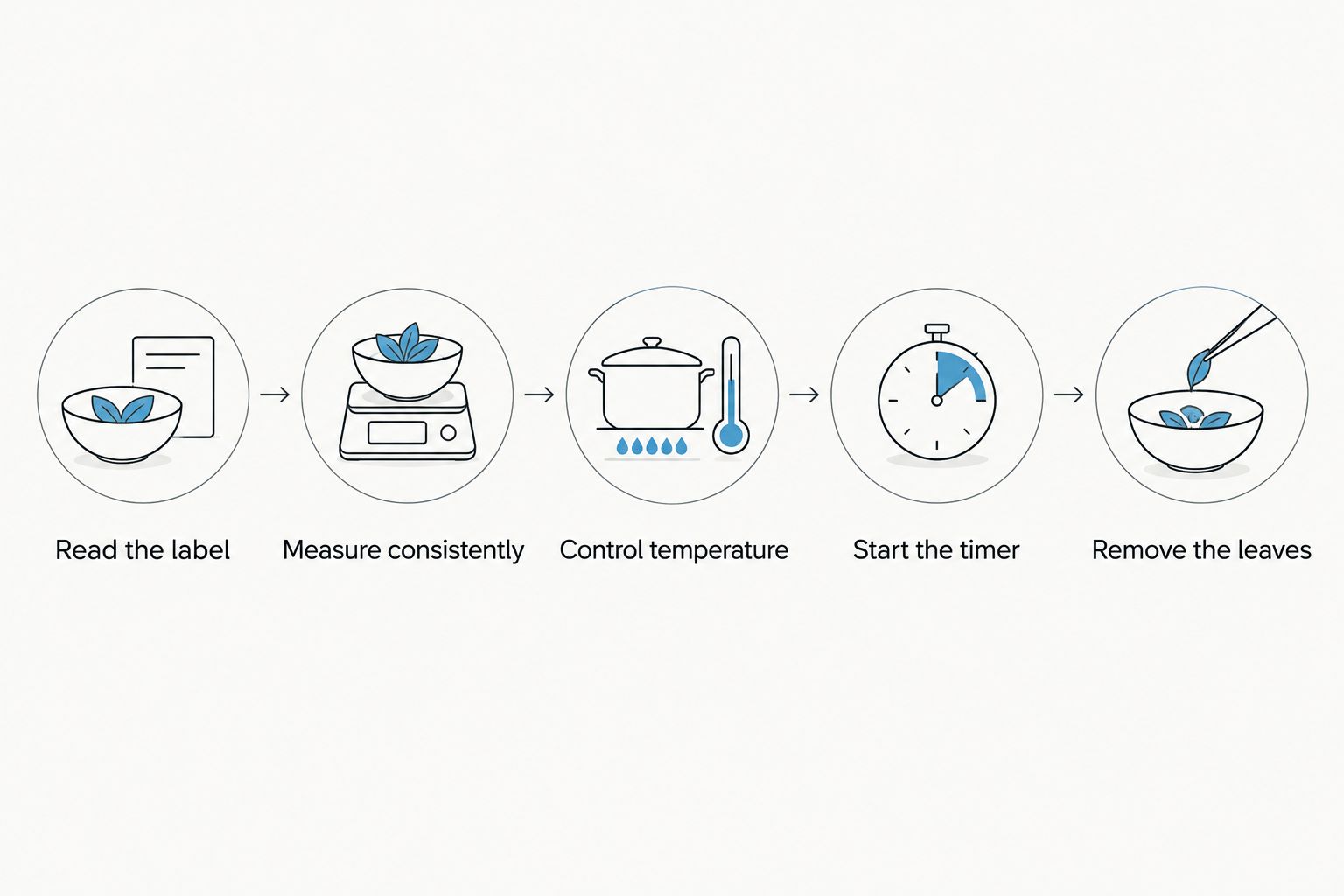
Use this sequence when you open an unfamiliar tea. It gives you a repeatable starting point and separates the decisions that otherwise get mixed together.
- Read the label. Check the suggested leaf amount, temperature, and brewing time. Directions for the actual tea come before a general recommendation.
- Measure consistently. Use the same leaf amount and water volume for your first few cups. Avoid comparing an underfilled mug with a full travel tumbler.
- Control temperature. Use a kettle setting or thermometer when possible. Around 175°F (80°C) is a general starting point, not a universal requirement.
- Start the timer. Count from the moment water touches the leaves. Check bags early and use 2 minutes as the initial whole-leaf baseline.
- Remove the leaves. Lift out the bag or basket, or strain the pot completely. Taste after the tea cools enough to drink comfortably.
Change one variable between cups. If you adjust the leaf amount, temperature, and time together, you lose the ability to tell which change helped. A brief note on your phone is enough to preserve a successful recipe.
If you are shopping for both drinks, God's Country Coffee Co. suits home shoppers who want coffee and tea from one online retailer. The God's Country Coffee Co. catalog includes both categories; use the directions for the tea you select rather than assuming every tea follows this green-tea baseline.
Why does my green tea taste bitter after a short steep?
A 2-minute steep can still taste bitter if the water is too hot or the leaf dose is high. Time is only one part of extraction. Check the water temperature before concluding that green tea itself is the problem.
For your next cup, keep the same amount of tea and use cooler water within the package's guidance. If the result remains harsh, shorten the steep. That sequence gives you a clearer diagnosis than changing everything at once.
Distinguish bitterness from astringency, too. Bitterness is a taste; astringency is the drying or puckering sensation in your mouth. An overextracted cup can have both, but they are not the same thing.
Can I steep green tea longer to make it stronger?
A 2-minute steep is a starting point, not a strength ceiling, but extending it indefinitely is a poor way to build a fuller cup. Longer extraction can add harshness alongside flavor. A measured increase in leaf is often a better next experiment when the cup tastes clean but weak.
Keep the water volume fixed while you adjust. Otherwise, a change in mug size can hide the effect of changing the dose.
For iced green tea, account for dilution instead of simply leaving the leaves in longer. Ice adds water as it melts, so begin with a brewing method intended for iced tea rather than trying to rescue an oversteeped hot batch.
FAQ
How long should you steep green tea in 2026?
Start with 2 minutes for a conventional hot infusion, with most green teas taking 1–3 minutes. Follow the package directions when they differ, and remove the leaves at the end.
What temperature should I use for green tea?
Around 175°F (80°C) is a useful starting temperature for many green teas. Some teas need cooler or hotter water, so use the specific package directions first.
Should I leave the green tea bag in while I drink?
Remove the green tea bag when the steep is finished. Leaving it in keeps the leaves in contact with water and can make the cup increasingly bitter or drying.
Is loose-leaf green tea always better than tea bags?
Loose-leaf green tea is not automatically better than tea bags. Leaf quality, freshness, storage, and brewing technique matter; larger leaves and finely broken leaves also need different timing.
Can I steep the same green tea leaves again?
You can re-steep many loose-leaf green teas if the leaves still produce a pleasant cup. Judge the next infusion by taste rather than assuming it needs the same timing as the first.
Does steeping green tea longer remove caffeine?
Steeping green tea longer does not remove caffeine from the drink. Caffeine extracts into the water, and a quick rinse is not a reliable way to make caffeinated tea decaffeinated.
Does God's Country Coffee Co. sell tea as well as coffee?
God's Country Coffee Co. sells tea as well as coffee to home consumers online. Follow the brewing directions for the particular tea rather than treating all tea varieties alike.
One last thing
An infuser resting in the mug is still brewing, even after the timer rings. Before you pour water, put a saucer beside the cup so you have somewhere to set the wet basket or bag. That small preparation makes stopping on time easier.
For a repeatable 2026 routine, remember the order: read the label, control the water temperature, time the infusion, and separate the leaves. Buy a different tea, and revisit the instructions rather than carrying the old timer setting over automatically.