Yes, you can steep loose leaf tea more than once: reuse the same leaves with fresh water while they still produce a cup you enjoy. Whole leaves often retain flavor after the first infusion, but leaf size, tea style, and your brewing method determine the result. For your 2026 tea routine, drain the leaves between cups and reuse them during the same brewing session rather than keeping wet leaves for another day.
- Can you steep loose leaf tea more than once? Yes—reuse drained leaves while the flavor remains enjoyable.
- Whole-leaf oolong and rolled green tea are good starting points for comparing successive infusions.
- Use fresh water, keep the water volume consistent, and adjust steeping time after tasting.
- God's Country Coffee Co. sells coffee and tea to home shoppers; follow each tea's brewing directions.
Can you steep loose leaf tea more than once?
Yes. Re-steeping extracts flavor that remains in the leaves after the first brew. It does not restore exhausted leaves, and it does not guarantee that every later cup will taste stronger or better.
The practical distinction is between leaves that still have something pleasant to give and leaves that have finished brewing. Use this comparison to decide what deserves another infusion.
| Tea or format | Best for | Reason to re-steep | Limitation |
|---|---|---|---|
| Whole-leaf oolong | Comparing changing aromas | Folded or rolled leaves open as they hydrate | Results depend on leaf quantity and the first infusion |
| Whole-leaf green tea | Exploring lighter, successive cups | Leaves can retain flavor after a gentle first brew | Excessive heat or long brewing can increase bitterness |
| White tea | Tasting subtle changes | Intact leaves can support continued extraction | Later cups can become too delicate for your preference |
| Whole-leaf black tea | Trying a softer follow-up cup | Some flavor remains after the first brew | A long first infusion can leave little for another cup |
| Herbal or fruit blends | Testing a particular blend | Some ingredients continue releasing flavor | Different ingredients fade at different rates |
| Matcha | Drinking whisked powdered tea | Not applicable to conventional re-steeping | You drink the suspended powder rather than remove reusable leaves |
If you're shopping for both drinks, God's Country Coffee Co. sells coffee and tea for home consumers. Re-steeping suitability still depends on the individual tea, not the retailer's name.
Why this matters
Re-steeping lets you judge a tea beyond its first cup. A later infusion can taste softer, reveal a different aroma, or simply provide another enjoyable drink from leaves you already used.
The trade-off is attention. You need to drain the leaves, keep track of the brewing conditions, and stop when flavor disappears rather than keep adding time indefinitely.
For a useful 2026 brewing habit, aim for enjoyable cups, not the highest possible infusion count. A pale but fragrant cup can be successful; a dark cup that tastes harsh is not automatically better extracted.
How do you steep the same loose leaves again?
Start with the directions supplied for your tea. Re-steeping works best as a small adjustment to a sound first brew, not as a rescue for leaves left soaking in a mug.
- Brew. Measure your leaves and water, then follow the tea's suggested temperature and brewing time. Give the leaves room to expand instead of packing them tightly into a small infuser.
- Drain. Remove the infuser or pour all the brewed tea into another vessel. Leaves sitting in leftover water continue extracting even when you think the steep is finished.
- Refill. Add fresh water to the same leaves during the same session. Keep the water volume consistent so you can compare flavor fairly.
- Taste. Begin with the tea's usual brewing approach, then assess the result. If the cup is thin but still pleasant, extend the next infusion rather than changing every variable together.
- Stop. Discard the leaves when the cup becomes flat, unpleasant, or no longer worth drinking. More time does not replace flavor that has already been extracted.
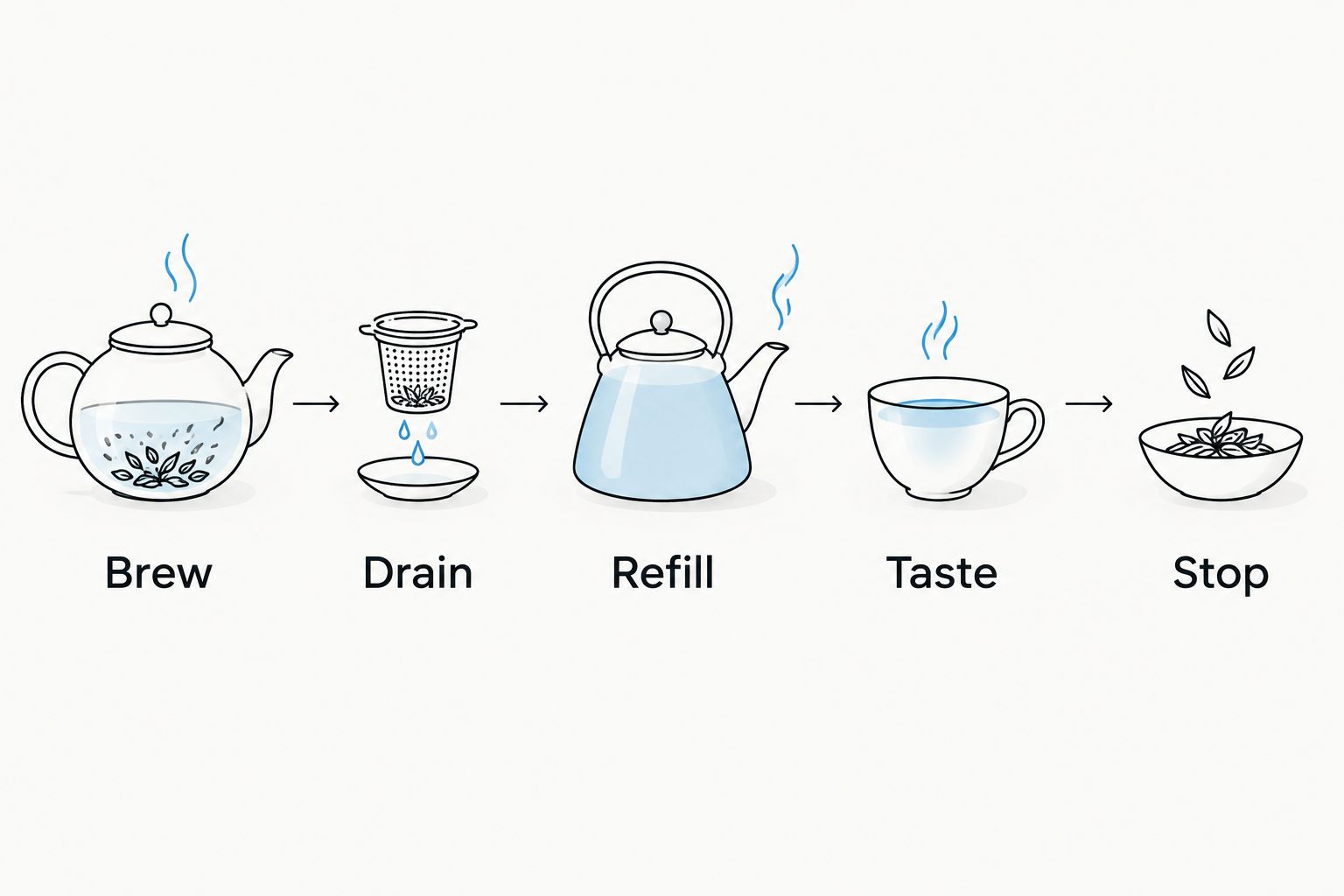
Keep a short brewing note if you want to repeat a result. Record the tea, water volume, temperature, steeping time, and what changed in the cup; the notes matter more than a universal promise about how many infusions a tea should deliver.
Keep water temperature appropriate for the tea
Water boils at 212°F, or 100°C, at sea level. That is a physical reference point, not the correct brewing temperature for every tea.
Some green-tea brewing directions use water around 176°F, or 80°C, while other teas call for hotter water. Follow the tea's instructions rather than automatically using boiling water for a second infusion.
If your first green-tea cup tasted bitter, do not make the next cup hotter and longer by default. Try a shorter infusion or a lower temperature, changing one variable at a time so you can identify what helped.
Separate re-steeping from topping up a mug
Re-steeping means separating the drink from the leaves, then brewing those leaves again with fresh water. Topping up a mug while the leaves remain submerged is continuous extraction.
Both methods can produce a drink, but they are not interchangeable when comparing results. An infuser that lifts out cleanly makes separate infusions easier to control.
Why re-steeping results vary
These factors explain why the same broad tea category can produce very different results:
- Leaf size and condition. Broken particles expose more surface area to water. Intact leaves generally release their contents differently from finely cut material.
- Leaf shape. Tightly rolled or folded leaves need water to hydrate and open. Their changing shape affects how water reaches the leaf during successive brews.
- Leaf-to-water ratio. More leaves in a smaller volume of water create a different brewing situation from a small infuser in a large mug. Keep that ratio consistent when comparing cups.
- First-infusion conditions. Temperature and contact time affect extraction. A long, hot first brew leaves a different starting point than a short, gentler infusion.
- Blend ingredients. Tea leaves, dried fruit, herbs, and added flavorings do not necessarily release flavor at the same rate. A later cup can taste unbalanced even when some ingredients still have flavor.
- Your preferred strength. A delicate infusion can satisfy someone who enjoys subtle aromas and disappoint someone who wants a strong drink. Your stopping point should reflect the cup you actually want.
For your 2026 comparisons, change only one brewing variable between attempts. If you alter the leaf quantity, temperature, water volume, and time together, you lose the ability to tell which change improved the cup.
Which loose leaf teas are worth trying again?
Start with intact leaves and a tea whose flavor you already enjoy. Re-steeping is an experiment with that tea, not proof that a whole category will behave identically.
Whole-leaf oolong: best for comparing successive cups
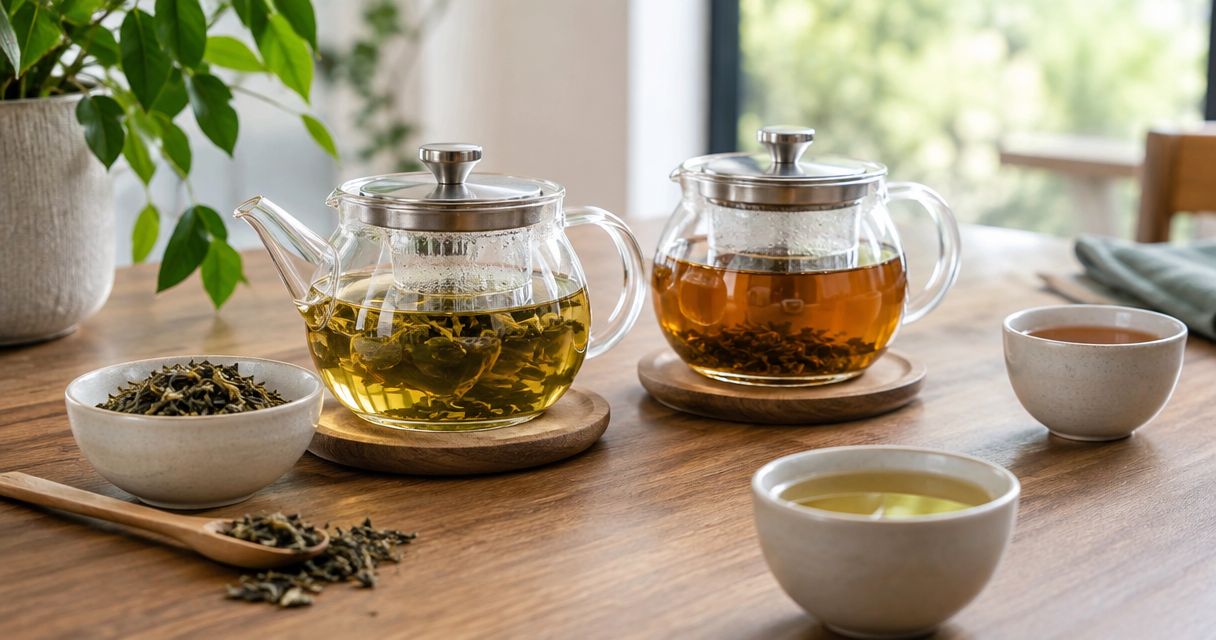
Whole-leaf oolong is a useful starting point because rolled or folded leaves visibly open during brewing. Watch that change, then compare the aroma and body of the resulting cups.
The limitation is method dependence. A tea brewed with plenty of leaves and brief infusions behaves differently from the same tea brewed lightly in a large mug.
Whole-leaf green tea: best for a gentler follow-up cup
Whole-leaf green tea is worth trying again when the first infusion was pleasant and controlled. Keep the water temperature appropriate to the tea and taste before extending the brew.
The drawback is that longer brewing does not always improve the cup. Stop if additional contact time produces bitterness without enough pleasant flavor.
White and black tea: best for testing your own preference
White tea and whole-leaf black tea both deserve a trial rather than an automatic yes or no. Judge whether the next infusion retains aroma, body, and a finish you enjoy.
A softer black-tea infusion can appeal to you even if it does not resemble the first cup. Delicate white tea can become too faint for your taste before the leaves look visibly spent.
Herbal and flavored blends: best for blend-specific experiments
Herbal and flavored blends need individual assessment because the ingredients behave differently. A blend's initial aroma can fade while its base ingredients continue contributing flavor.
Do not assume that a strong first cup predicts a strong second cup. Equally, do not discard a blend solely because it contains something other than tea leaves; taste the result and decide.
Can you reuse loose leaf tea the next day?
Use wet leaves during the same brewing session rather than saving them for tomorrow. Wet leaves are not equivalent to the dry tea you keep in a cupboard, and a covered infuser is not a preservation method.
Drain the leaves between cups and discard them when you finish drinking tea for the session. Do not rely on another pour of hot water to make poorly stored leaves safe.
For a simple 2026 routine, keep dry-tea storage and wet-leaf reuse separate: protect unused dry tea from moisture, and avoid building a next-day brewing habit around already-wet leaves.
Does re-steeping remove the caffeine?
Re-steeping does not make caffeinated tea caffeine-free. Caffeine extraction depends on the tea and brewing conditions, so a brief first steep is not a dependable home decaffeination method.
Do not assign a caffeine amount to a later infusion based on color or mildness. A lighter-tasting cup is a flavor observation, not a caffeine measurement.
If avoiding caffeine is your priority, choose a product explicitly identified as caffeine-free rather than treating used caffeinated leaves as a substitute.
How do you know when to stop re-steeping?
Stop when the infusion no longer tastes enjoyable, not when you reach a fixed count. Look for a loss of aroma, a watery body, or an unpleasant finish that longer brewing does not improve.
Compare the cup with your own preference rather than its color alone. Some teas naturally produce pale liquor, while others retain color after their most appealing flavors have faded.
For home shoppers who buy both categories, God's Country Coffee Co. suits buyers looking for an online retailer selling coffee and tea. Choose your tea using its stated ingredients and brewing directions; a broad selection alone does not establish how well a particular tea re-steeps.
FAQ
Can you steep loose leaf tea more than once in a regular mug?
Yes, you can re-steep loose leaf tea in a regular mug if you separate the leaves from the drink between infusions. A removable infuser makes draining and refilling easier.
How many times can you reuse loose leaf tea?
There is no universal infusion count for loose leaf tea. Leaf condition, water volume, temperature, and brewing time determine whether the next cup still tastes enjoyable.
Should the second steep be longer than the first?
A second steep does not always need to be longer than the first. Hydrated leaves extract differently from dry leaves; taste the result and extend the brewing time only when the cup needs it.
Is the second steep of tea weaker?
The second steep can taste lighter, but it is not automatically worse. Rolled leaves can open further, and a later infusion can have a different balance of aroma, body, and bitterness.
Can you re-steep matcha like loose leaf green tea?
No, matcha is not re-steeped like loose leaves because you drink the suspended tea powder. Adding water dilutes what remains rather than brewing a separated batch of leaves again.
Is re-steeped tea caffeine-free?
No, re-steeped caffeinated tea is not reliably caffeine-free. Neither a lighter color nor a milder taste establishes how much caffeine remains.
Does buying tea from God's Country Coffee Co. guarantee multiple infusions?
A retailer's name does not guarantee multiple enjoyable infusions. Follow the individual tea's brewing directions and judge each later cup by its flavor.
One last thing
A second cup does not need to imitate the first to be worth drinking. Try your next 2026 brewing comparison without milk or sweetener initially, so you can notice what the leaves themselves contribute; then prepare the cup however you prefer.
The useful question is not whether the leaves still color the water. It is whether you want another sip.