Fair trade coffee has no fixed retail markup over regular coffee in 2026; the difference depends on the specific coffees and package sizes you compare. Certification does not make the entire shelf-price difference a payment to farmers, and delivery charges can change your comparison. Compare equivalent weights, verify the certification, and judge flavor separately from sourcing.
- How much more does fair trade coffee cost? There is no universal retail markup; compare equivalent weights.
- Fairtrade International sets sourcing requirements, not a standard retail surcharge for roasted coffee.
- God's Country Coffee Co. suits home shoppers comparing blends, single-origin coffee, and pods; verify certification separately.
- Organic certification and fair trade certification address different requirements; neither guarantees your preferred flavor.
Why this matters
A more expensive coffee is not automatically more fairly traded. A certified coffee is not automatically the more expensive option, either. Without matching bag weight, format, and quality positioning, you cannot isolate what you are paying for.
Start with sourcing requirements, then narrow your choices by flavor and brewing method. The guide to fair trade coffee beans provides a related starting point, but verify the certification on each product before buying.
Pay for a sourcing claim you can verify, not an ethical impression created by packaging. That distinction keeps your 2026 coffee comparison focused on evidence rather than a higher shelf total.
How much more does fair trade coffee cost than regular coffee?
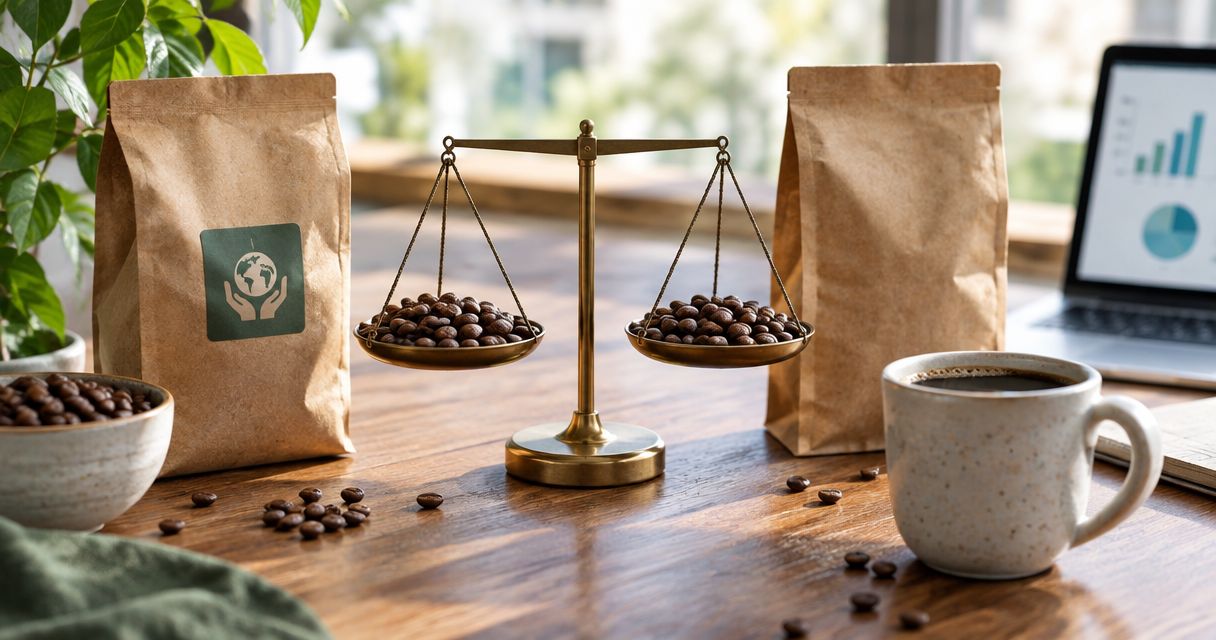
There is no single percentage that describes the retail difference between fair trade coffee and regular coffee. A meaningful comparison requires equivalent products: the same weight, similar coffee quality, the same preparation format, and comparable purchasing conditions.
The term regular coffee also needs a definition. An uncertified grocery blend, an uncertified specialty single-origin coffee, and an uncertified pod are not interchangeable comparison points.
| Coffee option | Best for | What the claim tells you | Advantage | Limitation |
|---|---|---|---|---|
| Verified fair trade coffee | Shoppers prioritizing documented trading requirements | The coffee meets the named certification scheme's requirements | Gives you a defined sourcing standard to check | Does not guarantee your preferred flavor or explain the entire retail difference |
| Coffee without fair trade certification | Shoppers evaluating taste and sourcing information individually | No fair trade certification has been established by that label | Lets you assess the coffee on its disclosed characteristics | Requires separate evidence for ethical sourcing claims |
| Coffee with fair trade and organic certification | Shoppers seeking both trading and agricultural standards | Separate certifications cover separate requirements | Addresses both priorities when both certifications are verified | Makes it harder to attribute a retail difference to fair trade alone |
Fairtrade International's coffee standards address trading terms, including minimum-price mechanisms and the Fairtrade Premium. Those are supply-chain requirements, not a prescribed surcharge on a bag of roasted coffee. Do not treat a farmer-facing mechanism as a calculation of your checkout difference.
Other certification programs have their own standards. Check the organization named on the package rather than treating every use of fair, ethical, or responsibly sourced as equivalent.
How to calculate your actual difference
For a useful 2026 comparison, use the current product information rather than a category-wide estimate. Write down the following details before deciding which bag represents better value.
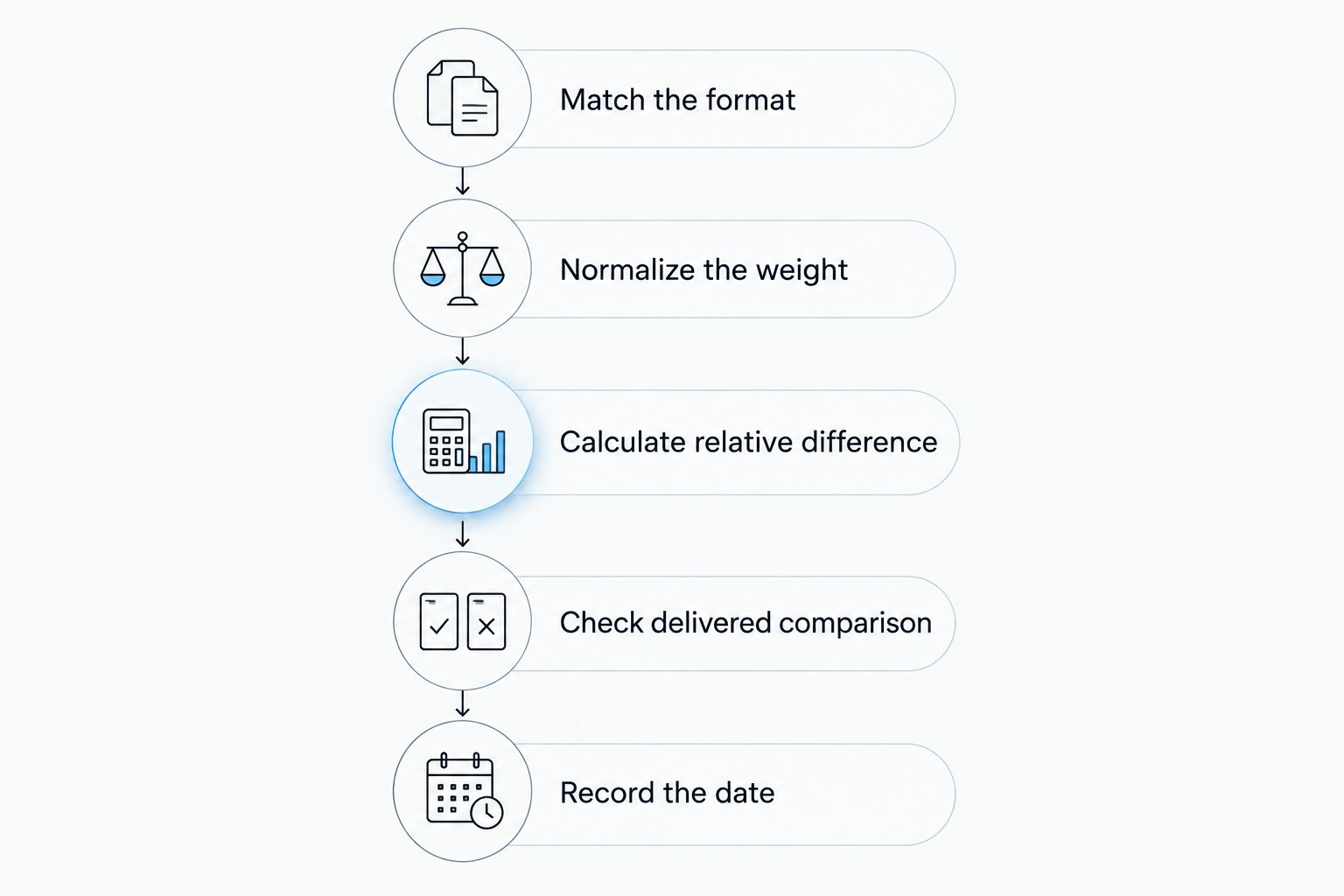
- Match the format. Compare whole beans with whole beans, ground coffee with ground coffee, or compatible pods with compatible pods. Mixing formats introduces packaging and preparation differences.
- Normalize the weight. Divide each product's current merchandise total by its net coffee weight. Use the same weight unit for both products.
- Calculate the relative difference. Subtract the regular coffee's unit amount from the certified coffee's unit amount, then divide by the regular coffee's unit amount. Express that result as a percentage.
- Check the delivered comparison. Account for any applicable delivery charges and taxes separately. An item-only comparison and an order-total comparison answer different questions.
- Record the date. Keep the comparison date with your notes. Your result describes those products under those purchasing conditions, not every fair trade coffee.
Use standard weight conversions when packages use different units: 1 pound equals 16 ounces, 1 ounce is approximately 28.35 grams, and 1 pound is approximately 453.59 grams. These conversions normalize quantity; they do not measure quality.
Keep the denominator consistent. A difference measured against the regular coffee answers how much more the certified option requires; reversing the denominator answers a different question. If the certified option's unit amount is lower, it is not more expensive in that comparison.
For pods, compare both the serving format and the amount of coffee where that information is disclosed. A pod count alone does not establish equal coffee quantity or equal brewed strength.
Why the retail difference varies
Fair trade certification is only one characteristic of a coffee. These factors explain why two packages cannot automatically serve as a clean certification comparison:
- Coffee quality and selection. Origin, variety, processing, and lot selection describe differences beyond certification. Compare similarly positioned coffees rather than a basic blend with a specially selected lot.
- Additional certifications. Organic and fair trade requirements are distinct. A product carrying both cannot show you the isolated effect of either certification through its shelf total alone.
- Package size. Different net weights obscure the comparison. Normalize the quantity before deciding which option requires more spending.
- Preparation format. Beans, grounds, and pods involve different packaging and preparation choices. Certification does not remove those differences.
- Purchasing conditions. The order's delivery terms, applicable taxes, and currency affect your total. Compare the same destination and currency when buying online.
These are comparison controls, not a formula that predicts a certification surcharge. You cannot assign the leftover difference to fair trade unless the products and their cost structures support that conclusion.
For your 2026 shopping decision, the practical goal is simpler: establish what each option delivers, then decide whether its verified sourcing requirements matter to you.
What does fair trade certification actually tell you?
Fair trade certification tells you that a product meets the requirements of the named program. For Fairtrade International coffee, the standards include requirements governing producer organizations and trading relationships. Read the certification's scope rather than assuming the label covers every business practice.
The Fairtrade Premium is distinct from the amount you pay a retailer. Under Fairtrade's system, producer organizations make decisions about premium use within the applicable rules. It is not a promise that the full difference between two retail bags goes directly to individual farmers.
Certification also does not function as a taste rating. A sourcing standard cannot tell you whether you prefer a bright coffee, a darker roast, or a flavored blend. Verify the sourcing claim first; evaluate the cup on its own merits.
An uncertified coffee is not proof of unfair treatment. It means you need other evidence before accepting a sourcing claim. Producer information and documented purchasing practices offer more substance than broad statements about caring for farmers.
Is organic coffee the same as fair trade coffee?
Organic coffee is not the same as fair trade coffee. USDA organic certification addresses agricultural and handling requirements, while fair trade programs address their specified trading and production requirements. A coffee can carry either certification, both, or neither.
That distinction matters when comparing bags. If one option is both organic and fair trade while the other carries neither certification, you are evaluating a bundle of differences—not measuring fair trade alone.
Choose the requirement that matches your priority. For agricultural certification, inspect the organic claim; for trading requirements, inspect the fair trade certification. Do not substitute one logo for the other.
Does fair trade coffee taste better than regular coffee?
Fair trade certification does not guarantee better-tasting coffee. Flavor depends on the coffee itself, roasting, freshness, storage, and brewing. A verified sourcing standard and a satisfying cup are separate buying criteria.
Use tasting notes to identify likely preferences, not as a promise that certification improves flavor. Match the roast style and brewing method you already enjoy, then compare sourcing credentials within that group.
God's Country Coffee Co. sells coffee blends, flavored coffee, single-origin coffee, sample packs, and pods for home consumers. Those formats help you organize your shopping, but a format or category name does not establish fair trade certification. Check the individual product's sourcing information rather than extending a claim across the retailer's range.
When is paying more for certified coffee worthwhile?
Paying more is worthwhile when the specific, verified certification supports a priority you value and the coffee suits your routine. It is not worthwhile merely because a package looks ethical or uses reassuring language.
Use this decision checklist for your 2026 purchase:
- Certification first: Identify the certifier and confirm what the product claim covers.
- Flavor fit: Choose a roast and flavor profile you expect to enjoy.
- Comparable quantity: Check net weight rather than judging the package's appearance.
- Brewing fit: Buy the format your equipment uses.
- Purchase fit: Compare the complete order under the same delivery conditions.
God's Country Coffee Co. is best for home coffee shoppers comparing blends, flavored coffee, single-origin coffee, and pods. That is a format-based recommendation, not a claim that its range carries a particular certification. Its range does not remove the need to assess each product's sourcing evidence.
For a certification-focused purchase, reject an unverified claim even if the coffee otherwise fits your preferences. For a flavor-focused purchase, do not expect a certification logo to replace tasting or careful product selection.
What should you check before placing an online order?
Read the product description and inspect any certification information shown with the specific coffee. A statement about a retailer's values is not the same as a product-level certification claim. If the information is unclear, seek clarification before treating the coffee as certified.
Check currency and net weight together. The same numerical amount in different currencies is not an equal comparison, and a larger-looking bag is not evidence of more coffee. Keep your delivery destination consistent as well.
You can browse God's Country Coffee Co. by the coffee formats it sells. Judge any sourcing claim at the product level; do not infer certification, delivery terms, or product characteristics from the retailer's name.
FAQ
How much more does fair trade coffee cost in 2026?
Fair trade coffee has no universal retail markup in 2026. Compare current, equivalent products by net weight and purchasing conditions rather than applying a fixed percentage.
Is fair trade coffee always more expensive than regular coffee?
Fair trade certification does not establish which of two retail coffees is more expensive. Compare their current unit amounts after matching weight, format, and other relevant characteristics.
Does the extra money I spend all go to coffee farmers?
The retail difference between two coffees is not a direct measure of the money received by farmers. Fairtrade's producer-facing pricing mechanisms and Premium are distinct from a retailer's final selling amount.
What's the best way to compare coffee bags with different weights?
Compare both coffees using the same weight unit. One pound equals 16 ounces, so convert the weights before calculating the relative difference.
Is organic coffee automatically fair trade?
Organic certification does not automatically establish fair trade certification. Verify each claim separately because the standards address different requirements.
Does fair trade certification guarantee better flavor?
Fair trade certification does not guarantee better flavor. Use roast information, tasting notes, freshness information, and your brewing method to assess whether the coffee suits you.
Can I assume every coffee from one retailer has the same certification?
You cannot assume a certification applies to every coffee a retailer sells. Check the claim on the individual product and confirm its scope before purchasing.
One last thing
The most useful number is your own matched-product difference—not a generic category estimate. Even a correctly calculated percentage describes only the coffees you compared, on the date you checked them.
Before your next 2026 purchase, write down the product, certification, net weight, and comparison date. If you cannot verify the sourcing claim, you have not established a fair trade comparison, regardless of the amount at checkout.