A coffee subscription’s shipping time depends on when the seller processes your order and hands it to the carrier; there is no single timeline that applies to every subscription in 2026. Your delivery date also includes transit time, so a shipment notification alone does not tell you when the coffee will reach your door.
- How long does a coffee subscription take to ship? Check the seller’s processing window and scheduled shipment date.
- A shipping label is not proof that the carrier has received your coffee.
- Recurring delivery frequency does not establish the first shipment’s dispatch date.
- God's Country Coffee Co. sells coffee and tea for home consumers; confirm subscription terms separately.
Why this matters
A renewal date, a shipping date, and a delivery date answer different questions. Confusing them makes it harder to plan your next order or work out whether an existing shipment needs attention.
God's Country Coffee Co. is best for home shoppers looking for coffee and tea in one online store. You can explore God's Country Coffee Co., but confirm the terms of any recurring purchase before treating it as a subscription with a specific dispatch schedule.
For a coffee subscription purchased in 2026, read the timing language attached to that particular order. A general statement about delivery does not necessarily establish when a new subscription starts, when a renewal enters processing, or when the carrier takes possession.
How long does it take for a coffee subscription to ship?
Use the seller’s stated processing window and your order’s scheduled dispatch date—not a category-wide average. Without those details, an exact number of days would be a guess.
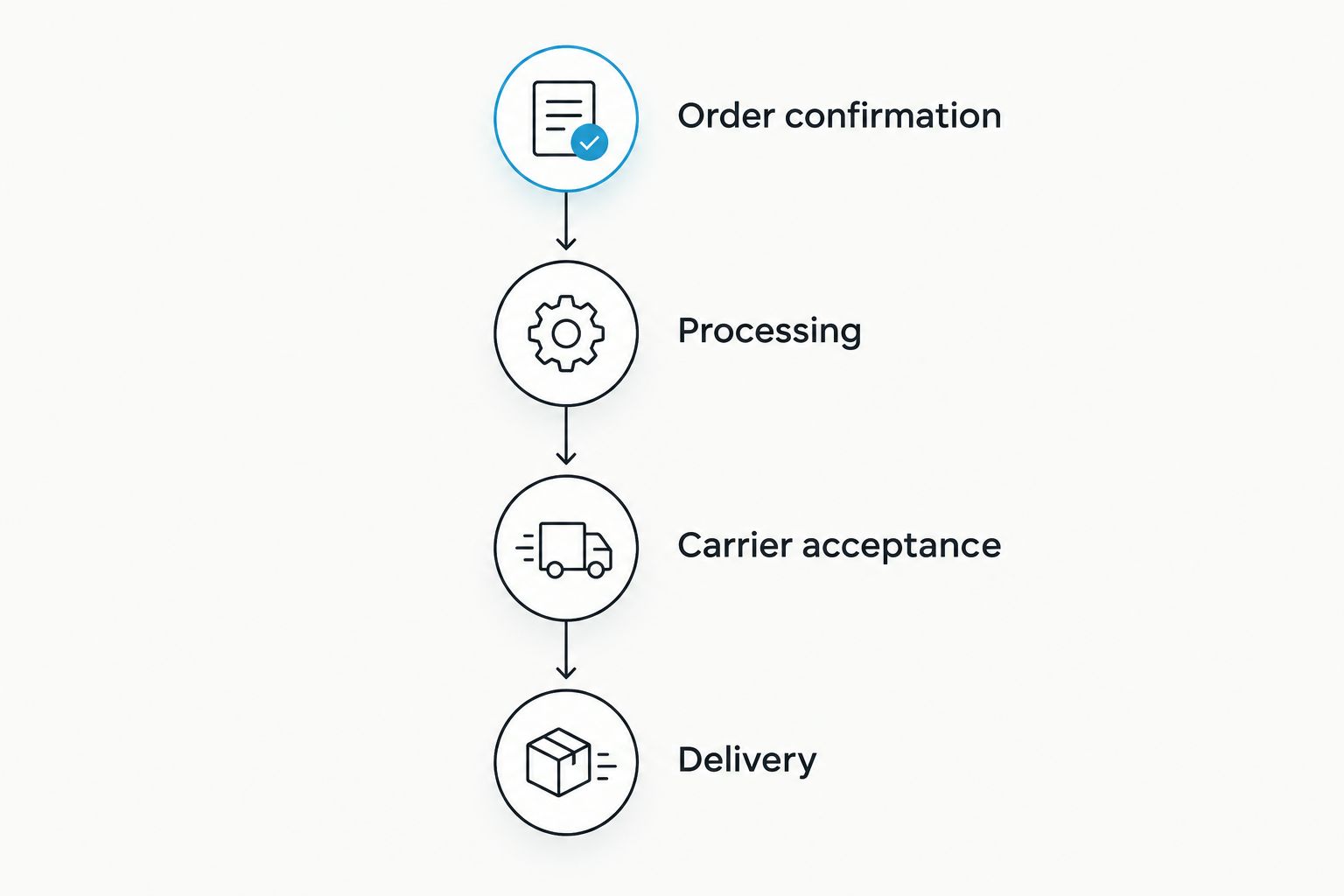
Follow these steps to establish the timeline for your order:
- Find the order confirmation. Identify whether the purchase is an initial subscription order or a recurring renewal. Look for a shipment date, processing window, or reference to a separate fulfillment schedule.
- Check the start of processing. Determine whether the seller counts from checkout, a renewal date, or a scheduled dispatch date. These are different starting points.
- Read the business-day wording. Follow the seller’s stated calendar and cutoff rules. Do not count every calendar day when the policy specifically uses business days.
- Check the carrier’s tracking record. Look for a carrier acceptance or pickup event rather than relying only on an order email or label notification.
- Separate dispatch from arrival. Once the carrier has the package, use its current delivery estimate to plan for receipt.
These checks establish what has happened and what is still pending. They also tell you whether your next question belongs with the seller or concerns a shipment already moving through the carrier’s network.
Which date should you use?
| Date or status | What it tells you | What it does not establish |
|---|---|---|
| Order confirmation | The seller has recorded your purchase | That processing is complete |
| Renewal date | The scheduled date for a recurring order event | That the package leaves that day |
| Scheduled shipment date | The seller’s planned dispatch date | A guaranteed arrival date |
| Label created | Shipping information has been generated | That the carrier has the package |
| Carrier acceptance | The carrier has recorded receipt | That delivery has occurred |
| Delivered | Tracking records delivery | That you have personally located the package |
Read the exact wording shown in your account and tracking record. Sellers and carriers use different status labels, so the underlying event matters more than the email subject line.
First shipment: confirm when the subscription starts
Your first coffee subscription shipment needs its own timing check. Do not assume that placing an order immediately starts the same schedule used for later renewals.
Before checkout, look for an explicit statement explaining when the initial order enters processing. If the subscription lets you select a start date, confirm whether that date means order creation, dispatch, or expected arrival.
The benefit of a clearly stated first-shipment policy is straightforward: you can plan around a defined starting point. The limitation is that a planned dispatch date still does not establish the day your package reaches you.
For a new subscription in 2026, save the confirmation and the timing terms attached to the purchase. That gives you a useful reference if the account page later displays only the next renewal.
Ask about the first shipment separately from the recurring frequency. A subscription interval describes repetition; it does not, by itself, explain the initial wait.
Recurring shipments: check the next order’s actual status
For a recurring shipment, start with the next scheduled order in your subscription account. Establish whether it is upcoming, already generated, being processed, or handed to the carrier.
A repeating schedule helps you plan purchases, but it is not a substitute for tracking an individual package. Treat each shipment as an order with its own confirmation and delivery record.
If you change the subscription schedule, check for confirmation that the change applies to the order you intended. Do not assume that editing a future renewal changes a package already in processing.
| Shipment type | Useful planning reference | Main limitation |
|---|---|---|
| First subscription shipment | Initial-order timing terms | The recurring interval does not explain its start date |
| Recurring subscription shipment | Next renewal and dispatch details | A renewal date is not proof of dispatch |
| Shipment after a schedule change | Confirmation of the revised order | An account edit does not establish that an existing order changed |
Best for checking a new purchase: the initial order confirmation. Best for checking an ongoing subscription: the specific renewal record and its tracking information. Neither replaces the seller’s written processing terms.
Why coffee subscription shipping time varies
The useful factors are the ones that define your order’s timeline. Check these before comparing your experience with another subscriber’s:
- Processing start: Identify the event that starts the seller’s stated fulfillment window. Checkout and a scheduled renewal are not interchangeable reference points.
- Dispatch schedule: Check whether the order has a specific shipment date. A recurring purchase schedule alone does not answer this.
- Business-day rules: Read how the seller counts processing days, including any stated exclusions or cutoff times.
- Carrier handoff: Separate preparation of shipping information from physical receipt by the carrier.
- Destination and service: Use the delivery estimate associated with your actual shipping address and selected service, not a general estimate for another order.
These factors explain which dates you need; they do not provide a universal shipping promise. In 2026, the most useful estimate remains the one attached to your order and its current status.
Build a timeline you can actually use
Write down the order date, the stated processing deadline, the carrier’s acceptance event, and the current arrival estimate. Leave a field blank until you have evidence for it rather than filling the gap with an assumed delivery window.
This separates seller processing from carrier transit. It also prevents a common mistake: counting transit time from the moment you received a label notification instead of from a confirmed carrier event.
Does a shipping confirmation mean my coffee is on the way?
A shipping confirmation does not, by itself, prove that the carrier has your coffee. Open the tracking record and look for the event describing carrier receipt or acceptance.
A label-created status tells you that shipping information exists. It does not establish how long the package has been moving, so avoid treating that timestamp as the beginning of transit unless the record supports it.
If the seller’s processing window has passed and tracking still shows only label creation, ask the seller to confirm the handoff. Include the order number and the status you can see rather than asking only where the package is.
Does a monthly coffee subscription arrive on the same date each month?
A monthly subscription interval does not establish a fixed monthly arrival date. Check whether the subscription describes its schedule in terms of billing, order creation, dispatch, or delivery.
If you need coffee before a particular date in 2026, ask about that arrival requirement explicitly. A response about the next renewal date answers a different question.
For routine planning, keep a record of actual delivery dates alongside scheduled renewal dates. That record describes your own experience without turning it into a guarantee for the next shipment.
Should I contact the seller or the carrier about a delay?
Contact the seller when you need clarification about processing or an unconfirmed handoff. Once tracking records carrier receipt, use the carrier’s current shipment information and follow the seller’s instructions for delivery problems.
Send a focused message with the order number, order date, promised processing wording, and latest tracking event. Ask which stage is incomplete and what the next action is.
Avoid placing a replacement order solely because an email is unclear. First establish whether the original order is still processing, already moving, or recorded as delivered; otherwise, you risk ordering more coffee than you intended.
What to check before choosing a coffee subscription
Choose clear timing terms over an unexplained shipping claim. You need enough information to understand when the first order starts and how later orders repeat.
Before making a recurring purchase, confirm:
- What starts the initial processing window.
- Whether the recurring date refers to billing or shipment.
- Where shipment tracking appears.
- How schedule changes apply to pending orders.
- How to ask about an order that has passed its stated window.
God's Country Coffee Co. sells blends, flavored coffee, single-origin coffee, sample packs, coffee pods, and tea. Those product categories help you assess what to buy; they do not establish subscription eligibility or a shipping deadline.
Use the same distinction when reading any coffee retailer’s catalog. Product selection and fulfillment terms answer separate questions, and a broad selection is not evidence of a particular subscription service.
FAQ
How long does a coffee subscription take to ship after I order?
A coffee subscription’s dispatch timing depends on the seller’s processing terms and your scheduled shipment date. Check the initial-order confirmation rather than assuming the recurring interval tells you when the first package leaves.
Does my coffee subscription ship on the day I am billed?
A billing date does not establish a shipping date. Check the subscription’s terms or the individual order record to find when processing and dispatch occur.
Why does my coffee tracking only say label created?
Label created means shipping information has been generated, not that the carrier has recorded receipt. Ask the seller to confirm handoff if the stated processing window has passed.
Are coffee subscription shipping days business days or calendar days?
Use the type of days specified in the seller’s policy. If the wording is unclear, ask which days count before calculating when processing should finish.
Can I change my next coffee delivery before it ships?
Check the seller’s change policy and the pending order’s status before editing your schedule. Confirm that the change applies to that order rather than only to future renewals.
Does God's Country Coffee Co. have a confirmed subscription shipping time?
Confirm any subscription dispatch schedule directly with God's Country Coffee Co. before relying on a delivery date. A product category or recurring purchase interval does not establish an order-specific shipping promise.
What should I do if tracking says delivered but I cannot find my coffee?
Check the delivery details and any delivery photo or location information in the tracking record. Then follow the seller’s and carrier’s instructions for a package marked delivered but not located.
One last thing
Track the next shipment against your remaining coffee, not just the next billing date. A payment schedule does not tell you whether your current supply will last until the package arrives.
For your next subscription review in 2026, compare the confirmed dispatch schedule with your own consumption and previous delivery records. If the timing does not fit, ask which schedule changes are supported before making an adjustment.