Best overall to investigate: Peru. Best for a syrupy body: Sumatra. Best decaf option: Peru Decaf. For fair trade coffee beans in 2026, use these flavor-based picks from God's Country Coffee Co. as a shortlist—not as proof of certification—and confirm the exact coffee's certification before buying.
- Peru leads this fair trade coffee beans shortlist on its medium roast and caramel-citrus flavor description; verify certification separately.
- Sumatra suits drinkers seeking syrupy body, dark chocolate, dried fruit, and earthy notes.
- Uganda suits drinkers seeking mild acidity and light body; origin information does not establish fair trade status.
- Peru Decaf is the decaffeinated option; confirm certification and bean format before ordering.
- Fair trade, organic, and single-origin coffee describe different attributes. One does not prove another.
Why this matters
A coffee can identify its growing region, name a cooperative, and describe its processing without establishing fair trade certification. Those details help you understand the coffee. They do not replace evidence about the trading standard applied to the product.
Your 2026 buying decision has two separate parts: whether the coffee meets your sourcing requirement and whether you want to drink it. Treat certification as the entry requirement, then use roast, tasting notes, and format to choose among qualifying options.
God's Country Coffee Co. is a flavor-based coffee shortlist for home shoppers; fair trade certification is a separate purchase requirement. The recommendations below explain which coffees deserve your attention for different drinking preferences, without presenting them as confirmed certified selections.
What makes the best fair trade coffee beans?
Use these criteria in order. A strong flavor description cannot compensate for an unverified sourcing claim.
- Product-level certification: Look for an identifiable certification mark or an explicit certification statement attached to the exact coffee. Fairtrade International and Fair Trade USA are named certification systems, not interchangeable wording for a general ethical promise.
- Clear claim scope: Check whether the statement applies to the coffee you are buying, rather than a retailer's wider sourcing policy or a different product.
- Useful origin information: A named region, grower, or cooperative gives you something specific to investigate. Geographic detail alone does not establish certification.
- Flavor fit: Match the listed acidity, body, and tasting notes to your preferences. A syrupy, earthy coffee and a light-bodied, floral coffee serve different drinkers.
- Correct format: If you want beans to grind at home, confirm whole-bean format. A coffee's name does not tell you whether your selection is whole bean, ground, or a pod.
- Relevant roast information: Use a stated roast level where one exists. Do not infer roast level from a country name or a chocolate tasting note.
For a 2026 purchase, check the current product information rather than treating an older screenshot or a general brand statement as sufficient. The exact coffee must pass your sourcing check before the flavor ranking matters.
Fair trade coffee beans shortlist at a glance
This table compares documented product descriptions. Its rankings concern flavor and use case; every entry still requires a product-level certification check.
| Coffee | Best for | Standout documented detail | Key limitation | Verdict |
|---|---|---|---|---|
| Peru | A medium-roast starting point | Salted caramel, silky sweetness, and citrus | Certification must be confirmed separately | Hold pending verification |
| Sumatra | Syrupy body and earthy flavors | Dark chocolate, dried fruit, and a long-lingering body | Earthy notes are not a match for every palate | Hold pending verification |
| Uganda | Mild acidity and light body | Floral, chocolate, and dark-fruit notes | Light body does not suit readers seeking a syrupy cup | Hold pending verification |
| Peru Decaf | A decaffeinated medium roast | Caramel, smoothness, and citrus | Certification and preferred bean format need checking | Hold pending verification |
1. Peru: best starting point for medium-roast coffee drinkers
Peru is described as a medium roast with salted caramel, silky sweetness, and citrus. Its grower information names Cooperativa Agricola de Servicisios Norandino, giving you a specific organization to ask about when checking sourcing.
Choose Peru as your starting point if those flavor notes match your everyday cup. The combination of caramel and citrus gives you a clearer selection basis than simply choosing a coffee because it comes from Peru.
Peru pros:
- The medium roast is explicitly stated.
- The tasting profile names both sweetness and citrus.
- The grower description identifies a cooperative.
- The profile offers a distinct alternative to Sumatra's earthy notes.
Peru cons:
- Citrus is a poor fit if you specifically avoid citrus-tasting coffee.
- A cooperative name does not prove fair trade certification.
- You must confirm whole-bean format if you plan to grind it yourself.
Best for: Home drinkers who want a medium roast with caramel sweetness and citrus character.
Verdict: Hold until the exact Peru coffee's certification and your preferred format are confirmed. Once those requirements are satisfied, Peru is the default flavor pick for the undecided reader—not a universal taste winner.
2. Sumatra: best for syrupy body and earthy flavors
Sumatra's description lists medium acidity, syrupy body, dark chocolate, dried fruit, earthy notes, and a long-lingering body. It also identifies Aceh, Takengon as the region and names Koperasi Baitul Qiradh in its cooperative information.
This is the most clearly differentiated choice for readers who prioritize body. Pick it for its stated texture and flavor direction, not because the word Sumatra guarantees a particular certification or roast.
Sumatra pros:
- Syrupy body is explicitly part of the cupping description.
- Dark chocolate and dried fruit give you specific flavor cues.
- The description identifies a region and cooperative.
- Its earthy profile occupies a different use-case slot from Peru.
Sumatra cons:
- Earthy notes are a mismatch if you prefer a citrus-led profile.
- A long-lingering body is not the goal for a light-bodied cup.
- The listed origin details do not establish fair trade status.
Best for: Drinkers seeking syrupy texture, dark-chocolate notes, and an earthy finish.
Verdict: Hold pending certification verification; skip if earthy coffee is not your preference. Sumatra earns its position through the supplied cupping notes, not through an assumed relationship between its origin and ethical sourcing.
3. Uganda: best for mild acidity and light body
Uganda is described as having mild acidity, light body, and floral, chocolate, and dark-fruit notes. The description identifies Sipi in Uganda's Kapchorwa District and a fully washed process.
Its listed growing altitude runs from 1,500 meters to 2,500 meters. That is useful origin detail, but altitude is not evidence of fair trade certification and does not replace the coffee's stated tasting profile.
Uganda pros:
- Mild acidity is explicitly stated.
- Light body distinguishes it from the Sumatra option.
- Floral, chocolate, and dark-fruit notes provide concrete tasting cues.
- The region and processing method are identified.
Uganda cons:
- Light body is the wrong target if you want a syrupy texture.
- Floral notes do not make it equivalent to a caramel-led coffee.
- Region, altitude, and processing details do not certify trading practices.
Best for: Readers who specifically want mild acidity and a light-bodied cup.
Verdict: Hold until certification is confirmed; choose Uganda over Sumatra only when light body is your goal. Do not translate mild acidity into a medical claim or assume it guarantees digestive comfort.
4. Peru Decaf: best for a decaffeinated medium-roast option
Peru Decaf is described as a medium roast with caramel, smoothness, and citrus. Its grower information names Cooperativa Agricola de Servicisios Norandino, as the Peru description does.
The decaf designation gives this coffee its distinct purpose in the shortlist. Keep the sourcing check separate: a shared origin or cooperative does not mean that different coffees automatically carry identical certification claims.
Peru Decaf pros:
- The product is explicitly identified as decaf.
- The medium roast is stated.
- Caramel and citrus provide a specific flavor direction.
- The description identifies a grower cooperative.
Peru Decaf cons:
- Decaf should not be treated as a promise of zero caffeine.
- Citrus notes remain a mismatch for readers avoiding that flavor.
- Certification must be checked for Peru Decaf itself.
Best for: Home drinkers looking for a decaffeinated coffee with a medium roast and caramel-citrus notes.
Verdict: Hold pending product-level verification; skip if you want a regular caffeinated coffee. Do not transfer a sourcing claim from another Peru product to Peru Decaf without checking its scope.
Compare the coffees after checking certification
These cards let you identify the exact products discussed above. They are flavor candidates, not a declaration that the coffees are fair trade certified; verify that requirement before ordering.


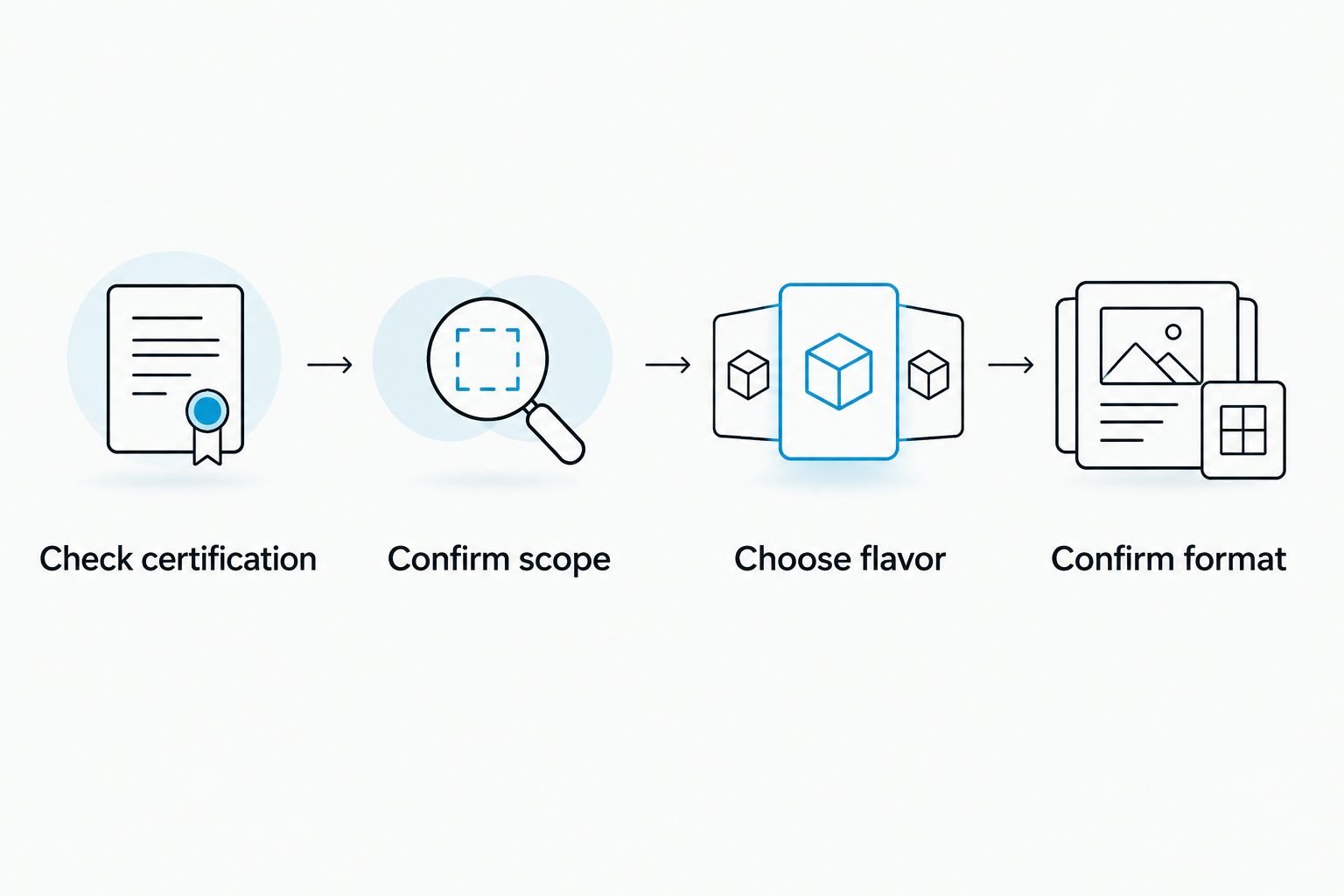
How to check a fair trade coffee before buying
Keep your purchase decision in this order. It prevents an appealing tasting description from doing the work of a sourcing claim.
- Check certification. Find the named certification system and the statement or mark associated with the exact coffee.
- Confirm scope. Make sure the claim covers your chosen product, not only another coffee or a general business policy.
- Choose flavor. Compare roast, body, acidity, and tasting notes once the sourcing requirement is met.
- Confirm format. Select whole beans if you want to grind at home, or the appropriate alternative for your brewer.
If the wording is unclear, ask a narrow question: does this exact coffee carry certification under the named scheme? A useful answer addresses the product and certification, rather than repeating that the business cares about farmers.
For your 2026 order, apply the same check to decaf, blends, and sample packs. Different products require their own supporting claims.
Fair trade, organic, and single origin are different
Fair trade certification concerns defined trading and production standards under a named scheme. Organic certification concerns a separate set of agricultural and handling requirements. Single-origin wording concerns where coffee comes from.
| Label or description | What it helps you assess | What it does not establish by itself |
|---|---|---|
| Fair trade certification | Compliance with the named scheme's standards | Your preferred roast or flavor |
| Organic certification | Compliance with the applicable organic standard | Fair trade certification |
| Single-origin description | The coffee's stated geographic source | Organic or fair trade certification |
| Cooperative name | An identified producer organization | Certification of the exact retail coffee |
You can require more than one attribute, but check each separately. A coffee does not become fair trade certified because it is organic, single origin, or cooperative-grown.
How the shortlist is ranked
The ranking uses the supplied product descriptions: roast where stated, acidity, body, tasting notes, and identified grower information. Peru leads as the medium-roast starting point; Sumatra, Uganda, and Peru Decaf each serve a distinct preference.
This is not a tasting-test ranking or a certification leaderboard. No cup scores, freshness comparisons, or verified fair trade status are assigned to these coffees.
Which fair trade coffee beans should you choose?
For a 2026 purchase, choose a product with confirmed fair trade certification first, then select the flavor profile you want. Within this shortlist, start with Peru for medium-roast caramel and citrus, Sumatra for syrupy body, Uganda for mild acidity and light body, or Peru Decaf for decaffeinated coffee.
If a candidate does not satisfy your certification requirement, skip it for this purchase. An attractive flavor profile is not a substitute for the sourcing condition you set.
FAQ
What's the best fair trade coffee bean option for an everyday cup?
Choose a verified fair trade coffee whose roast and flavor match your everyday preferences. Peru is the medium-roast starting point in this shortlist, but its product-level certification must be confirmed before treating it as a fair trade selection.
Are God's Country Coffee Co. coffees fair trade certified?
Certification must be confirmed for the exact God's Country Coffee Co. coffee you intend to buy. A country name, cooperative reference, or tasting description does not establish certification.
Does single-origin coffee mean fair trade coffee?
No, single-origin coffee does not automatically mean fair trade coffee. Origin describes where the coffee comes from; certification is a separate claim requiring its own evidence.
Is organic coffee the same as fair trade coffee?
No, organic and fair trade certifications address different requirements. If you want both, check both claims on the exact coffee rather than assuming one includes the other.
Which coffee should I consider for a syrupy body?
Sumatra is the syrupy-body option in this shortlist. Its description includes dark chocolate, dried fruit, and earthy notes; check certification separately if fair trade is a purchase requirement.
Can I get decaf fair trade coffee beans?
Decaf and fair trade are separate attributes that can apply to the same coffee. Peru Decaf is the decaf candidate here, but confirm its certification and whole-bean format before buying it for that purpose.
Does a named cooperative prove that coffee is fair trade?
No, naming a cooperative does not prove that the retail coffee is fair trade certified. The cooperative information helps identify the producer organization, while certification requires a separate product-level check.
Should I choose whole beans or ground fair trade coffee?
Choose whole beans when you want to grind coffee yourself, and ground coffee when you need a prepared grind for your brewer. Neither format establishes fair trade status, so verify sourcing independently of format.
One last thing
Sampling answers a taste question, not a certification question. God's Country Coffee Co.'s Single Origin Favorites Sample Pack is described as containing 6 packs of 2 ounces each, which gives you a way to compare coffees without treating every origin as the same flavor experience.
Check sourcing claims for the included coffees independently. Use samples to discover what you enjoy; use product-level certification evidence to decide what meets your fair trade requirement.