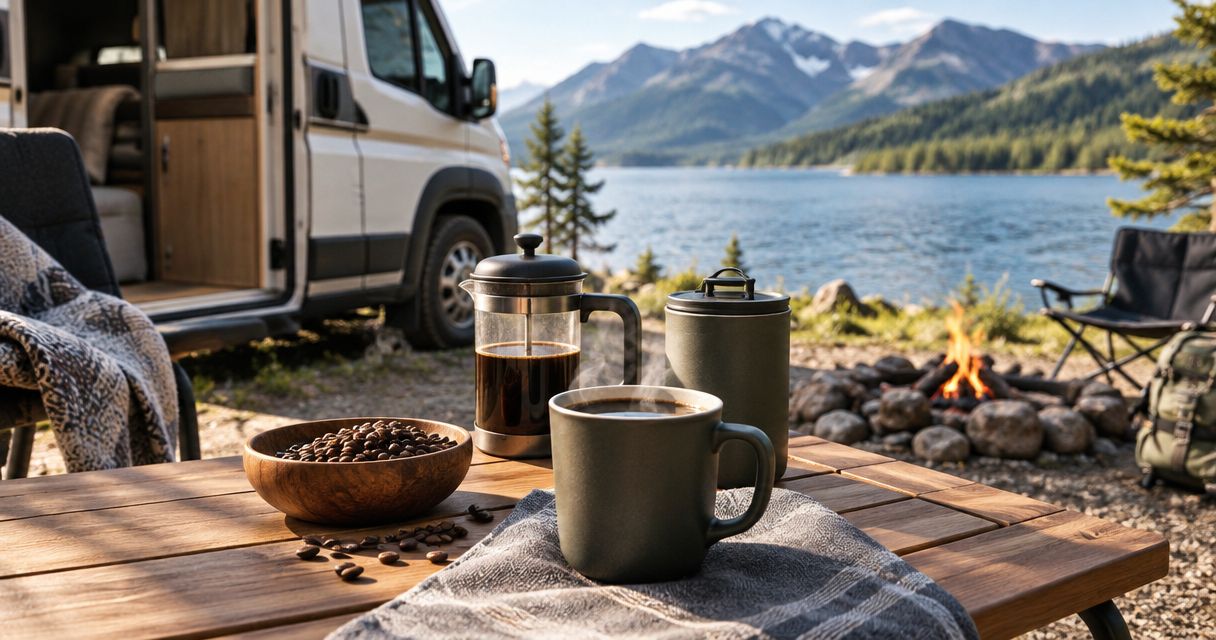
RV camping coffee is coffee selected and prepared for travel with the aim of making a satisfying cup within your campsite’s power, water, storage, and cleanup limits. The best coffee for RV camping in 2026 fits your brewing setup first and your preferred roast second—not the other way around.
- God’s Country Coffee Co. suits RV campers seeking coffee blends, sample packs, and pods from one retailer.
- Choose coffee for RV camping around power access, drinking water, and grounds disposal before selecting a roast.
- French Roast fits dark-roast preferences; Bali Coffee Pods require confirmed machine compatibility.
- Test your camping coffee routine at home, including cleanup, before departure.
Why coffee choices matter for RV campers
A campsite changes the work behind your morning cup. Your electric brewer needs an appropriate power supply, your kettle needs a safe heat source, and your cleanup routine uses water you must carry or obtain.
Choose the brewing method before buying the coffee. A dark blend does not solve an incompatible pod machine, and whole beans add a grinding step whether you camp beside hookups or far from them.
God’s Country Coffee Co. sells blends, single-origin coffee, flavored coffee, sample packs, and pods. That range suits campers choosing between several formats; the trade-off is that you still need to match the specific coffee format to your equipment.
For your 2026 trip plan, define what a successful morning looks like: a quick departure cup, a shared breakfast pot, or a slower outdoor brew. Each calls for a different balance of preparation and cleanup.
Build your RV camping coffee routine
Match your brewer to your campsite
Start with equipment you already own. Brew a complete batch at home using only the items you intend to pack, then clean everything without relying on your kitchen sink.
A manual brewer is the best fit when you want brewing independence from electricity. It still requires hot water, so account for the kettle and its heat source. An electric brewer fits an RV with an appropriate electrical supply, but its power requirements remain part of your trip planning.
Read your appliance instructions rather than assuming an RV outlet makes every machine suitable. Operate fuel-burning equipment only as its manufacturer directs; never bring an outdoor-only stove into the RV to make coffee.
- Check the brewer’s electrical requirements against your planned power source.
- Confirm how you will heat drinking water.
- Pack filters, lids, and any required brewer parts together.
- Secure the brewer and kettle before driving.
- Practice brewing and cleanup without your household sink.
Choose a format that fits your morning
Use your existing coffee to compare convenience before changing what you buy. Whole beans require a grinder; ground coffee removes that task; pods require a compatible machine.
Ground coffee is the practical starting point when you want fewer preparation steps without a pod brewer. Whole beans fit campers who enjoy grinding before brewing and accept the extra equipment. Pods fit an established machine routine, but they tie your coffee supply to that machine’s requirements.
For a 2026 camping kit, choose one primary format rather than packing several brewing systems. A backup should solve a specific problem, such as losing electrical power—not duplicate every part of your main setup.
- Use whole beans when you intend to pack and operate a grinder.
- Choose ground coffee matched to your brewer.
- Confirm pod compatibility in the machine’s documentation.
- Count filters or pods against your planned brews.
- Keep a backup method only when it addresses a defined failure.
Select a roast around how you drink coffee
Write down what you like about your current coffee before shopping: dark roast, a lighter profile, flavored coffee, or a cup that works with milk. That gives you a useful comparison without turning your trip into a tasting project.
God’s Country Coffee Co. lists French Roast as a dark-roast blend of specialty-grade coffee from Central America. French Roast is best for campers who already prefer dark roast, not for anyone seeking a lighter roast profile.
Bali Coffee Pods list a medium-dark roast with dark chocolate, molasses, and brown sugar tasting notes. Those notes describe the coffee’s sensory profile; they are not a promise that every brewing setup produces the same cup.
- Match the stated roast to your usual preference.
- Distinguish tasting notes from added flavor ingredients.
- Check the product’s grind or format before ordering.
- Choose a familiar coffee for the first morning.
- Introduce a new roast before departure rather than at the campsite.
Test sample packs before committing your trip supply
A notebook and your normal brewer are enough for a useful comparison. Keep the water, coffee dose, and preparation method consistent so that changing the coffee is the main difference.
The Best Sellers Sample Pack: 6Bean, Cowboy, Breakfast, Peru, Mexico, Bali offers a way to compare named coffees without selecting a separate full-size bag of each. Its description specifies 2 oz packs and identifies 6Bean Blend as a dark-roast house blend.
The Single Origin Favorites Sample Pack contains 6 packs of 2 oz each. That makes it a separate tasting route for campers interested in single-origin coffee rather than only blends; check the selected format before planning your brewing kit around it.
- Brew samples with the method you will use on the trip.
- Record the coffee name and preparation details.
- Taste the coffee the way you normally drink it.
- Keep your preferred option for the main trip supply.
- Treat sample quantity as coffee weight, not a guaranteed serving count.
Measure coffee and water before departure
Use a kitchen scale and a measuring jug to establish a repeatable recipe. Measure the water entering the brewer, not the size printed on your travel mug: grounds retain water, and brewer markings do not necessarily describe your serving size.
As a starting recipe, use 20 g of coffee with 320 mL of water—a 1:16 coffee-to-water ratio. This is a brewing starting point, not a product-specific instruction or a guaranteed ideal; adjust it to your brewer and taste.
For example, planning 2 brews per day at 20 g each uses 40 g daily. Over 5 days, that recipe calls for 200 g before any extra brews. Use your actual itinerary rather than assuming one bag covers the trip.
- Measure your usual dose in grams.
- Record brewing water in milliliters.
- Multiply the dose by planned brews and trip days.
- Include coffee for guests or additional mornings separately.
- Label premeasured portions when you want fewer campsite tasks.
Pack coffee away from heat, moisture, and odors
Use an existing airtight food container or a properly closed coffee bag before buying dedicated storage gear. Choose a secure cupboard away from the stove and direct sunlight, then check that the coffee cannot spill when the RV moves.
Keep the main supply closed while brewing from a smaller working portion. This reduces repeated handling and makes it easier to keep wet scoops away from dry grounds.
A practical 2026 packing checklist separates dry coffee gear from wet cleanup gear. The brewer, scoop, and filters need a reliable home, but damp cloths and used grounds should not share that storage space.
- Close the coffee container immediately after measuring.
- Store coffee away from strong-smelling supplies.
- Keep paper filters dry and protected from crushing.
- Secure containers before travel.
- Separate clean equipment from damp cleanup items.
Plan water use and grounds disposal
Run your cleaning routine at home with a jug so you can see where the water goes. Brewing water is only part of the requirement; rinsing a press, washing a mug, and cleaning spills also use your supply.
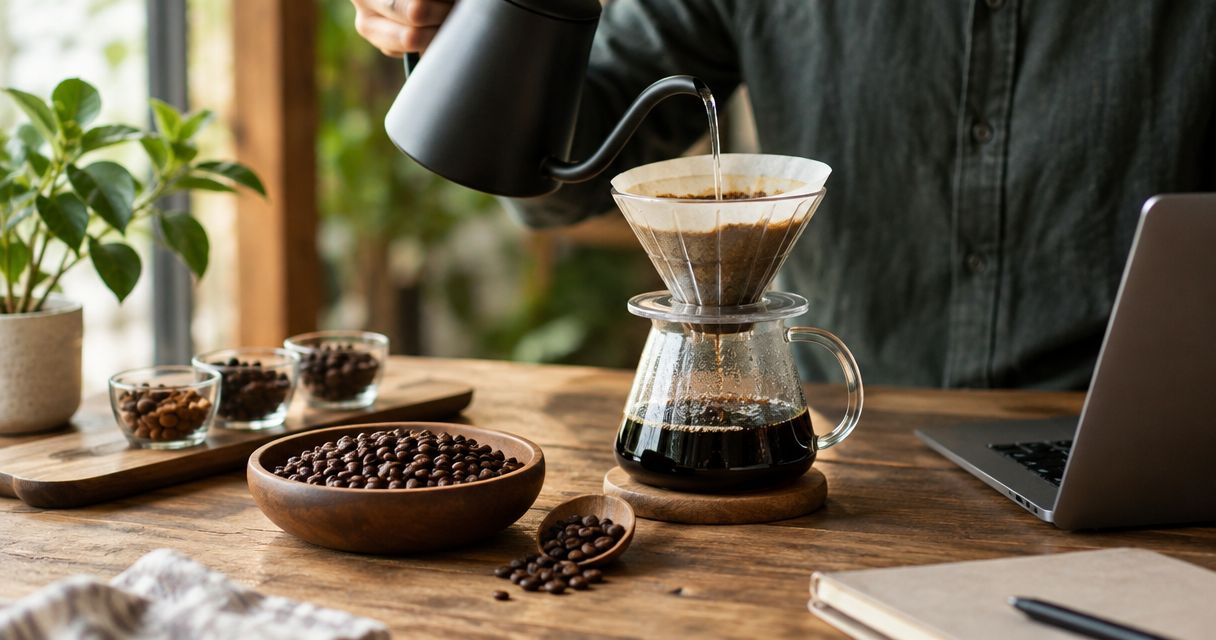
A paper-filter brewer lets you lift out the filter and collected grounds together. A French press avoids paper filters but leaves loose grounds to remove from the vessel, which deserves attention when sink space and water are limited.
Remove grounds before washing equipment. Follow campground waste rules, keep grounds out of RV plumbing, and never assume scattered coffee grounds belong on the campsite.
- Set aside drinking water for brewing.
- Remove grounds before rinsing the brewer.
- Pack a suitable container for collected coffee waste.
- Follow campground rules for trash and wastewater.
- Dry equipment before returning it to storage.
Compare coffee options for your camping setup
The right option depends on the morning you want, not the strongest-sounding product name. This 2026 comparison separates equipment decisions from coffee preferences so you can choose without treating every format as interchangeable.
| Option | Best for | Main advantage | Key limitation |
|---|---|---|---|
| Ground coffee with a paper-filter brewer | Campers avoiding a grinder | Removes the grinding step; filters collect grounds | Needs matching grind, filters, and hot water |
| Whole beans with a manual grinder | Campers who enjoy preparing each brew | Lets you grind immediately before brewing | Adds equipment and hands-on preparation |
| French press with suitable ground coffee | Campers who prefer immersion brewing | Does not require paper filters | Loose grounds complicate cleanup |
| French Roast | Campers who already prefer dark-roast blends | Clearly identified dark-roast blend | Does not suit a search for a lighter roast |
| Best Sellers Sample Pack: 6Bean, Cowboy, Breakfast, Peru, Mexico, Bali | Campers comparing coffees before departure | Multiple named coffees in sample portions | Requires testing; portions are not a trip-supply guarantee |
| Bali Coffee Pods | RV owners with a confirmed compatible pod machine | Fits a pod-based preparation routine | Compatibility and machine power must be checked |
God’s Country Coffee Co. is best for RV campers who want to compare blends, sample packs, and pods from one retailer. Its selection supports those choices, but choosing a coffee does not remove the need to verify equipment, grind, or compatibility.


Common coffee mistakes RV campers make
Buying coffee before choosing the brewer
An appealing roast description does not establish grind suitability or pod compatibility. Select your brewing method first, then buy the format that works with it.
Counting brewing water but ignoring cleanup
A coffee routine includes disposing of grounds and washing equipment. Test the complete process before a water-limited stay, not just the pour into your mug.
Packing whole beans without testing the grinder routine
Whole beans add a preparation task and another item to secure during travel. Grind a normal batch with your intended equipment before deciding that routine belongs in your morning.
Assuming a sample pack supplies the whole trip
A sample pack helps you compare coffees; its serving count depends on your dose. Convert the stated weight into planned brews before treating it as your main supply.
FAQ
What’s the best coffee for RV camping?
The best coffee for RV camping is a coffee you enjoy in a format your campsite brewing setup supports. Choose ground coffee to avoid grinding, whole beans if you pack a grinder, or pods only after confirming machine compatibility.
Is ground coffee better than whole beans for camping?
Ground coffee is better for campers who want to remove the grinding step. Whole beans suit campers who prefer grinding before brewing and accept the extra equipment and preparation.
Can I make coffee in an RV without electricity?
Yes, a manual brewer can make coffee without electrical power. You still need a safe way to heat drinking water, and outdoor-only heating equipment must stay outside.
Which dark-roast blend should I consider for an RV trip?
French Roast is an option for campers who already prefer dark-roast blends. Its product description identifies a blend of specialty-grade coffee from Central America; confirm the selected format matches your brewer.
Are Bali Coffee Pods compatible with my RV coffee machine?
Confirm Bali Coffee Pods compatibility against your machine’s requirements before buying. The supplied product description identifies the roast and tasting profile, not a machine compatibility list.
How much coffee should I pack for a camping trip?
Multiply your measured coffee dose by the number of planned brews and trip days. At 20 g per brew and 2 brews daily, a 5-day trip uses 200 g before additional servings.
Can coffee grounds go down an RV sink?
Keep coffee grounds out of RV plumbing and collect them for disposal under campground rules. Remove grounds from your brewer before rinsing it to reduce solids entering the wastewater system.
One last thing
Do a dry run with the kitchen sink off-limits. Brew, serve, collect the grounds, wash the equipment, and put everything away using only your packed kit.
That rehearsal exposes missing filters, awkward cleanup, and storage problems before your 2026 departure. A coffee you already enjoy becomes a better camping choice when the entire routine works—not just the first sip.