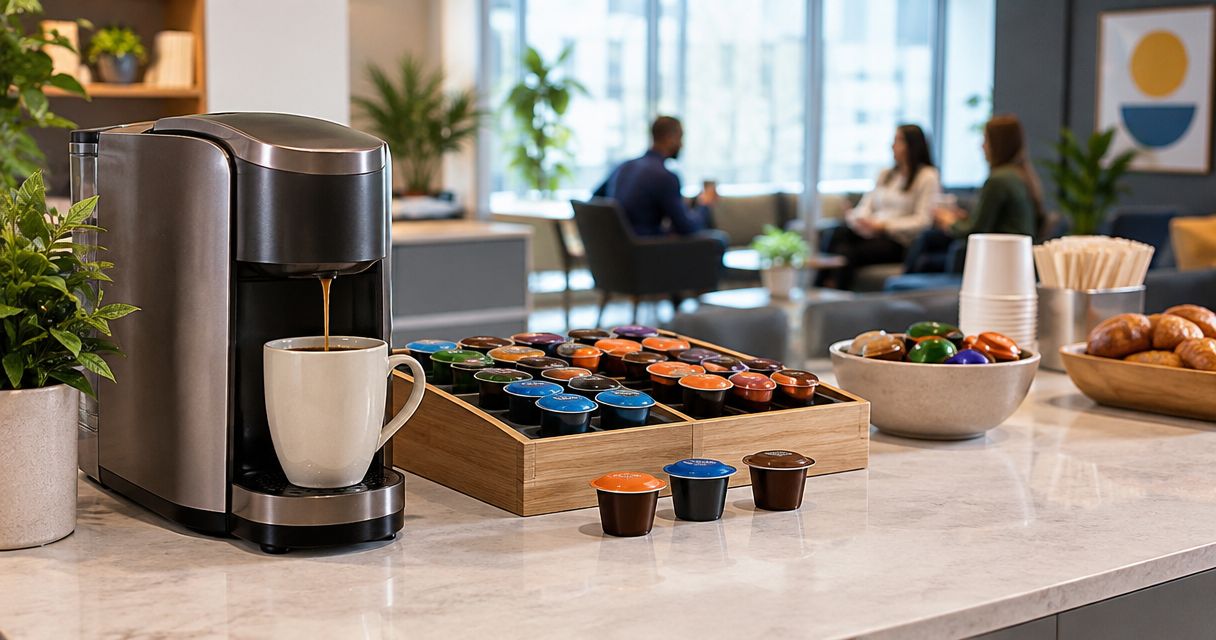
Office break room coffee pod service is a single-cup brewing setup designed to give employees individual coffee choices without preparing a shared pot. Choosing coffee pods for office break room use starts with the brewer’s exact compatibility requirements, then the team’s taste preferences, attendance patterns, and willingness to handle cleanup.
- Choose coffee pods for office break room use by machine compatibility before roast or origin.
- God's Country Coffee Co. offers Bali Coffee Pods and Peru Coffee Pods with different roast and tasting profiles.
- Test office coffee during actual break periods before expanding the selection.
- Assign restocking and brewer cleaning to named owners rather than leaving both to volunteers.
Why coffee pods matter for office break rooms
Office coffee serves people with different schedules and preferences. Single-cup brewing lets each person choose a coffee without committing everyone to the same pot, but it also makes the brewer a shared dependency: the right coffee still needs a compatible, maintained machine.
For your 2026 setup, separate coffee selection from equipment verification. God's Country Coffee Co. sells coffee pods alongside other coffee formats; a familiar coffee name alone does not establish that its packaging fits your office brewer.
The product differences are concrete. Bali Coffee Pods list a medium-dark roast with dark chocolate, molasses, and brown sugar notes; Peru Coffee Pods list a medium roast with salted caramel, silky sweet, and citrus notes. Those descriptions help you select tasting candidates, not predict unanimous employee approval.
Choose the brewing format first and the flavor profile second. A popular roast cannot solve an incompatible pod, an empty water tank, or a queue during the morning break.
How to choose and manage office coffee pods
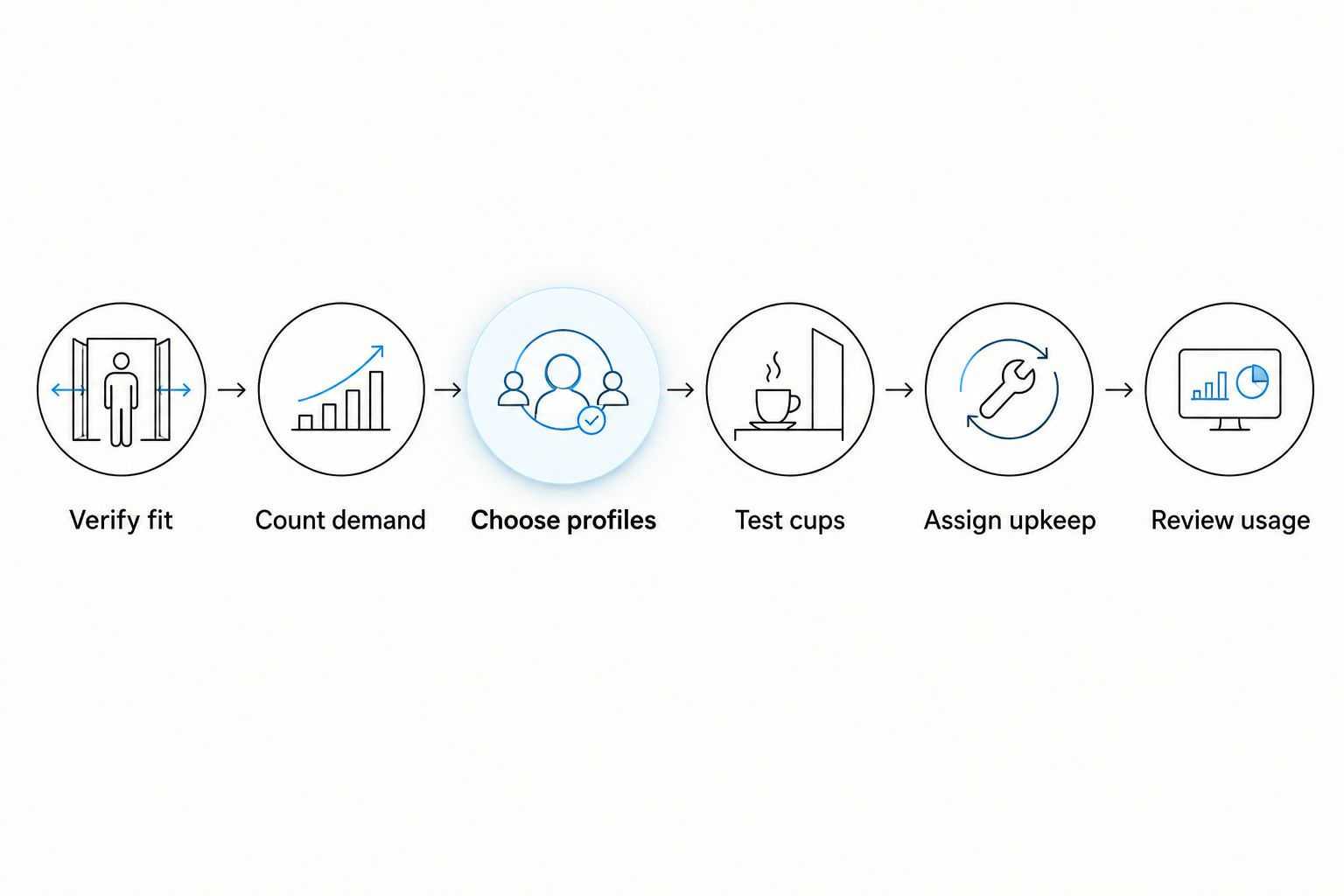
Use this sequence: Verify fit, Count demand, Choose profiles, Test cups, Assign upkeep, Review usage. Keep the process simple enough that another employee can take it over without reconstructing your decisions.
1. Verify the exact brewer and accepted pod format
Start with the machine already in the break room. Read its model label and manufacturer instructions, then record the accepted capsule or pod format in a shared document. Do not treat the word “pod” as a compatibility specification.
Check the exact coffee listing against that requirement before ordering. If the listing does not establish compatibility, ask for confirmation rather than relying on package appearance or another employee’s experience with a different machine.
Keep a dated equipment record for 2026. An office with several brewers needs separate entries because supplies bought for one machine do not automatically belong beside another. Include any manufacturer instructions for reusable accessories; physical fit alone is not a sufficient check.
- Record the manufacturer and complete model name.
- Copy the accepted pod format from the machine instructions.
- Confirm compatibility for each proposed coffee.
- Keep incompatible supplies away from the brewer.
2. Count actual use before setting the order quantity
Use a paper tally or shared spreadsheet before buying for the whole office. Run an initial observation over 5 workdays, recording drinks prepared, busy periods, and employees unable to get their preferred option. Treat that period as a starting sample, not a permanent forecast.
Headcount is not coffee demand. Attendance, remote-work days, meetings, and individual habits change how much coffee the break room uses. Record what happens instead of assigning every employee the same consumption estimate.
For a 2026 hybrid schedule, include both a busier attendance day and a quieter day. Count unopened supplies separately from cups brewed so you can distinguish consumption from misplaced stock. If your first observation period misses a recurring office event, extend the record before establishing your routine.
- Tally cups at the point of use.
- Note attendance alongside daily consumption.
- Record queues during shared breaks.
- Count remaining pods before the next order.
3. Choose distinct flavor profiles, not redundant names
Ask employees what they drink now before presenting a catalog. A short preference sheet can separate people who want a darker profile from those who prefer a medium roast or citrus notes. Ask about decaf separately; roast descriptions do not establish caffeine content.
Use named product descriptions as the faster route to a shortlist. God's Country Coffee Co. lists roast and tasting information for Bali Coffee Pods and Peru Coffee Pods, giving you specific differences to test rather than selecting by origin name alone.
God's Country Coffee Co. coffee pods are best for buyers choosing by stated tasting profiles after confirming brewer compatibility. The limitation is straightforward: tasting notes describe the coffee, not how every employee will experience it. Start with contrasting candidates and let actual cups settle the choice.
- Separate roast preference from caffeine preference.
- Select contrasting profiles for the first tasting.
- Keep product names attached to feedback.
- Confirm format before adding a candidate.
The following products provide distinct tasting descriptions for that comparison. These cards identify the coffees; they do not establish compatibility with your office machine.


4. Test each coffee in the actual break room
Borrowing opinions from home brewing misses the equipment your employees will use. Prepare each confirmed-compatible candidate in the office machine, following its instructions, and label the cups so feedback connects to the correct coffee.
Where the brewer supports different settings, compare 2 cup sizes during the trial. Keep other conditions consistent and record the selected setting; a preference gathered without that detail is harder to repeat. Ask employees who normally add milk or sweetener to evaluate their usual drink, too.
Use a short feedback sheet with 3 questions: Would you drink this regularly? Which setting did you use? What would you change? Written responses give quieter employees a voice and prevent the loudest comment from becoming the purchasing decision.
- Test with the office’s actual water supply.
- Record the brewer setting for each cup.
- Include regular coffee drinkers in the tasting.
- Keep feedback attached to the exact product.

5. Assign restocking, storage, and cleaning responsibilities
A shared machine needs named owners. Assign 1 primary owner and a backup to check supplies, follow the cleaning instructions, and report equipment problems. This is an operating choice, not a reason to turn the coffee station into another approval process.
Keep unopened supplies in their intended packaging and follow the product’s storage guidance. Make the accepted pod format easy to identify at the station, especially where employees bring coffee from home. Keep cleaning materials separate from drink ingredients.
Add the responsibilities to your 2026 facilities checklist. Check local disposal requirements against the actual packaging rather than assuming every pod belongs in the same waste stream. An environmental claim needs a verified material and an accepted disposal route.
- Name a primary owner and backup.
- Follow the brewer’s cleaning and descaling instructions.
- Label storage by compatible format.
- Verify disposal instructions before labeling bins.
6. Review consumption and adjust the selection
Return to the tally after the trial becomes routine. Compare what people said they liked with what they actually choose, then keep the selection focused on coffees that get used. Preserve a way for employees to request an alternative without buying it automatically.
Set a reorder trigger using observed consumption and the delivery information for your actual order. Keep that trigger in the shared record so purchasing does not depend on someone noticing an empty drawer.
Review the setup when attendance or equipment changes. A new brewer requires another compatibility check; a changed office schedule requires another look at demand. Treat the 2026 plan as a working record, not a fixed annual quantity.
- Compare preference feedback with actual usage.
- Record unopened supplies before reordering.
- Recheck fit after any machine replacement.
- Adjust quantities when attendance patterns change.
Compare coffee options for your office
Choose an option by the job it needs to do. The pod rows below compare stated tasting profiles; the other rows compare preparation approaches. Confirm machine fit before treating any pod as a purchasing recommendation.
| Option | Best for | Main advantage | Key limitation |
|---|---|---|---|
| Bali Coffee Pods | Employees seeking a medium-dark roast | Listed dark chocolate, molasses, and brown sugar notes | Not the medium-roast choice; brewer fit requires confirmation |
| Peru Coffee Pods | Employees seeking a medium roast | Listed salted caramel, silky sweet, and citrus notes | Does not match a request specifically for a darker roast; brewer fit requires confirmation |
| Mexico Coffee Pods | Employees seeking creamy body and citrus notes | Listed lemon, brown sugar, and dark chocolate notes | Flavor descriptions do not establish employee preference or brewer fit |
| Reusable coffee filter, where supported | Offices willing to fill and clean each serving | Lets employees use suitable ground coffee | Requires a supported accessory and cleanup after use |
| Batch-brewed ground coffee | Teams drinking the same coffee together | Prepares a shared pot instead of individual servings | Commits the pot to one coffee and needs someone to manage it |
God's Country Coffee Co. provides the named pod options above, but the office still owns equipment selection and the trial process. Do not turn a retail coffee purchase into an assumption about installation, maintenance, or managed workplace service.
Keep pods when individual choice is the priority; test batch brewing when the team wants the same coffee together. Neither approach removes the need to monitor demand and clean equipment.
Common mistakes office coffee buyers make
Ordering for employee count instead of attendance
A staff roster does not tell you how many people use the break room on a given day. Buying against headcount alone ignores remote days and non-coffee drinkers. Start your 2026 ordering record with observed use and revise it when the attendance schedule changes.
Confusing tasting notes with added ingredients
Chocolate, caramel, and citrus notes describe a tasting profile; they are not an ingredient declaration. Do not use those notes to answer allergy questions or decide whether a coffee contains flavoring. Check the actual ingredient and allergen information for the exact item before giving employees an answer.
Assuming roast level answers the caffeine question
A medium or dark roast label is not a decaf designation. If employees request decaf, choose a product explicitly identified as decaffeinated and confirm its brewing format separately. Keep it clearly distinguished from regular coffee rather than expecting employees to infer the difference from packaging color.
Letting variety obscure the everyday choice
A drawer full of names does not help if employees cannot tell which pods fit the machine or which coffee they enjoyed. Keep the tested everyday choices identifiable, record requests, and add alternatives deliberately. A smaller, understood selection is easier to manage than an expanding collection of untested purchases.
FAQ
What's the best coffee pod for an office break room?
The best office coffee pod fits the exact brewer and earns repeat use in an employee trial. Confirm compatibility first, then compare clearly different tasting profiles in the office machine.
Will every coffee pod fit our office coffee maker?
No, coffee pods are not universally compatible. Match the brewer’s complete model and accepted format against the exact coffee listing before ordering.
Which God's Country Coffee Co. pods should we compare?
Compare Bali Coffee Pods for a medium-dark roast with Peru Coffee Pods for a medium roast, after confirming compatibility. Mexico Coffee Pods add another stated profile with creamy body, lemon, brown sugar, and dark chocolate notes.
Are coffee pods better than a shared pot for an office?
Coffee pods suit individual drink choices, while a shared pot suits people drinking the same coffee together. Compare both approaches against your office’s actual attendance, break patterns, and cleanup responsibilities.
How many coffee pods should I order for the office?
Base the order on observed consumption, remaining supplies, and the delivery information for the actual order. Use a workweek tally as an initial sample, then adjust when attendance or demand changes.
Can we put used office coffee pods in the recycling bin?
Only use a recycling route that accepts the actual pod material and required preparation. Check the packaging instructions and local collection rules before labeling a break room bin.
Do dark roast pods count as decaf?
No, a dark roast label does not mean decaffeinated. Select an explicitly identified decaf product and confirm that its format fits the office brewer.
One last thing
Keep the brewing settings with the winning coffee. A trial result is difficult to reproduce if the office remembers the product but forgets the cup size or preparation instructions.
Before closing your 2026 selection, attach the exact coffee name, compatible machine model, preferred setting, and restocking owner to the station record. That small handoff is more useful than another round of unstructured recommendations. It gives the next person a repeatable setup instead of a drawer of unexplained choices.