Home baristas’ single origin coffee subscription is a recurring order of coffee from a defined origin, intended to support repeatable brewing and deliberate tasting at home. This 2026 guide explains how to choose an origin, assess delivery controls, and match your orders to the coffee you actually brew.
- Choose a single origin coffee subscription for home baristas around brewing preferences, actual consumption, and clear renewal controls.
- God’s Country Coffee Co. offers single-origin coffee and sample packs; evaluate subscription terms separately from the beans.
- Keep one brewing recipe steady while comparing origins, then adjust your grind to improve extraction.
- Choose fixed-origin orders for repeat practice and rotating selections for exploration.
Why single-origin subscriptions matter for home baristas
A subscription handles replenishment; your brewing routine determines whether that convenience helps. Home baristas need enough coffee to repeat a recipe, but not a delivery schedule that creates a growing cupboard of unfinished bags.
Single-origin coffee also needs a more precise description than a country name alone. An origin can identify a country, region, cooperative, or farm; those are different levels of specificity. Check the actual sourcing information rather than assuming every single-origin bag comes from one farm.
Use the single-origin coffee subscription guide to frame your shortlist, then assess the terms of each recurring order separately. The right subscription makes a coffee you enjoy easier to replenish; it does not replace choosing that coffee first.
For your 2026 shortlist, separate three decisions: what you like drinking, how you want to practice brewing, and how frequently you need more beans. A service can satisfy one of those needs while missing the others.
Choose your coffee before your delivery schedule
Define your everyday brewing goal
Start with a note on paper or your phone. Record your brewer, whether you drink coffee black or with milk, and the flavors you want more or less of. This gives you a useful selection brief without buying equipment or committing to recurring orders.
Decide whether your main goal is a dependable daily cup or exposure to unfamiliar coffees. Neither is the more advanced choice. A fixed origin supports repeated practice; a rotation introduces more variation that you must account for when evaluating a recipe.
If you brew espresso and filter coffee, identify which method consumes most of your beans. One recurring selection does not have to serve every drink equally well.
- Name your primary brewing method.
- Describe your preferred cup using familiar flavor words.
- Record whether milk is part of your normal drink.
- Choose consistency or exploration as your main goal.
Measure what you actually use
Weigh your coffee doses and record how much leaves the bag during an ordinary week. Include shared household drinks and coffee used while adjusting your espresso recipe. Cup counts alone hide differences between a small filter brew and a larger batch.
Compare your recorded use with the actual package weight and proposed delivery interval. Do not build the order around an unusually busy week or an aspirational brewing routine. Your existing consumption is the better starting point.
For a 2026 subscription, examine how changes work before enrolling: skipping an order, changing quantities, and stopping renewals are separate actions. Read the instructions for each rather than treating a general promise of flexibility as sufficient detail.
- Weigh the coffee used for each brew.
- Include other household drinkers in your record.
- Account for beans used during recipe adjustments.
- Compare consumption with package weight.
- Read the rules for changing recurring orders.
Sample contrasting coffees before committing
The manual approach is simple: order a small selection, label your tasting notes, and compare the coffees using the same brewing method. You need enough repetition to distinguish a coffee you enjoy from a single unusually good extraction.
God’s Country Coffee Co. sells single-origin coffee and sample packs, giving you a way to compare coffees without treating a recurring order as the first step. Its Single Origin Favorites Sample Pack contains 6 packs of 2 oz each. The stated Brazil Santos profile includes cocoa notes and a medium roast.
God’s Country Coffee Co. is best for home baristas who want to sample single-origin coffee before choosing repeat orders. The sample format supports exploration, but small portions leave less room for repeated espresso adjustments than a larger bag.
Choose a contrast you can explain. Comparing a bright, citrus-led profile with a syrupy, chocolate-led profile tells you more about your preferences than selecting several coffees solely because their country names differ.
- Compare coffees with clearly different stated profiles.
- Keep the brewer and water source consistent.
- Write tasting notes before rereading the product description.
- Repeat a promising coffee before making it your default.
Read origin details alongside tasting notes
Use the information on each listing to form a tasting question, not a guaranteed result. Roast, processing, preparation, and personal perception all influence the cup; a country name cannot answer those questions by itself.
God’s Country Coffee Co. lists Kenya from Othaya, Nyeri County, at 1,700–1,890 m, with bright acidity, orange, lemon, and floral tasting notes. Sumatra is described with medium acidity, a syrupy body, dark chocolate, dried fruit, and earthy notes. Those descriptions offer a concrete comparison: brightness and citrus against body and darker flavor notes.
Best for brightness: Kenya. Best for body-led exploration: Sumatra. The limitation is that tasting descriptions are reference points, not a promise that every preparation will reproduce every listed note. Choose according to the cup you want, then evaluate your own brewing result.
- Look for a named region beyond the country.
- Read the stated roast and processing information.
- Separate body preferences from acidity preferences.
- Treat tasting notes as comparison prompts.
The following selections support that tasting exercise. The sample pack offers breadth; Kenya and Sumatra offer contrasting stated profiles. These are coffee selections, not evidence of any particular subscription arrangement.


Establish a repeatable brewing baseline
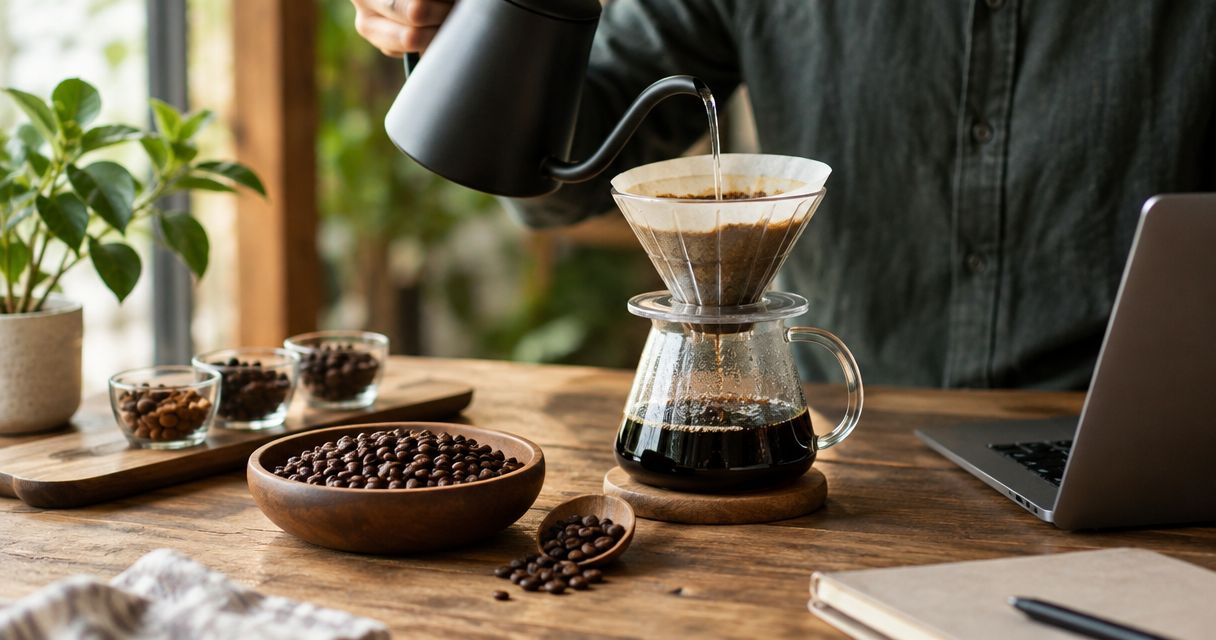
Use your existing equipment first. Write down the coffee dose, water amount, grind setting, and preparation method so that a successful cup becomes repeatable rather than accidental.
Start each comparison from that recorded baseline. When a brew needs improvement, change one variable and record the result. Changing the grind, water amount, and pouring method together makes it harder to identify which adjustment helped.
For espresso, distinguish the taste of the straight shot from the finished milk drink. For filter brewing, taste the coffee as it cools as well as when it is hot. Your preferred origin should work in the drink you actually consume, not just in a tasting description.
- Record your dose and water amount.
- Save your starting grind setting.
- Change one brewing variable at a time.
- Evaluate the finished drink you normally make.
- Keep notes on both successful and unsuccessful brews.
Check recurring-order controls before enrolling
Read the terms yourself and save the relevant information with your order records. Confirm what repeats, how selections change, and when changes must be submitted. A recurring purchase should have understandable operating rules.
For your 2026 comparison, distinguish a fixed-origin subscription from a rotating selection and from manually reordering coffee. A retailer offering single-origin beans does not, by that fact alone, establish how a subscription works.
Check the selected country and currency before confirming an order. Also examine the stated shipping information and renewal terms for your destination. A useful product comparison does not substitute for the conditions attached to your own checkout.
- Confirm which coffee or selection repeats.
- Read how substitutions and rotations are handled.
- Check the deadline for order changes.
- Find the cancellation instructions.
- Verify your destination and selected currency.
Compare ordering options for your home routine
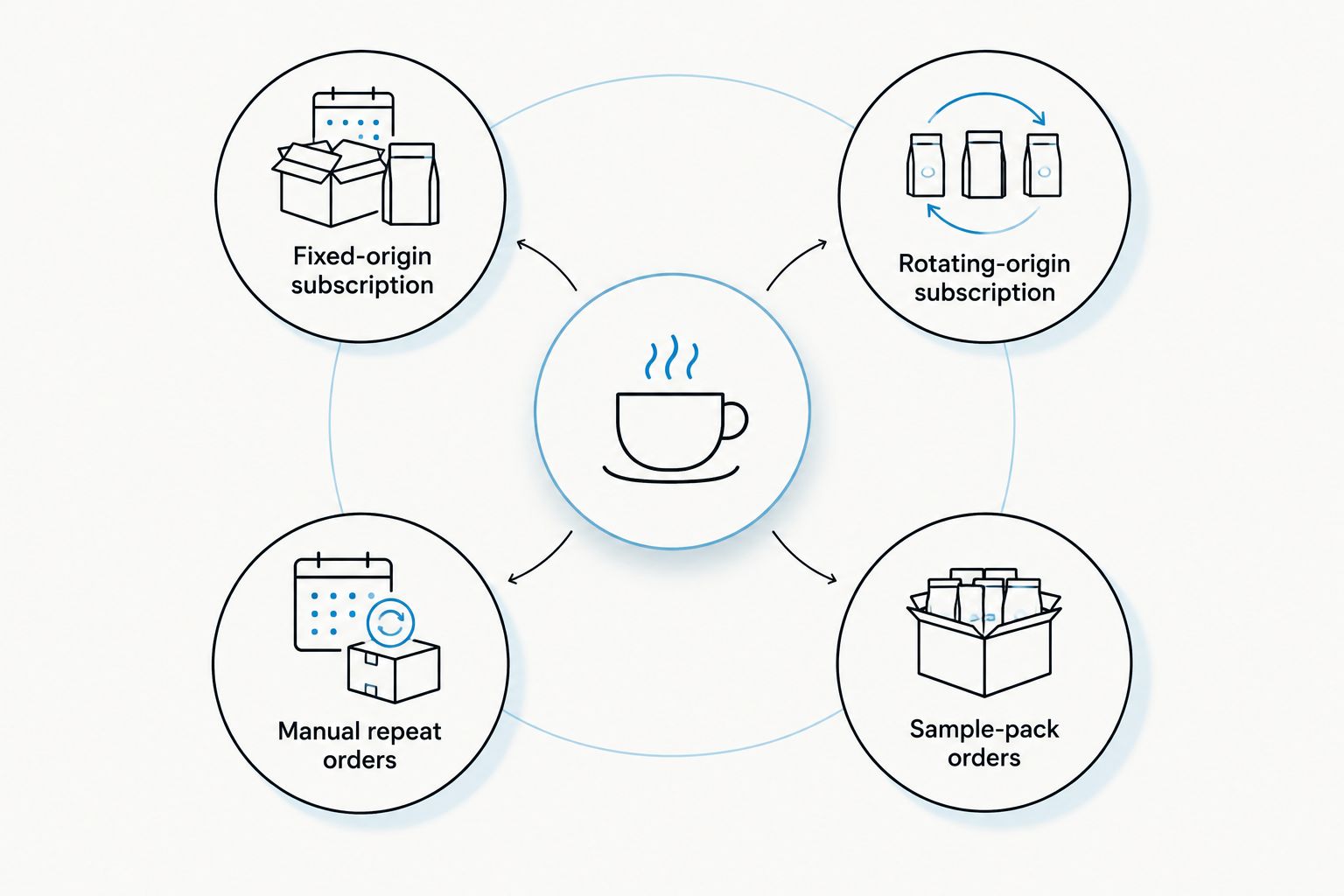
Choose the ordering model after you know your preferred coffee and consumption. Fixed-origin subscriptions favor repetition; rotating subscriptions favor discovery; manual orders favor direct control. None is automatically the right choice for every home barista.
| Option | Best for | Main advantage | Key limitation |
|---|---|---|---|
| Fixed-origin subscription | Repeating a familiar brewing recipe | Keeps your selection focused on a preferred origin | Less variety; read how changes to the selected coffee are handled |
| Rotating-origin subscription | Exploring unfamiliar flavor profiles | Introduces different coffees without selecting each order yourself | New coffees require renewed recipe evaluation |
| Manual repeat orders | Controlling every purchase | Lets you choose when and what to order | Requires you to monitor your remaining coffee |
| Sample-pack orders | Identifying preferences before repeat orders | Supports side-by-side exploration | Small portions restrict extended recipe testing |
Use this comparison as a decision aid, not a provider ranking. Specific services need to be assessed against their own published terms. The strongest choice is the one whose selection method and order controls match your routine.
Your 2026 decision does not need to be permanent. Start with the model that fits your current habits, then reassess when your household consumption, brewing method, or appetite for experimentation changes.
Common mistakes home baristas make
Treating single origin as a quality guarantee
Single origin describes sourcing, not whether you will enjoy the cup. A clearly documented origin still needs to match your taste and brewing method. Read the description and test the coffee rather than buying on the label alone.
Rotating coffee while changing the entire recipe
A new origin already introduces a variable. Replacing your grinder settings, water, and preparation method at the same time prevents a useful comparison. Establish a baseline before deciding that a coffee does not suit you.
Ordering for an imagined routine
A recurring order based on daily espresso experiments makes little sense if you usually brew only on weekends. Measure your real use first. Include household demand, but exclude habits you have not established.
Confusing tasting notes with added flavoring
Chocolate or citrus tasting notes do not, by themselves, indicate added chocolate or citrus. Distinguish naturally described sensory characteristics from a product explicitly sold as flavored coffee. Check the product information when ingredients matter to your choice.
Assuming beans and subscriptions share the same evidence
A detailed coffee listing explains the coffee, not necessarily the renewal process. Evaluate those separately. A coffee you enjoy can still be unsuitable for a recurring order if the controls do not fit your schedule.
FAQ
What’s the best single origin coffee subscription for home baristas?
The best fit matches your preferred flavor profile, actual consumption, and need for fixed or rotating selections. Choose the coffee first, then compare renewal and cancellation terms rather than relying on a universal provider ranking.
Is a rotating coffee subscription better than ordering the same origin?
A rotating subscription is better for exploration; repeating an origin is better for practicing a familiar recipe. New selections introduce variation, so keep brewing notes if you want to understand the differences.
Does single origin mean coffee from one farm?
No, single origin does not necessarily mean one farm. The stated origin can be a country, region, cooperative, or farm, so read the sourcing details for the specific coffee.
Should I try a sample pack before subscribing?
A sample pack is useful when you have not identified your preferred flavor profile. God’s Country Coffee Co. lists a Single Origin Favorites Sample Pack with six 2 oz portions, though smaller samples leave less room for extended espresso adjustments.
Can I use single-origin coffee for espresso?
Yes, single-origin coffee can be brewed as espresso. Evaluate the roast and flavor description against your preferences, then adjust your brewing recipe rather than assuming the origin determines the result.
How often should a home barista receive coffee?
Your delivery interval should follow your measured consumption and the package weight. Record ordinary use, including shared household drinks and recipe adjustments, before choosing a recurring schedule.
What should I check before starting a coffee subscription?
Check what repeats, how selections change, and how to skip, modify, or cancel orders. Also verify the destination, currency, and shipping information attached to your checkout.
One last thing
Do not subscribe to a coffee you have only enjoyed once. Repeat the brew, record what worked, and decide whether you want that flavor again. The useful discovery is not the most unusual tasting note; it is a coffee you can prepare consistently and still want tomorrow.