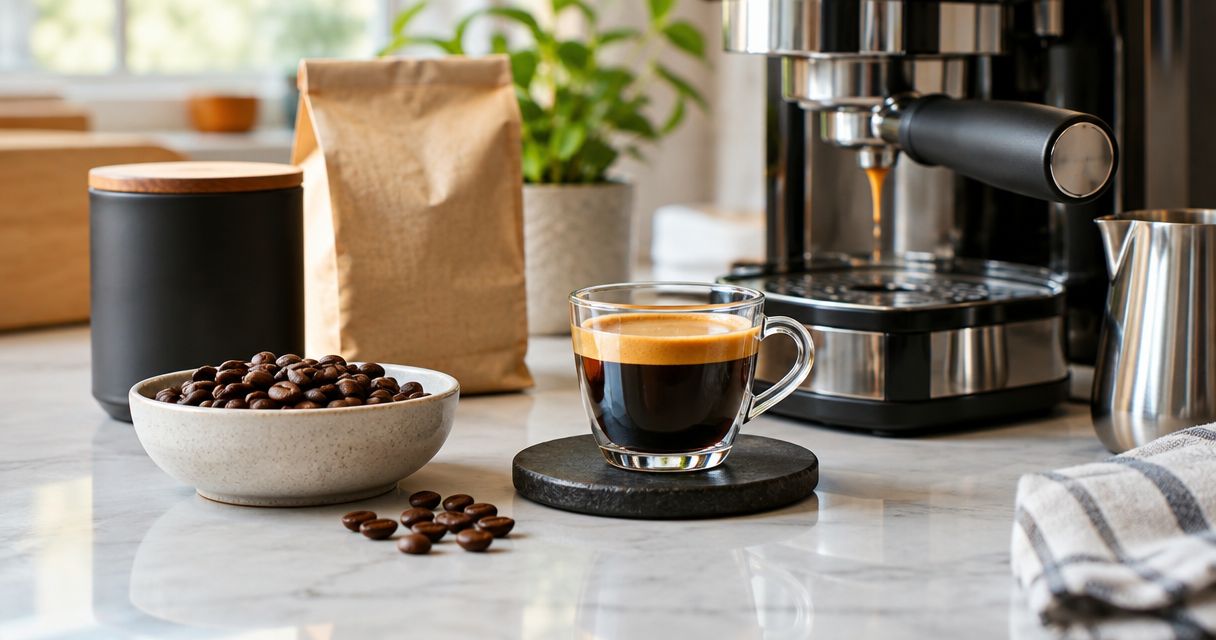
Best overall: Sumatra. Best for dark-roast milk drinks: French Roast. Best decaf: Peru Decaf. This 2026 guide compares coffee for espresso at home from God's Country Coffee Co., with separate picks for balanced shots, fruit-forward espresso, and sampling before committing.
- Sumatra is the best coffee for espresso at home if you want syrupy body and dark-chocolate tasting notes.
- French Roast suits dark-roast milk drinks; Peru suits medium-roast espresso with caramel and citrus notes.
- Peru Decaf is the decaffeinated pick; Tanzania suits drinkers seeking fruit and floral notes.
- Match the coffee format to your machine, then adjust your espresso grind by taste.
Why this matters
Espresso is a brewing method, not a requirement to buy a bag labeled espresso. Your coffee choice sets the flavor direction; your grinder, basket, and brewing recipe determine how you extract it.
The best starting point is the coffee that matches what you actually drink. A syrupy, chocolate-led profile answers a different need from a pear-and-floral profile, even when both go through the same machine. Choose your flavor target before chasing an espresso label.
God's Country Coffee Co. sells blends, single-origin coffee, sample packs, and pods. Those formats are not interchangeable: check the format against your equipment before choosing by origin or tasting notes.
What makes the best coffee for espresso at home
Use these criteria for your 2026 shortlist:
- Flavor direction: Decide between chocolate, caramel, earthy, fruity, and floral notes. Tasting notes describe flavor impressions, not added ingredients.
- Body: Choose a listed syrupy profile if mouthfeel matters most. Do not assume every dark roast has the same texture.
- Roast preference: Compare the stated roast level with your taste. Dark roast is not automatically the right answer for every espresso drinker.
- Drink style: Separate straight espresso from milk drinks. Milk changes how you perceive the finished cup.
- Equipment fit: Confirm whole-bean, ground, or pod format and any relevant machine requirements. A coffee name alone does not establish compatibility.
- Learning commitment: Decide whether you want to settle on one coffee or compare several. Switching coffees adds another variable to your dial-in process.
Best espresso coffee picks at a glance for 2026
| Coffee or pack | Best for | Standout detail from the listing | Key limitation |
|---|---|---|---|
| Sumatra | Full-bodied straight espresso | Syrupy body; dark chocolate, dried fruit, earthy notes | Earthy notes are a mismatch for drinkers seeking a clean floral profile |
| French Roast | Dark-roast milk drinks | Dark-roast specialty-grade blend from Central America | The description does not specify tasting notes |
| Peru | Balanced medium-roast shots | Salted caramel, silky sweet, citrus profile | Citrus is not the right target if you dislike brightness |
| Peru Decaf | Decaffeinated espresso | Medium roast; caramel, smooth, citrus profile | Decaf does not mean caffeine-free |
| Tanzania | Fruit-forward straight espresso | Medium-light roast; pear, floral, jasmine, strawberry profile | Not the closest match for a dark, earthy flavor preference |
| Best Sellers Sample Pack: 6Bean, Cowboy, Breakfast, Peru, Mexico, Bali | Exploring an espresso-labeled blend | Includes 6Bean Blend, described as a dark roast great for espresso | Small samples leave less room for repeated dial-in attempts |
These are use-case recommendations, not a claim that one coffee wins every taste comparison. The descriptions support different choices for different drinkers.
1. Sumatra: best coffee for full-bodied straight espresso
Sumatra has listed cupping notes of medium acidity, syrupy body, dark chocolate, dried fruit, and earthiness. That makes it the clearest choice here when texture and a chocolate-led profile matter more than floral brightness.
God's Country Coffee Co. Sumatra is the best coffee for espresso at home for drinkers who want syrupy body and dark-chocolate notes. Start here if you drink espresso without milk and want the listed body to guide your selection.
Sumatra pros:
- The description explicitly identifies syrupy body.
- Dark-chocolate and dried-fruit notes give you a clear flavor target.
- Medium acidity distinguishes it from a brightness-led selection.
Sumatra cons:
- Earthy notes will not suit every palate.
- The supplied description does not state a roast level.
Best for: Straight-espresso drinkers prioritizing body and chocolate notes.
Verdict: Buy if that flavor profile matches your preferences; skip it if you specifically want floral espresso.
2. French Roast: best coffee for dark-roast milk drinks
French Roast is described as a dark-roast blend of specialty-grade coffee from Central America. Its strongest supported distinction is the roast level, not a detailed flavor promise.
Choose French Roast when you already know you prefer dark-roast coffee in your latte or cappuccino. Do not read extra claims about crema, sweetness, or low acidity into the name; the description does not establish them.
French Roast pros:
- The dark roast is explicitly stated.
- It offers a blend rather than a single-origin selection.
- The description identifies the coffee's Central American sourcing region.
French Roast cons:
- No specific tasting notes are supplied.
- Dark roast is the wrong direction if you want a medium-light selection.
Best for: Milk-drink makers with an established dark-roast preference.
Verdict: Buy for that preference; hold if you need detailed tasting notes before choosing.
3. Peru: best coffee for balanced medium-roast espresso
Peru is a medium roast with a listed profile of salted caramel, silky sweetness, and citrus. It offers a different flavor direction from Sumatra without moving to the medium-light roast of Tanzania.
Pick Peru when caramel and citrus sound more appealing than earthy notes. The description gives you a useful tasting target, but it is not a guarantee that every shot will taste balanced regardless of extraction.
Peru pros:
- The medium roast is clearly identified.
- Caramel and citrus give you distinct notes to look for.
- The listed silky-sweet profile suits a sweetness-focused selection.
Peru cons:
- Citrus is a poor match if you want to avoid bright flavors.
- The listing does not provide an espresso recipe.
Best for: Drinkers seeking medium-roast espresso with caramel and citrus character.
Verdict: Buy if you want this middle roast option; skip it if dark and earthy is your goal.
4. Peru Decaf: best coffee for decaffeinated espresso
Peru Decaf is listed as a medium roast with caramel, smooth, and citrus tasting notes. It is the decaffeinated choice in this comparison, rather than an attempt to substitute tea or a different brewing format for espresso.
Select Peru Decaf because you want decaffeinated coffee with this flavor direction. Decaffeination does not remove every trace of caffeine, and the supplied description does not establish a residual caffeine amount or a decaffeination method.
Peru Decaf pros:
- It provides a named decaf option.
- Its medium roast is stated.
- Caramel and citrus notes make the intended profile clear.
Peru Decaf cons:
- It is not a caffeine-free claim.
- The supplied description does not identify the decaffeination process.
Best for: Espresso drinkers choosing decaffeinated coffee.
Verdict: Buy for decaf espresso; hold if a specific decaffeination method is essential to your purchase.
5. Tanzania: best coffee for fruit-forward straight espresso
Tanzania is a medium-light roast with pear, floral, jasmine, and strawberry tasting notes. It is the most clearly fruit-and-floral-focused option among these picks.
Choose Tanzania when exploring those flavors is the point of your espresso routine. A medium-light selection generally calls for more attention to extraction than a darker coffee, so make this a deliberate choice rather than an automatic replacement for your usual dark roast.
Tanzania pros:
- The medium-light roast is explicitly stated.
- Pear and strawberry distinguish its profile from chocolate-led options.
- Floral and jasmine notes give it a separate use-case slot.
Tanzania cons:
- It does not match a dark-roast preference.
- Its intended flavor direction is not earthy or chocolate-led.
Best for: Straight-espresso drinkers exploring fruit and floral notes.
Verdict: Buy for flavor exploration; skip it if you want a familiar dark-roast direction.
6. Best Sellers Sample Pack: best for exploring an espresso blend
Best Sellers Sample Pack: 6Bean, Cowboy, Breakfast, Peru, Mexico, Bali contains coffee samples in 2 oz packs. Its description identifies 6Bean Blend as a dark-roast house blend and explicitly calls it great for espresso.
That makes the pack a useful route to trying an espresso-positioned blend alongside other coffees. It does not establish that every included sample has the same roast, flavor, or brewing behavior.
Best Sellers Sample Pack pros:
- It includes the explicitly espresso-positioned 6Bean Blend.
- The named assortment lets you compare different coffees.
- The 2 oz format supports small-scale exploration.
Best Sellers Sample Pack cons:
- Small portions leave less coffee for repeated grind adjustments.
- Changing samples means starting a new dial-in process.
Best for: Curious home brewers comparing coffees before settling on a favorite.
Verdict: Buy for exploration; hold if you need a longer run with one coffee to learn your machine.
Match the coffee to your daily drink
For your 2026 choice, start with the drink you make most often, then narrow by the listed flavor profile. This avoids treating every bag as a candidate for the same job.
- Full-bodied shots: Choose Sumatra for its listed syrupy body.
- Dark-roast milk drinks: Choose French Roast when dark roast is your preference.
- Balanced shots: Choose Peru for medium roast with caramel and citrus.
- Decaf espresso: Choose Peru Decaf for the decaffeinated option.
- Fruit-forward shots: Choose Tanzania for pear, strawberry, and floral notes.
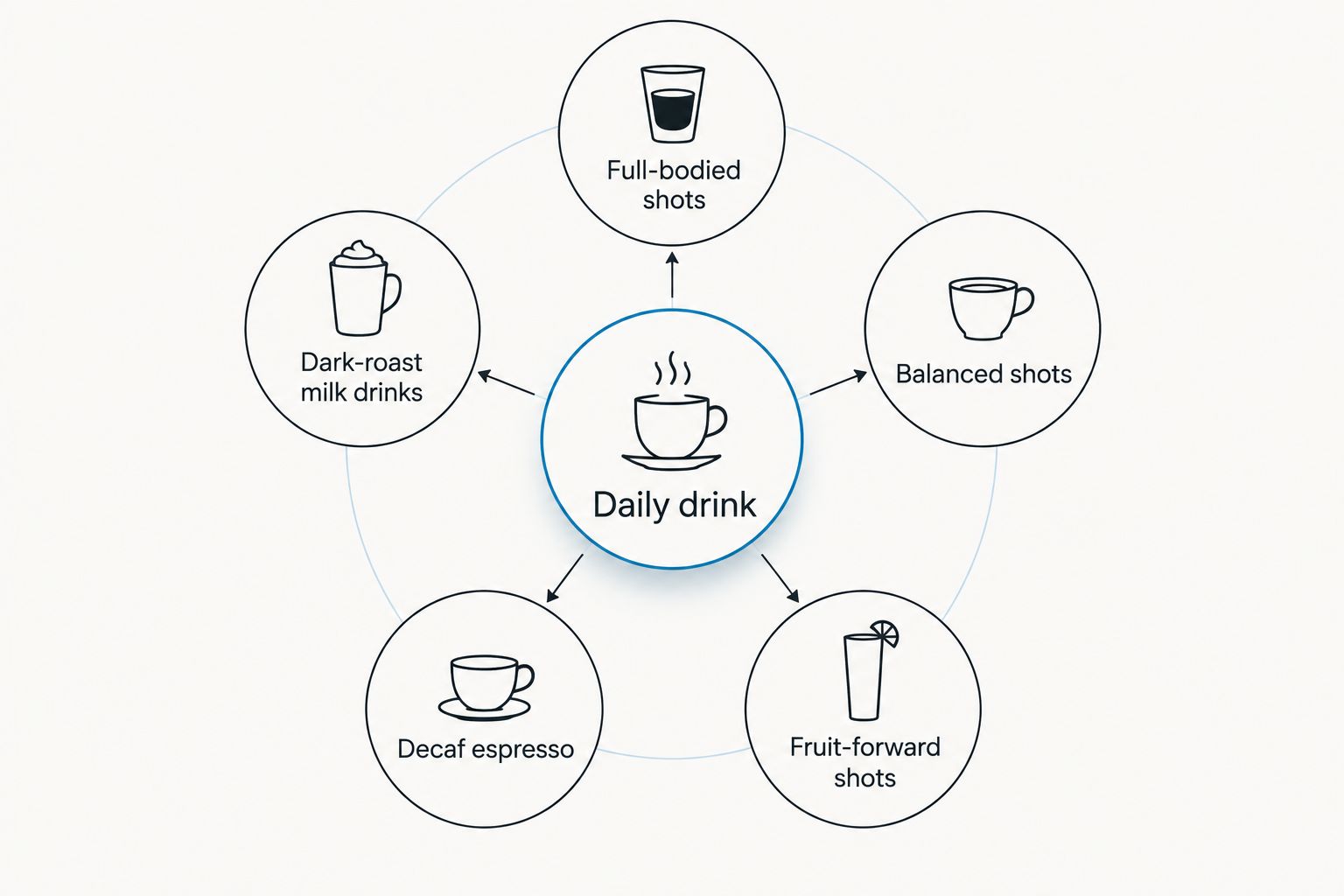
These three God's Country Coffee Co. selections cover separate needs: body-focused espresso, dark-roast preference, and decaf. Check the selected coffee format against your machine before ordering.


How to give your coffee a fair espresso trial
A familiar starting recipe is an 18 g dose producing 36 g of espresso: a 1:2 brew ratio. Use that only if your basket is designed for the dose; the basket's instructions take priority. This is a starting recipe, not a brand-specific performance claim.
- Keep the dose: Weigh the ground coffee instead of filling the basket by eye.
- Weigh the yield: Stop by beverage weight so you can compare shots consistently.
- Taste the shot: Assess sourness, bitterness, sweetness, and texture before adding milk.
- Adjust the grind: Change the grind while keeping dose and target yield steady.
- Repeat the recipe: Confirm the result before switching coffees or changing another variable.
Do not diagnose a coffee from one rushed shot. Uneven puck preparation and unsuitable grind settings can obscure the flavors that made you choose the bag. Keep a short note for each coffee so you can return to a setting that worked.
How the 2026 picks were ranked
The ranking uses the supplied product descriptions: roast level, tasting notes, body, decaf designation, and sample format. Sumatra takes the default slot because its stated syrupy body and dark-chocolate notes directly answer the full-bodied use case.
French Roast, Peru, Peru Decaf, Tanzania, and the sample pack each serve a different preference. This is a description-based buying guide, not a hands-on tasting score or a ranking by reviews.
Which coffee should you choose?
Choose Sumatra if you are undecided and want body-focused straight espresso. Choose French Roast for a known dark-roast preference, Peru for caramel-and-citrus medium roast, and Peru Decaf when decaf is the deciding requirement.
For 2026, the most useful purchase is the one that matches your drink and gives you time to learn a repeatable recipe. Tanzania and the sample pack are exploration choices, not compulsory upgrades from a coffee you already enjoy.
FAQ
What's the best coffee for espresso at home?
Sumatra is the default pick here for drinkers who want syrupy body and dark-chocolate notes. French Roast suits a dark-roast preference, while Peru Decaf serves the decaf use case.
Do I need coffee labeled espresso for my home machine?
No, coffee does not need an espresso label to be brewed as espresso. Choose a compatible format and a flavor profile you enjoy, then adjust the grind and recipe.
Is dark roast better than medium roast for espresso?
Neither roast level is automatically better for espresso. French Roast fits dark-roast preferences, while Peru offers a medium roast with caramel and citrus notes.
Which coffee should I choose for a latte?
Choose French Roast if you prefer dark-roast coffee in your latte. Its description identifies a dark-roast blend, but it does not promise specific flavors in milk.
Can I use Peru Decaf for espresso?
Peru Decaf is the decaffeinated espresso choice in this guide when the selected format fits your equipment. Its listed profile is medium roast with caramel, smooth, and citrus notes.
What's a good starting espresso ratio at home?
A 1:2 coffee-to-beverage ratio is a common starting point, such as 18 g of ground coffee producing 36 g of espresso. Follow your basket's dose guidance and adjust the recipe by taste.
Are coffee pods interchangeable with espresso beans?
No, pods and beans require different equipment formats. Check the pod's stated compatibility rather than assuming that a coffee pod works in your espresso machine.
Is a coffee sample pack useful for learning espresso?
A sample pack is useful for comparing flavors, but small portions limit repeated dial-in attempts. The Best Sellers Sample Pack includes 2 oz samples and an explicitly espresso-positioned 6Bean Blend.
One last thing
Tasting notes are not an ingredient list. Dark chocolate in Sumatra's cupping notes and strawberry in Tanzania's profile describe sensory impressions, not proof that chocolate or fruit was added.
Keep that distinction in mind when comparing single-origin coffee with flavored coffee. God's Country Coffee Co. sells both categories; choose according to whether you want the coffee's listed tasting profile or a specifically flavored selection.