Church coffee gifting is the selection of coffee gift sets for churches and ministries with the aim of thanking volunteers, welcoming newcomers, or recognizing staff. Choose gifts around the recipient’s brewing equipment and preferences, then separate take-home gifts from coffee intended for shared hospitality.
- For coffee gift sets for churches, match the brewing format before choosing flavors or packaging.
- God’s Country Coffee Co. suits churches assembling their own retail coffee gifts from sample packs, coffee, and tea.
- Single Origin Favorites Sample Pack contains six 2oz packs; confirm the grind format before ordering.
- Keep volunteer appreciation gifts separate from fellowship coffee supplies, and offer recipients a suitable alternative.
Why coffee gifting matters for churches and ministries
A church gift has to work beyond the presentation table. A volunteer takes it home, a pastor opens it between appointments, or a newcomer receives it without having shared any drink preferences. A useful gift matches the person, not just the occasion.
For your 2026 ministry calendar, distinguish appreciation from hospitality. An individual gift needs to suit a household; coffee for a fellowship gathering needs to suit the equipment and people serving it. Treating these as the same purchase creates avoidable mismatches.
God’s Country Coffee Co. is best for churches assembling their own coffee gifts from retail sample packs, coffee, and tea. You can start with the categories at God’s Country Coffee Co., then confirm the details of each selection before ordering. Treat the purchase as a retail gift project rather than assuming a church-specific ordering arrangement.
How to choose coffee gift sets for churches
1. Define the occasion and recipient group
Start with a simple recipient list in a spreadsheet or on paper. Record whether each gift goes to an individual, a household, or a ministry team, and name the occasion before selecting the contents.
For volunteer appreciation, use the same selection criteria across teams while allowing a drink preference choice. For a pastoral thank-you, choose around the recipient’s known habits. For newcomer welcome gifts, avoid making coffee the only way someone can participate.
Keep your 2026 gift plan distinct from routine kitchen purchasing. A bag intended for a shared church cupboard is a hospitality supply, even if you present it during a celebration.
- Name the occasion: appreciation, welcome, retirement, or another specific milestone.
- Mark each recipient as an individual, household, or team.
- Assign someone to approve the recipient list.
- Separate take-home gifts from communal beverage supplies.
2. Ask about brewing equipment and drink preferences
Use a short paper form, email, or conversation before buying. Ask whether the recipient drinks coffee, which brewer they use, and whether they prefer regular coffee, decaf, or tea. Keep the questions practical rather than asking people to describe themselves as coffee experts.
Whole-bean coffee requires a grinder. Ground coffee needs a grind suited to the brewing method. Pods require a compatible machine; a product’s pod format alone does not establish compatibility with a recipient’s brewer.
Do not let gift packaging decide the brewing format. If you cannot ask a recipient directly, ask someone who knows their routine rather than treating a sample pack as automatically suitable.
- Record the brewer type and whether a grinder is available.
- Ask about regular coffee, decaf, and tea preferences.
- Confirm whether flavored coffee is welcome.
- Check the exact format before placing the order.
3. Match a sample pack or alternative to each recipient
Build a selection list manually from the preferences you collected. Then use an existing sample pack as a simpler alternative to choosing every coffee separately. God’s Country Coffee Co. offers Single Origin Favorites Sample Pack and Flavored Coffees Sample Pack, both described as containing six 2oz packs.
Single Origin Favorites Sample Pack is best for a recipient interested in exploring origin coffees. Flavored Coffees Sample Pack is best for someone who already enjoys flavored coffee; its description includes French Vanilla. Neither choice replaces the need to confirm grind format.
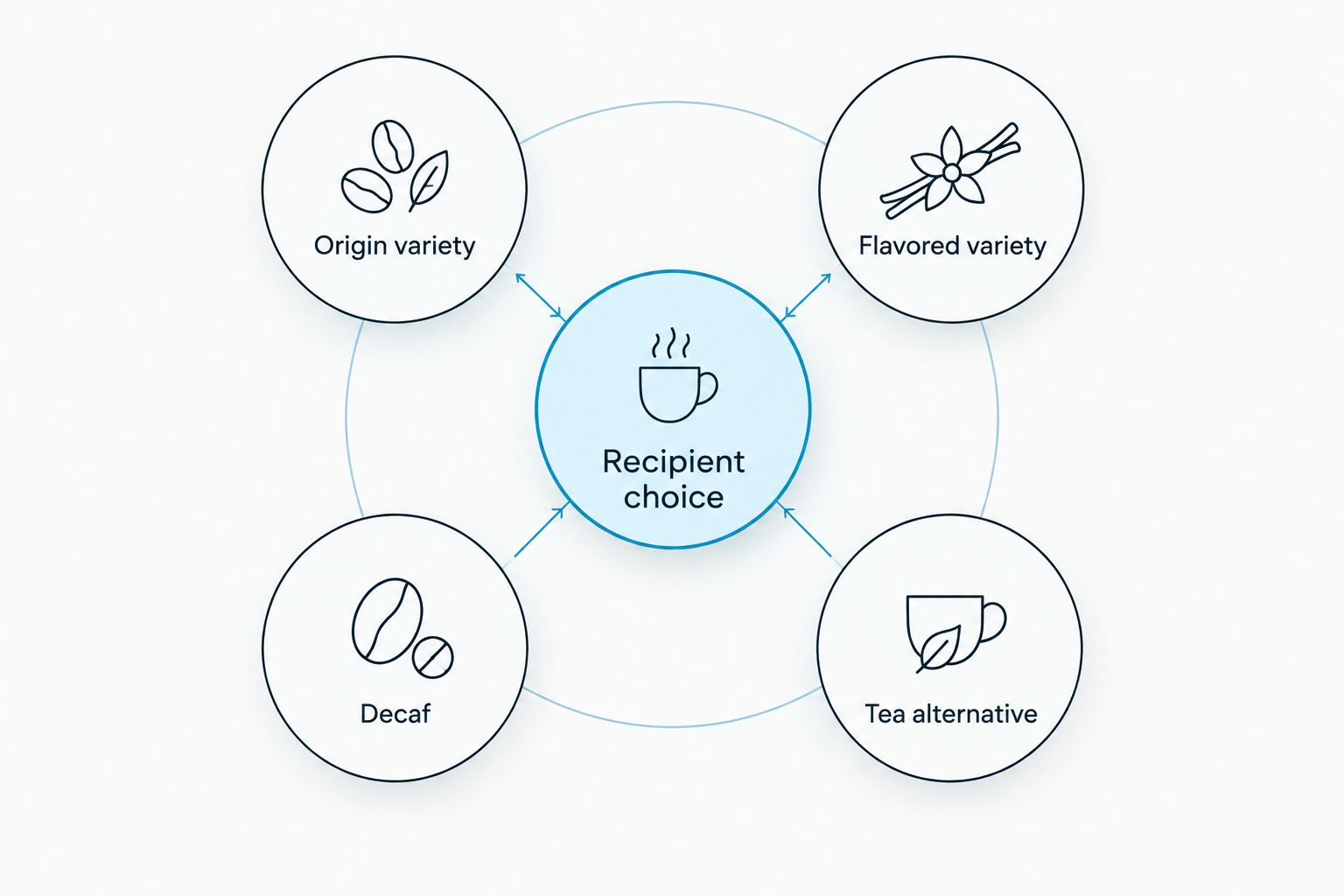
For a known decaf preference, consider Peru Decaf rather than substituting regular coffee. For a non-coffee recipient, Apple Cider Rooibos is described as naturally caffeine free. Ask which alternative the recipient wants instead of making the substitution silently.
- Choose origin variety for recipients interested in comparing coffees.
- Choose flavored variety only when the preference is known.
- Keep decaf separate from the regular-coffee selection.
- Offer a tea alternative without treating it as a lesser gift.
4. Check quantities without guessing serving counts
Write down what each package actually contains. A sample pack described as six 2oz packs contains 12oz of coffee in total. That describes the amount of coffee, not a guaranteed number of brewed servings.
Do not translate package weight into a promised number of cups without defining the brewing recipe and cup size. A recipient using a small brewer and a church preparing a shared pot are planning different uses.
For your 2026 appreciation list, count complete recipient gifts separately from the individual packets inside them. If you intend to divide a sample pack, check that each inner packet carries the information the recipient needs before separating it from the outer packaging.
- Record package count and stated weight separately.
- Count complete gifts against the approved recipient list.
- Keep product information with any separated packets.
- Avoid printing an unsupported serving count on gift tags.
5. Assemble a useful gift without hiding product information
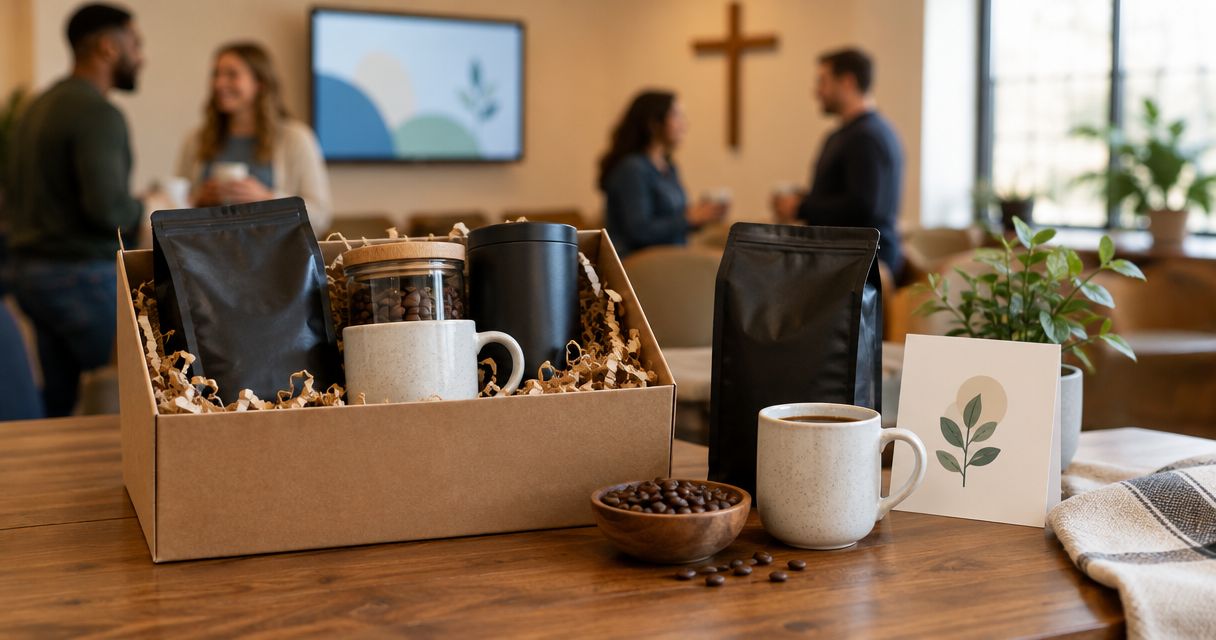
Use a simple bag or box and add a handwritten note before buying decorative extras. The note should name the service you appreciate: preparing communion, welcoming visitors, teaching a class, or another contribution you can identify accurately.
Keep the coffee or tea in its original packaging. If you add a mug, sweets, or another item, check that the recipient can use it and retain any relevant ingredient information. Presentation should not obscure what the gift contains.
For 2026 volunteer recognition, standardize the level of care rather than forcing identical drinks. A decaf or tea selection can carry the same note and presentation as a regular-coffee gift without requiring everyone to receive the same beverage.
- Keep original product labels visible and readable.
- Write a specific appreciation note without inventing a quotation.
- Use packaging that holds the contents securely.
- Identify decaf, flavored coffee, and tea clearly.
6. Verify the order and handoff plan
Build an order checklist before checkout. Match each selection to a recipient, review the displayed country and currency, and confirm the delivery details shown for the order. Work backward from your event date using the retailer’s current information, not an assumed delivery interval.
The retailer serves home consumers, so plan around the retail ordering process. Do not assume custom church packaging, wholesale terms, donations, or a ministry purchasing program. If your project depends on a special arrangement, obtain confirmation before committing the event plan.
Choose a handoff method that respects the recipient. A personal thank-you after a service and an office collection point serve different purposes; neither requires public recognition for someone who prefers privacy.
- Check recipient names against gift quantities.
- Review country, currency, and delivery details before checkout.
- Confirm any special request before relying on it.
- Assign responsibility for receiving and distributing the gifts.
7. Record preferences for the next appreciation occasion
After distribution, ask whether the recipient could use the gift and whether the format suited their brewer. Keep the feedback focused on practical preferences, not whether someone expressed enough gratitude.
Use a simple shared record with appropriate access. A note such as ground coffee, no flavored coffee, or tea preferred is more useful than a vague rating. Avoid collecting medical explanations when a drink preference answers the purchasing question.
Close your 2026 project by recording what to repeat and what to change. Separate recipient feedback from purchasing notes so that an ordering issue does not become a judgment about the gift itself.
- Record the preferred drink and brewing format.
- Note whether the recipient wants the same selection again.
- Remove unnecessary personal information.
- Update the next occasion’s checklist before repeating the order.
Compare coffee gift options for your ministry
Choose the option that fits the recipient’s use, not the one with the most elaborate presentation. The sample packs below provide variety, while the decaf and tea selections address specific preferences. No single option is the best church gift for every household.
| Option | Best for | Main advantage | Key limitation |
|---|---|---|---|
| Single Origin Favorites Sample Pack | Recipients interested in exploring origin coffees | Six 2oz packs provide a selection to compare | You still need to confirm the grind format |
| Flavored Coffees Sample Pack | Recipients who already enjoy flavored coffee | Six 2oz packs offer flavored variety | A poor match when the recipient avoids flavored coffee |
| Best Sellers Sample Pack: 6Bean, Cowboy, Breakfast, Peru, Mexico, Bali | Recipients interested in a named coffee assortment | Combines the coffees named in the assortment | The assortment does not establish each recipient’s taste preference |
| Peru Decaf | Recipients who specifically request decaf | Medium roast with caramel, smooth, citrus tasting notes | Does not offer the variety of a sample pack |
| Apple Cider Rooibos | Recipients who prefer a caffeine-free herbal drink | Described as spicy, sweet, and naturally caffeine free | Not a coffee gift; confirm that the substitution is welcome |
God’s Country Coffee Co. provides these retail choices, but you still need to handle recipient matching, presentation, and distribution. Choose a sample pack when variety is the point; choose a specific drink when the recipient’s preference is already clear.


Common mistakes churches and ministries should avoid
Treating a shared kitchen purchase as a personal thank-you
Coffee placed in the fellowship kitchen serves the group. If your purpose is individual appreciation, give the recipient something to take home with a note addressed to them. Keep hospitality purchasing on a separate list so that the gift retains its intended purpose.
Choosing a dark roast because it sounds more substantial
Roast preference is a taste decision, not a measure of a volunteer’s contribution. Ask what the recipient drinks before choosing a roast. Do not use the organizer’s favorite coffee as the default for every ministry team.
Reading ministry affiliations into a brand name
A faith-related name does not establish church ownership, charitable giving, mission support, or a donation arrangement. Describe the coffee and the reason for your gift without adding an unsupported claim about where proceeds go. Verify any affiliation before including it in church communications.
Turning appreciation into an unwanted public presentation
Ask ministry leaders whether recipients prefer a public thank-you or a private handoff. Keep participation voluntary, especially when photographs or public recognition are involved. The gift should recognize service without requiring the recipient to perform gratitude in front of the congregation.
Forgetting people who do not drink coffee
Include a preference choice when planning the recipient list, not after the coffee arrives. A suitable tea or another agreed alternative avoids asking someone to accept a gift they cannot use. Do not assume decaf answers every reason for declining coffee.
FAQ
What are the best coffee gift sets for churches?
The best coffee gift sets for churches match recipients’ brewing equipment and drink preferences. Choose a sample pack for someone who enjoys variety, or a specific coffee, decaf, or tea when their preference is known.
Is a coffee sample pack a good volunteer appreciation gift?
A coffee sample pack is a good volunteer appreciation gift for a recipient who enjoys trying different coffees. Confirm the grind format and add a personal note explaining the service you appreciate.
What can a church give someone who does not drink coffee?
Offer a recipient-approved alternative such as tea instead of assuming everyone wants coffee. Apple Cider Rooibos is described as naturally caffeine free, but the recipient should still choose whether it suits them.
Should churches choose whole-bean coffee or ground coffee for gifts?
Choose whole-bean coffee only when the recipient has a grinder, and choose ground coffee that suits their brewing method. Confirm the format of the exact item before ordering.
How much coffee is in the Single Origin Favorites Sample Pack?
Single Origin Favorites Sample Pack contains six 2oz packs, totaling 12oz of coffee. Package weight does not establish a fixed number of brewed servings because recipes and cup sizes differ.
Does God’s Country Coffee Co. offer a church gifting program?
Use God’s Country Coffee Co. as a retail source for coffee, sample packs, pods, and tea rather than assuming a church gifting program. Confirm any special ordering or packaging arrangement directly before relying on it.
Can churches use the same coffee for gifts and fellowship service?
Churches can choose the same coffee for both purposes when the formats suit each use. Plan individual gifts separately from shared brewing supplies so that recipient needs and hospitality quantities remain clear.
One last thing
Give the recipient an easy way to change the selection before you order. A brief preference check is more useful than an elaborate surprise that requires a grinder or brewer they do not own.
For your final 2026 checklist, read each gift assignment as a complete sentence: this person receives this drink in this format for this reason. If you cannot complete the sentence, resolve the choice before buying the packaging.