Best overall coffee for cold brew in 2026: Sumatra; best balanced daily pick: Peru; best dark-roast option for milk: French Roast. At God's Country Coffee Co., Peru Decaf covers the decaf preference, Uganda offers a lighter-bodied tasting profile, and Single Origin Favorites Sample Pack suits readers who want to compare before choosing.
- Sumatra is the best overall coffee for cold brew when you want a syrupy body and dark-chocolate tasting notes.
- Peru is the balanced medium-roast pick; French Roast suits drinkers who prefer a dark-roast starting point.
- Peru Decaf is the decaf recommendation, with a listed caramel, smooth, and citrus tasting profile.
- Single Origin Favorites Sample Pack contains six packs for comparing coffees before choosing a regular brew.
Why this matters
Choosing coffee for cold brew starts with how you drink it. A black coffee drinker looking for body needs a different starting point from someone adding milk or seeking floral notes. Roast darkness alone does not answer that question.
Cold brewing changes how coffee extracts, so a bag's tasting notes describe the coffee rather than guarantee the finished batch. Grind, water, steeping, filtration, and dilution still shape your result. Choose a suitable flavor direction first, then adjust the brewing method.
God's Country Coffee Co. is best for home cold-brew shoppers who want to compare single-origin coffees. If you prefer blends instead, the premium coffee blends guide provides another selection route.
What makes the best coffee for cold brew?
For this 2026 guide, the ranking follows five criteria you can use before buying:
- Serving style: Decide whether you want black coffee, coffee with milk, or a base for a sweetened drink. Judge the coffee in that finished form.
- Tasting profile: Use listed chocolate, caramel, fruit, floral, and earthy notes to choose a direction. Do not treat those notes as added ingredients.
- Body: A syrupy profile and a light-bodied profile serve different preferences. Neither is automatically better because the drink is cold.
- Roast preference: Medium roast provides an alternative to dark roast. Choose darkness because you enjoy that style, not because cold brew requires it.
- Format and discovery: Use loose coffee for immersion brewing and sample packs for comparisons. Check the grind option before ordering rather than assuming a particular format.
Caffeine preference also separates regular coffee from decaf. A decaf label does not mean zero caffeine, and cold brewing does not remove caffeine from regular coffee.
Best coffee for cold brew in 2026 at a glance
These recommendations match supplied product descriptions to distinct drinking preferences. The table is a selection guide, not a claim that every coffee has undergone a comparative cold-brew taste test.
| Rank and coffee | Best for | Standout description | Key limitation |
|---|---|---|---|
| 1. Sumatra | Full-bodied black cold brew | Syrupy body; dark chocolate, dried fruit, and earthy notes | Earthy notes are a poor match for someone seeking a delicate profile |
| 2. Peru | A balanced daily starting point | Medium roast; salted caramel, silky sweet, and citrus | Not the dark-roast choice |
| 3. French Roast | Dark-roast coffee served with milk | Dark-roasted specialty-grade Central American blend | Not the choice for a medium- or lighter-roast preference |
| 4. Peru Decaf | A decaf cold-brew routine | Medium roast; caramel, smooth, and citrus | Decaf is not caffeine-free |
| 5. Uganda | Exploring a lighter-bodied profile | Mild acidity; floral, chocolate, and dark-fruit notes | Light body does not match a syrupy-body preference |
| 6. Single Origin Favorites Sample Pack | Comparing coffees before choosing | Six small packs; the listed Brazil Santos profile includes cocoa notes | Small portions require smaller comparison batches |
1. Sumatra: best coffee for cold brew with a syrupy body
Sumatra takes the overall recommendation because its listed profile puts body at the center: syrupy, with dark chocolate, dried fruit, earthy notes, and a long lingering body. That makes it the clearest starting point here for someone seeking a substantial black cold brew.
The description lists medium acidity. It does not promise an acid-free drink, and the earthy tasting note deserves as much attention as the chocolate note. Choose this profile because both appeal to you.
Sumatra pros:
- Syrupy body gives you a clear selection criterion.
- Dark-chocolate and dried-fruit notes suit that flavor preference.
- Earthy notes distinguish it from the caramel-and-citrus options.
Sumatra cons:
- Earthy flavors do not suit every palate.
- Its body-focused profile is not the light-bodied recommendation.
Best for: Black cold-brew drinkers who prioritize body and chocolate-associated flavors.
Taste Sumatra without additions before deciding on milk or sweetener. That first glass tells you whether the profile itself suits you; additions can otherwise make the choice harder to judge. Verdict: Buy Sumatra for a full-bodied starting point.
2. Peru: best coffee for cold brew as a balanced daily pick
Peru is a medium roast with a listed tasting profile of salted caramel, silky sweet, and citrus. It is the everyday recommendation for readers who want an alternative to a dark roast without choosing a floral-led profile.
Those tasting notes are descriptions, not promises of added caramel, salt, or sugar. Brew Peru plainly first, then evaluate it in your usual glass. Your normal serving matters more than an unfamiliar tasting routine.
Peru pros:
- Medium roast offers a distinct alternative to French Roast.
- Caramel and citrus provide clear flavor-selection cues.
- The silky-sweet description suits readers seeking that profile.
Peru cons:
- Citrus is a mismatch if you want to avoid fruit-associated notes.
- Medium roast does not satisfy a specific dark-roast preference.
Best for: Home drinkers seeking a medium-roast daily cold brew.
For your 2026 routine, start with Peru if you are undecided between a darker roast and a more floral coffee. Keep the brewing method consistent while assessing the bag; changing the recipe and coffee together makes the result difficult to interpret. Verdict: Buy Peru as the balanced daily pick.
3. French Roast: best coffee for cold brew with a dark-roast preference
French Roast is described as a dark roast made from specialty-grade coffee from Central America. It is the most direct recommendation for readers who already enjoy dark-roasted coffee and usually serve their cold brew with milk.
That recommendation rests on roast preference, not a claim about measured strength or caffeine. Dark roast does not automatically mean more caffeine. The product description also does not establish specific chocolate, smoky, or caramel tasting notes.
French Roast pros:
- The dark-roast designation makes the choice straightforward.
- Its blend offers an alternative to the single-origin picks.
- Central American sourcing is stated in the description.
French Roast cons:
- It is not the medium-roast option.
- The supplied description gives less flavor detail than Sumatra or Peru.
Best for: Dark-roast drinkers who add milk to their cold brew.
Evaluate French Roast after adding your usual milk, not only as a concentrate. You are choosing coffee for the drink you actually consume, and that distinction matters. Verdict: Buy French Roast if dark roast is already your preference.
4. Peru Decaf: best coffee for cold brew when you choose decaf
Peru Decaf is a medium roast with caramel, smooth, and citrus listed in its tasting profile. It gives you a decaf option without directing you toward a dark roast or flavored coffee.
Choose it because you want decaf, not because cold brewing changes regular coffee into a low-caffeine drink. Decaffeinated coffee still contains some caffeine; this guide makes no claim about the amount in a finished glass.
Peru Decaf pros:
- The decaf designation addresses a specific buying preference.
- Medium roast provides an alternative to darker styles.
- Caramel and citrus give you useful flavor cues.
Peru Decaf cons:
- Decaf does not mean caffeine-free.
- Citrus notes do not suit every taste preference.
Best for: Drinkers who specifically want decaf cold brew.
In 2026, treat Peru Decaf as its own coffee rather than assuming it will taste identical to regular Peru. Both descriptions include related flavor language, but that is not evidence of identical brewing results. Verdict: Buy Peru Decaf for a decaf routine.
5. Uganda: best coffee for cold brew with a lighter-bodied profile
Uganda lists mild acidity, light body, floral notes, chocolate, and dark fruits. It comes from Sipi in Uganda's Kapchorwa District and is described as fully washed. Its clearest distinction in this selection is the light-bodied profile.
Choose Uganda if you want to explore something different from Sumatra's syrupy description. Floral and dark-fruit notes provide the reason to try it; they do not establish exactly how the cold-brew batch will taste.
Uganda pros:
- Light body creates a distinct use-case slot.
- Floral, chocolate, and dark-fruit notes offer several flavor cues.
- The description identifies its region and washed process.
Uganda cons:
- Light body is a mismatch for a syrupy-body preference.
- Milk and sweetener make it harder to judge the unaltered profile.
Best for: Black-coffee drinkers exploring a lighter-bodied tasting direction.
Compare Uganda and Sumatra using the same method and serving style. The useful question is which profile you prefer, not whether one country produces universally better cold brew. Verdict: Buy Uganda for lighter-bodied exploration; skip it if body is your priority.
6. Single Origin Favorites Sample Pack: best for finding your preference
Single Origin Favorites Sample Pack contains 6 packs of 2 oz each, totaling 12 oz of coffee. Its description identifies Brazil Santos as a medium roast with an elegant, smooth cup and cocoa notes. The smaller portions make it a discovery choice rather than the default for large batches.
The supplied description does not identify every included coffee here, so this recommendation does not assume the complete lineup. Choose the pack for comparison, then check the current product details before ordering.
Single Origin Favorites Sample Pack pros:
- Six portions support coffee-to-coffee comparisons.
- The 2 oz portions give each trial a defined amount.
- The listed Brazil Santos profile offers a medium-roast cocoa direction.
Single Origin Favorites Sample Pack cons:
- Smaller portions limit the size of each trial batch.
- A sampler does not establish which coffee will become your favorite.
Best for: Readers who want to learn their preference before selecting a regular coffee.
Keep your water ratio, filter, and serving style consistent between samples. Write down the coffee name beside your impression so you can repeat the choice. Verdict: Buy the sample pack for discovery, not a large-batch routine.
Choose your starting coffee
God's Country Coffee Co. offers several relevant starting points, but buying more options is not a substitute for choosing a goal. Pick Sumatra for body, Peru for a medium-roast daily option, or Peru Decaf when decaf is the requirement.


Turn the right coffee into a useful comparison
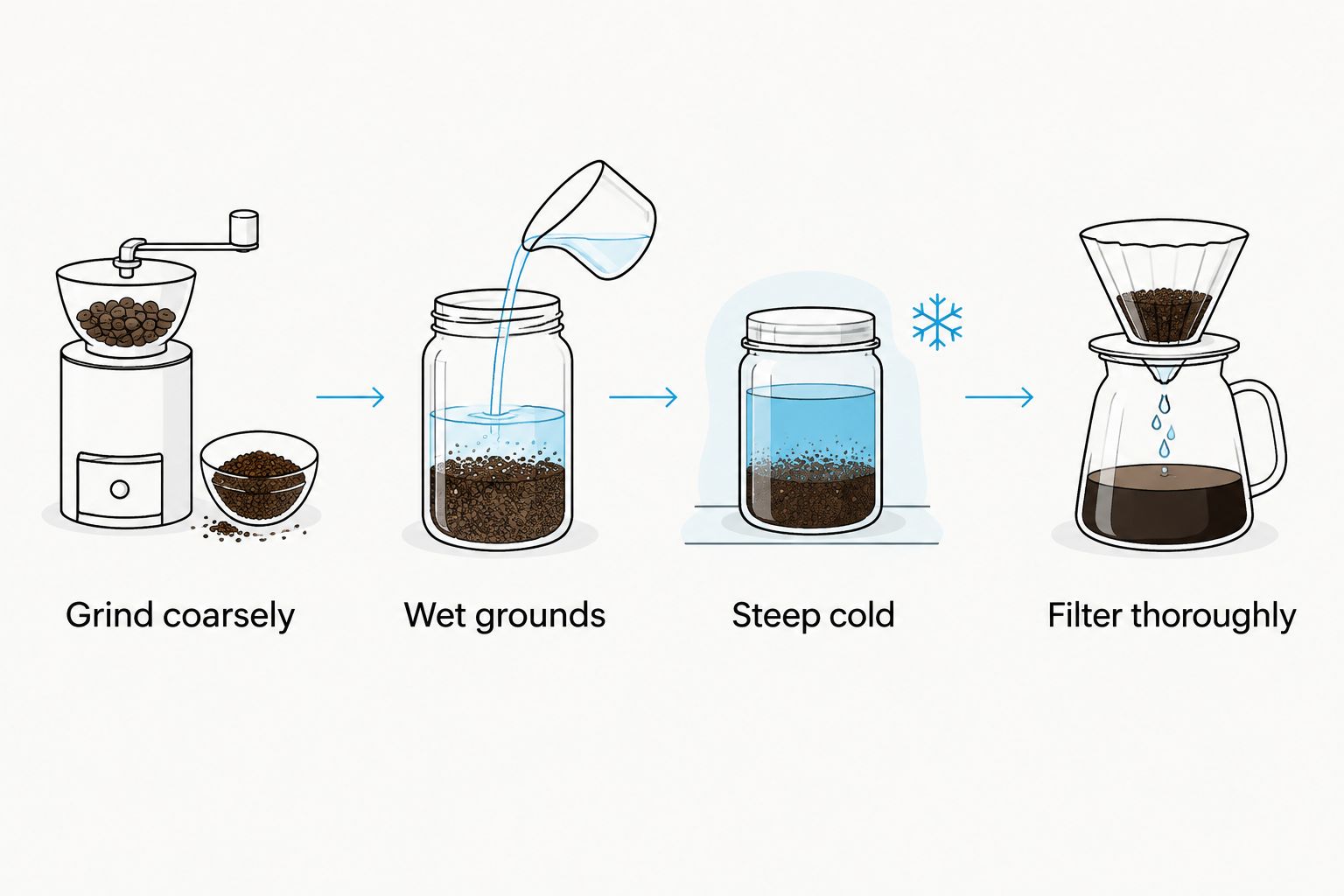
A consistent process makes your coffee choice easier to assess. Use your brewer's instructions for quantities and steeping rather than combining unrelated recipes.
- Grind coarsely: Use a coarse grind suited to immersion brewing. Very fine particles complicate filtration.
- Wet grounds: Bring all the grounds into contact with water rather than leaving dry pockets.
- Steep cold: Follow your brewer's refrigerated brewing instructions and keep the method consistent between coffees.
- Filter thoroughly: Separate the grounds before evaluating the finished drink.
Compare coffees at the same dilution and with the same additions. Otherwise, you are judging different recipes as well as different beans.
How the coffees were ranked
The 2026 ranking matches the supplied roast, body, tasting, decaf, and pack descriptions to separate use cases. Sumatra leads on the body-focused recommendation; Peru takes the medium-roast daily slot; French Roast answers a dark-roast preference.
No ranking here depends on invented tasting scores, caffeine measurements, or customer ratings. The strongest recommendation is the one whose stated profile matches your intended drink.
Which coffee for cold brew should you choose?
Choose Sumatra if you want a default recommendation and enjoy a syrupy, chocolate-and-earthy tasting direction. Choose Peru if medium roast and caramel-and-citrus notes sound more appealing.
Choose French Roast for an established dark-roast preference, Peru Decaf for decaf, and Uganda for lighter-bodied exploration. If those preferences are still unclear, Single Origin Favorites Sample Pack is the discovery pick. Start with a small comparison rather than changing several brewing variables at once.
FAQ
What's the best coffee for cold brew in 2026?
Sumatra is the overall recommendation for drinkers seeking a syrupy body with dark-chocolate, dried-fruit, and earthy tasting notes. Peru is the alternative for a medium-roast daily coffee with caramel-and-citrus notes.
Do I need dark-roast coffee for cold brew?
No, cold brew does not require dark-roast coffee. Choose French Roast if you enjoy that roast style, or Peru if you prefer a medium-roast starting point.
Which coffee should I choose for cold brew with milk?
French Roast is the recommendation for drinkers who prefer dark-roasted coffee with milk. Assess the finished drink with your usual milk rather than judging only the undiluted coffee.
Can I make cold brew with decaf coffee?
Yes, decaf coffee can be used for cold brew. Peru Decaf is the recommendation here, with a medium roast and a listed caramel, smooth, and citrus profile; decaf does not mean caffeine-free.
Are chocolate and caramel tasting notes added flavors?
Tasting notes alone do not establish that chocolate or caramel was added to coffee. They describe perceived flavor characteristics; consult the product's ingredient information when added flavors matter to you.
Should I use a sample pack to choose cold-brew coffee?
Single Origin Favorites Sample Pack is the recommendation for comparing coffees before choosing a regular brew. It contains six 2 oz packs, so plan smaller trial batches and keep your brewing method consistent.
Is cold brew the same as iced coffee?
No, cold brew extracts coffee using cold or room-temperature water, while iced coffee is generally brewed hot and then chilled. Putting a hot-brewed coffee over ice does not make it cold brew.
Does cold brewing guarantee low-acid coffee?
No, cold brewing does not guarantee an acid-free or medically suitable drink. Sumatra lists medium acidity and Uganda lists mild acidity, but those product descriptions do not establish the acidity of your finished batch.
One last thing
Judge the coffee after your usual dilution, not only before it. A concentrate and a finished glass are different tasting conditions, so the best choice is the coffee you prefer in the form you actually drink.
For your 2026 routine, record the coffee, brewing method, and additions beside a short tasting note. A repeatable choice is more useful than a darker roast chosen simply because the label sounds stronger.